
The Barnes-Hecker Mine before the disaster
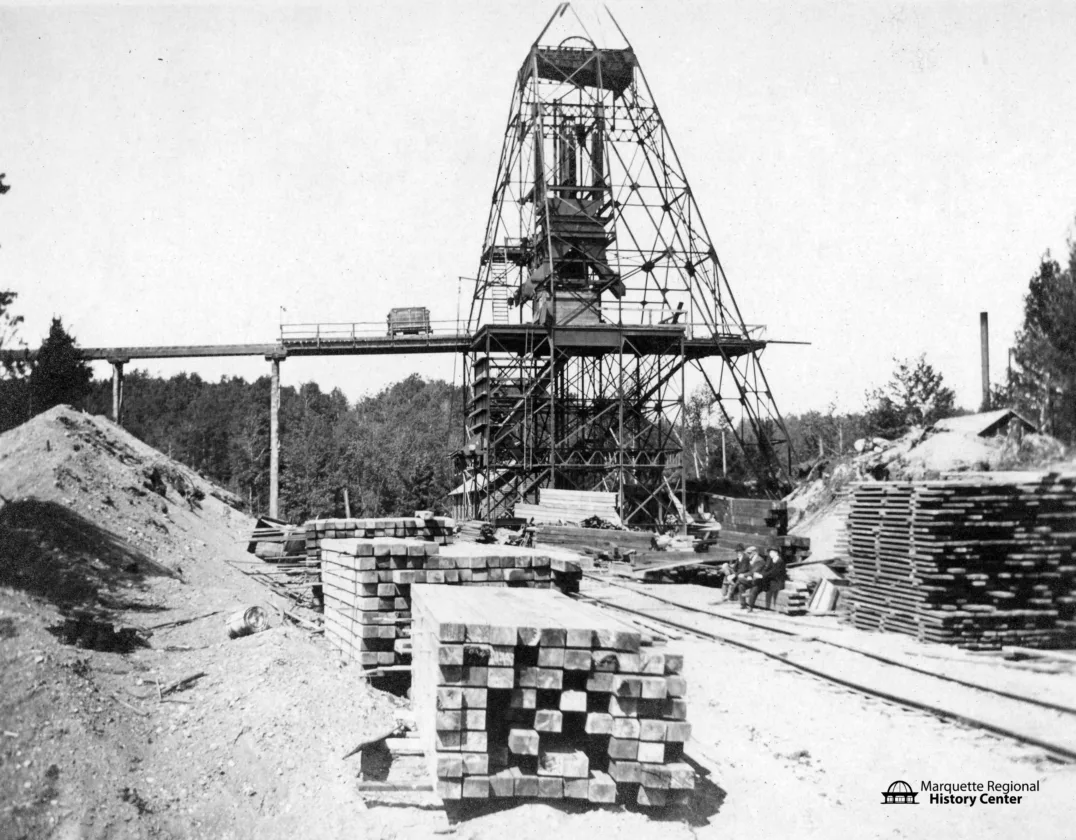
The Barnes-Hecker shaft & trestle, taken looking west at the Chase Mine (Photo courtesy of the MRHC Francis Moore Archival Collection)
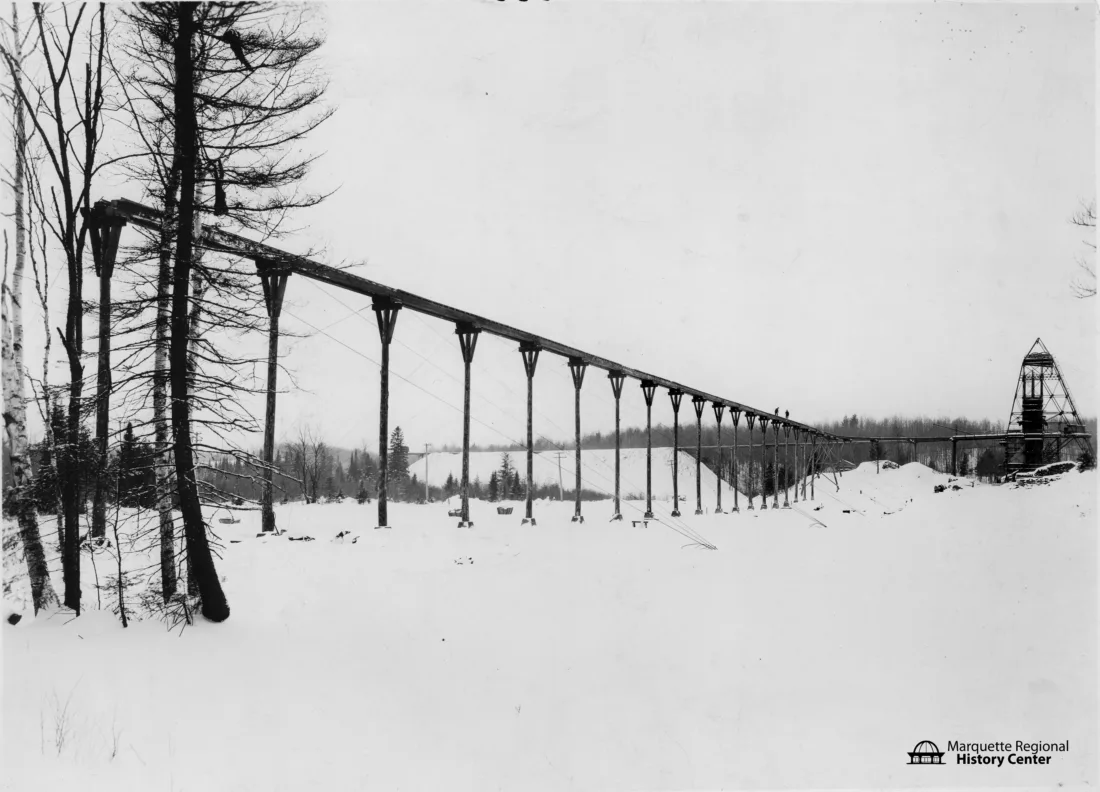
View of one leg single track stocking trestle at the Barnes-Hecker Mine. (Photo courtesy of the Marquette Regional History Center)
The Barnes-Hecker shaft & trestle, taken looking west at the Chase Mine (Photo courtesy of the MRHC Francis Moore Archival Collection)
View of one leg single track stocking trestle at the Barnes-Hecker Mine. (Photo courtesy of the Marquette Regional History Center)
Trending
The name of the Barnes-Hecker Mine casts a large shadow across the history of Marquette County. With the centennial quickly approaching, many community members have heard the sad story of the deadliest mine disaster in Marquette County history when fifty-one miners died during a cave-in on November 3, 1926. But how many have heard about the history of the Barnes-Hecker before the disaster?
The Barnes Land Company owned the land which later became the Barnes-Hecker Mine. The first part of the mine's name clearly comes from company, while the second half probably came from Frank J. Hecker, a Detroit railroad executive and industrialist, who seems to have been an investor in the land company.
In 1907, Cleveland Cliffs Iron Company leased the land and began exploring the property for mining potential. Diamond drilling provided samples of subsurface strata, revealing an ore body of soft hematite approximately sixty feet wide and 225 feet long, about 250 feet below the surface. Although this was an usually small deposit and the overburden above it was swampy, development of the site proceeded.
Work sinking the shaft began in late 1917, pushed by the First World War's need for iron, but it was not without problems. The miners sank the shaft through "a very heavy quicksand." Though they lined the top of the shaft with concrete to prevent caving earth, miners still experienced "sand runs" through underground fissures.
Water also caused significant problems with construction. The engineers were unable to determine the water's source and even pumping nearly 3,000 gallons of water from the mine every minute was not enough to keep pace. The engineers created a series of underground dams and ultimately drained the nearby North Lake through a three and a half miles long trench. This remediation reduced the volume of water pumped from the mine by 80 percent, down to just seven hundred gallons per minute.
Throughout 1918 and 1919, work developing the mine progressed very slowly. The first fatality at the Barnes-Hecker Mine occurred on September 29, 1919. The CCI foreman carpenter for the North Lake District, Einer Salmenen was working at the second level, lining the shaft pocket with steel plates when he slipped off a ladder and fell down the shaft to his death.
Active mining began in October 1923. At the time, the vertical shaft beneath the headframe extended 1,060 feet underground, with horizontal drifts at depths of 600, 800, and 1,000 feet. At the end of the third level, a raise, or inclined passageway, connected to the sixth level of the Morris-Lloyd Mine, one and a half miles to the southeast. Between 1923 and 1927, the Barnes-Hecker shipped 419,000 tons of ore. The 182,000 tons shipped in 1926 accounted for 4% of the total shipments from the Marquette range the year of the disaster.
To learn more about the Barnes-Hecker Mine Disaster, join the Marquette Regional History Center's UP History Book Club this evening, on Wednesday, October 14 at 6:30 p.m. We will be discussing Enduring Legacies: People of the 1926 Barnes-Hecker Mine Disaster by Mary Tippett. Join in person at the Marquette Regional History Center or online via Zoom. More information at marquettehistory.org/UPHBC.
Other upcoming events commemorating the 100th Anniversary of the disaster include:
• The Barnes-Hecker Memorial Park Dedication at 11 a.m. on Saturday at the mine site on County Road CL in Ely Township
• An exhibit "100 Years of Tears: Barnes-Hecker Mining Disaster" opens at the Beaumier U.P. Heritage Center, 223 Harden Hall on the campus of Northern Michigan University at 1 p.m. on Saturday. The opening will feature snacks and light refreshments as well as a gallery talk by the exhibition's curators, Zach Lanciani and Daniel Truckey. The exhibition will be on display at the Beaumier Center until April 3, 2027, and is free and open to the public.
• "Uncovering the Truths About the Barnes-Hecker Mine Disaster" a presentation by Jim Paquette, hosted by the Marquette Regional History Center at 6:30 p.m. on Wednesday, Oct. 21. Jim will share his ongoing research of the disaster. Uncovered evidence and documented facts through intense historical research will shed the light of truth that the Barnes-Hecker disaster victims and their families have always deserved. $5 suggested donation.
• "Philo P. Chase and the Barnes-Hecker Mine" a presentation by Zach Lanciani at the Northern Michigan University Archives, 228 Harden Hall on campus at 7 p.m. on Thursday, Oct. 29. Zach will walk through his research process in the archives and share what he uncovered about the Barnes-Hecker Mine, including Philo P. Chase, president of the Barnes Land Company, who rented the land to Cleveland-Cliffs.
• An Ecumenical Memorial Service at 2 p.m. on Sunday, Nov. 1, in person at Bethany Lutheran Church, 715 Mather Ave in Ishpeming or online. Hosted by the 4ISH ELCA Congregations of Ishpeming, Wesley United Methodist Church, and the Catholic Parish of Saint John's and Saint Joseph's, in partnership with the Barnes Hecker 100th Anniversary Committee. A time of fellowship will follow the service.
• A Candlelight Vigil at the Barnes-Hecker Memorial Park on County Road CL in Ely Township at 7 p.m. on Monday Nov. 2. The vigil will include bagpipers. In the event of inclement weather, the vigil will be held at Westwood High School.
• The tolling of church bells throughout Ishpeming and Negaunee on Tuesday, Nov. 3 at 11:20 a.m. At the exact moment of the mine's collapse, church bells will toll fifty-one times in solemn remembrance of the men who lost their lives.
• A Televised Special on My UP Now on Tuesday, Nov. 3 at 7:30 p.m. My UP News (WBUP/WJMN) will present a half hour news program in honor of the 100th anniversary of the Barnes-Hecker Mine disaster. Join MY UP’s Rebecca Bartelme sharing the history, stories from the families left impacted by the tragedy and what marking this historic day means for the community.