
Early deer hunting
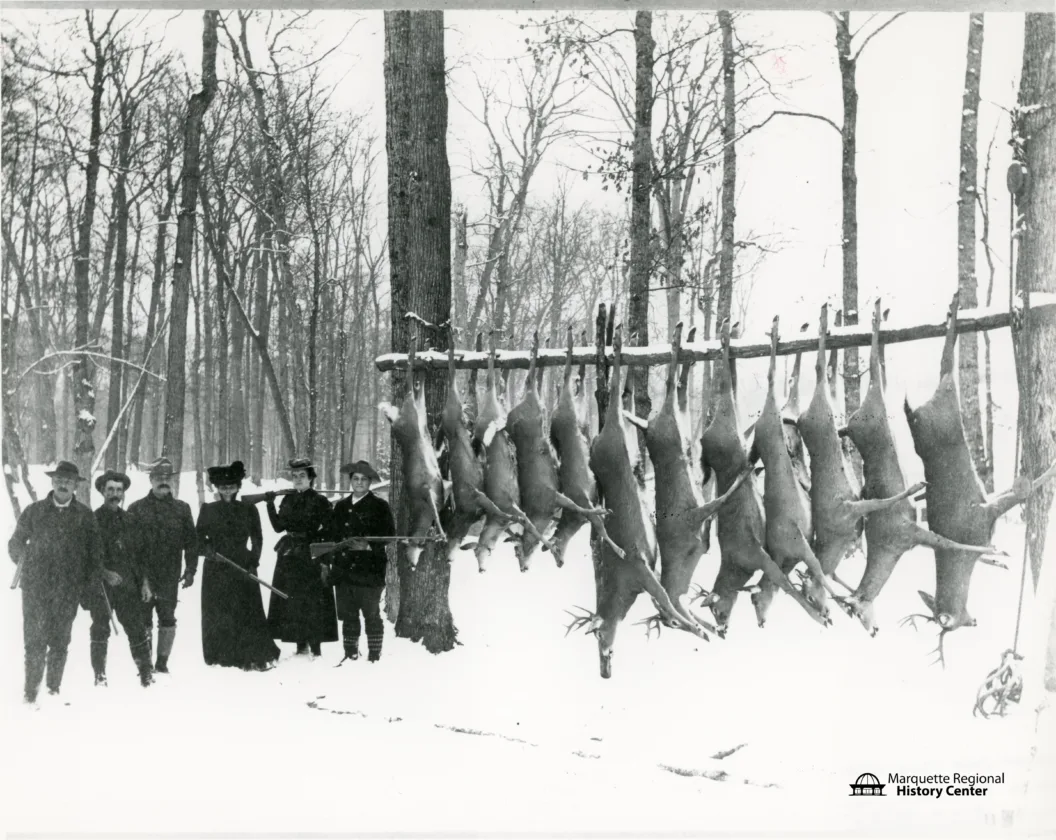
(Photo courtesy of the Marquette Regional History Center)
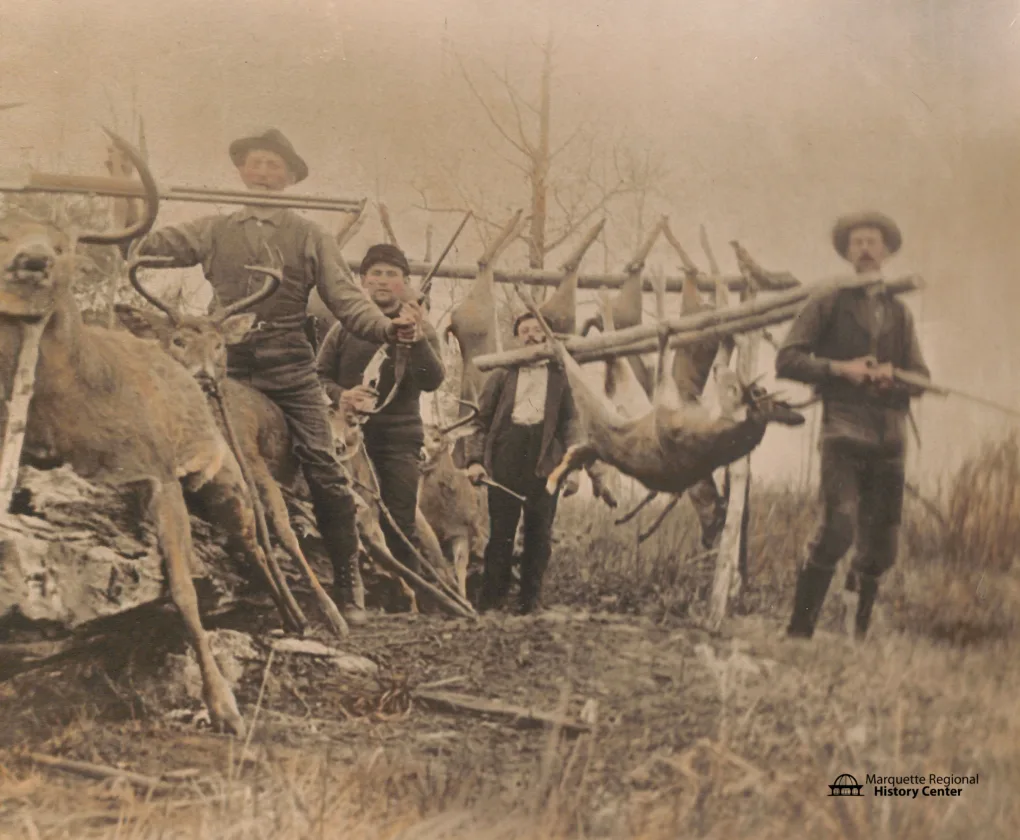
(Photo courtesy of the Marquette Regional History Center)
(Photo courtesy of the Marquette Regional History Center)
(Photo courtesy of the Marquette Regional History Center)
Trending
Adapted from a Historical Highlights radio talk by Kenyon Boyer on Nov. 24, 1957
For many years after Euro-Americans first settled the Upper Peninsula, few people seemed to care about the enforcement of game laws. There were always plenty of deer, so the supply, like the pine forests, was thought to be inexhaustible. The coming of the railroads changed all that.
The coming of the Detroit, Mackinac and Marquette Railroad to St. Ignace in 1881, opened a huge territory of land to lumbermen and hunters, allowing deer by the thousands to be slaughtered for market and for hides. Though there were still plenty of deer below the straits, more hunters kept coming to the Upper Peninsula, concentrating mostly in the area between St. Ignace and Shingleton.
The hunters built camps or put up tents all along the railroad tracks, with some of the wealthier hunters renting private coach cars and having them left on railroad spurs. At the time, hunters could shoot as many as they wished and typically concentrated on getting the largest buck with the biggest antlers.
Once they had enough bucks or does for themselves, all of their friends, and maybe a few to sell when they got home, the hunters would drag the carcasses to the railroad tracks, flag down the next train, load everything into the baggage or express car, and ride home in comfort.
A few far-sighted sportsmen could see that commercial hunters eventually would ruin the deer herd if nothing was done. A Mining Journal article on October 7, 1882, said, "Deer are being slaughtered in numbers along the line of the new railroad [the DM&M] …Almost every train brings in its quota of venison. We fear that the days of this noble game are very nearly numbered in this part of the Upper Peninsula unless some further legal restrictions be placed upon the time and methods of hunting them."
A year later, on September 22, 1883, another article stated: "A few influential men have organized the St. Ignace Game Protective Club because of the disregard of the game laws by outside market hunters, who come into this section and use dogs, shine and trap deer by the dozen. One man has 13 hired hunters in the vicinity of Jeromeville [now Shingleton]. Most of them shine deer at night in the lakes, using coal oil lamps. When they hear a splash, they row over and shoot. They have wagons to cart the carcasses to the nearest stations where the ill-gotten game is forwarded by rail to market. Last year there were 250 deer stacked up after the shooting season, which were bought from hunters and used in four neighboring lumber camps all winter. Let other cities form sportsmen's clubs so a stop can be put to the wholesale slaughter of native game of the Upper Peninsula before its utter extinction."
Finally in 1887, the state of Michigan established the Office of Game and Fish Warden, apparently at the instigation of the state sportsmen's association. After signing the bill, Governor Luce appointed William A. Smith, a lawyer from Grand Rapids, as the first warden. The warden had an annual salary of $1,200 and had the authority to appoint from one to three deputies from each county.
That same year, several important amendments to the game and fish laws were added, including that no dogs or artificial lights could be used, and the season was shortened slightly. But there was still no limit on the number of deer that could be harvested.
In 1891 another addition to the law stated that venison could not be sold after eight days following the close of the season. That fall there were reports of hunters bringing deer into Munising that smelled like they had already spoiled.
A bag limit of five deer per hunter was introduced in 1895. This was supposed to drive the market hunters out of business, but instead they purchased licenses for their families and friends. The slaughter went on, with the price of venison rising slightly. By 1905, only two deer were allowed and about ten years after that, only one.
Though the number of deer that each hunter could kill was going down, after the turn of the century, the number hunters themselves kept increasing steadily. Marquette County alone saw the sale of over 3,000 hunting licenses in 1905.
By 1911, the deer season ran from October 15 through November 30 and was combined with partridge season. 15,000 licenses had been issued in the Upper Peninsula and nearly 4,000 deer were shipped out by the railroads. The harvest was approximately 80% does that year. In addition to the deceased animals, that season saw the deaths of nine hunters and injuries to 30.