
Prison agriculture, part II
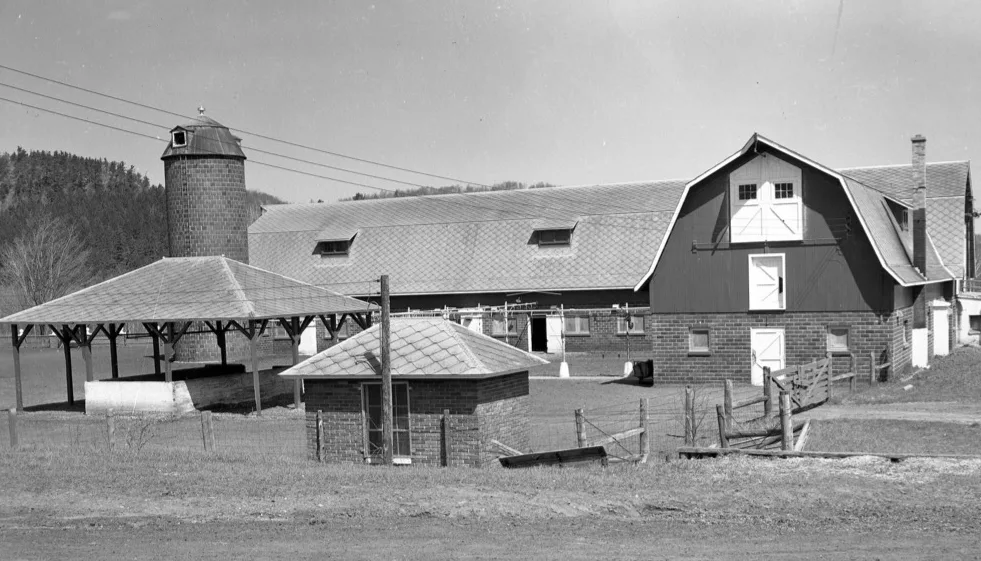
The prison farm is pictured. (Photo courtesy of Jack Deo)
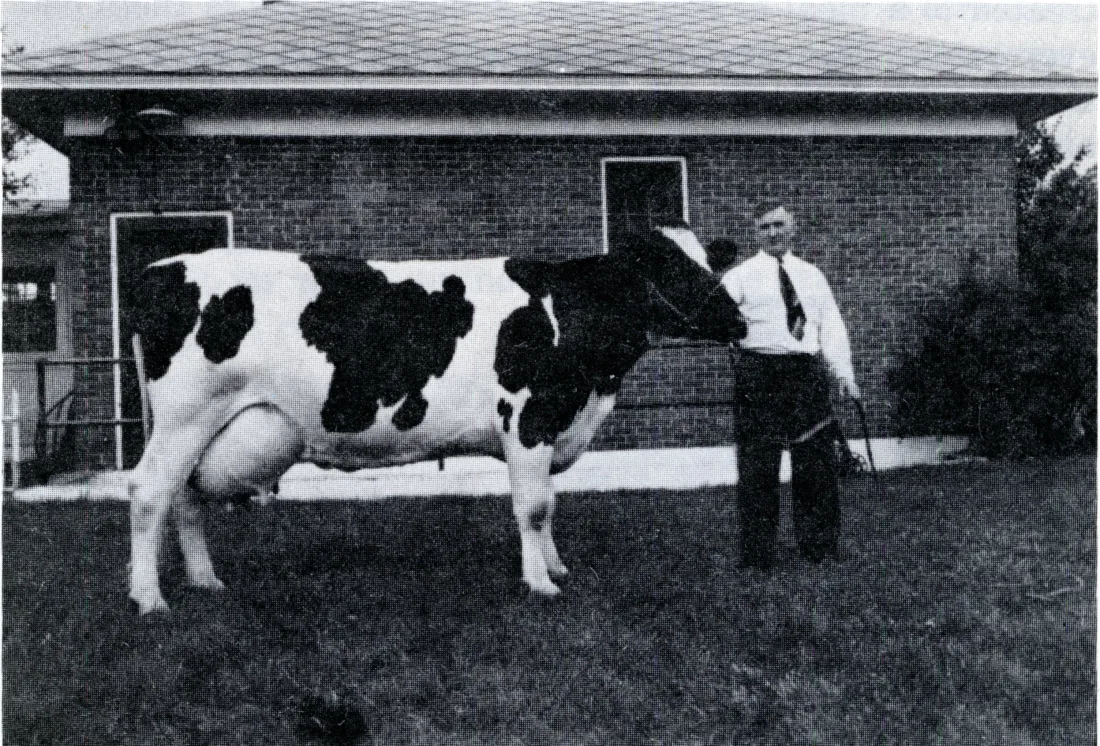
An award-winning cow is pictured at the prison farm. (Photo courtesy of Jack Deo)
The prison farm is pictured. (Photo courtesy of Jack Deo)
An award-winning cow is pictured at the prison farm. (Photo courtesy of Jack Deo)
Trending
Last week's article discussed the history of farming at the Marquette Branch Prison. Two former prison employees, Dan Kolpack and Tom Ogle, helped to bring the story up to date.
When Tom Ogle began working at the prison in 1975, the prison cannery was no longer in operation, but the prison farms were still growing both sweet and feed corn, silage, potatoes, onions and other vegetables. There were still hogs and chickens, but both were gone soon after he arrived. The prison ran an ad in the Mining Journal on Dec. 31, 1975, offering the entire flock of 275 three-year-old leghorn chickens for sale to the highest bidder.
But the proud dairy operation continued, with production records going back to the 1920s. In 1979 the roof of the dairy barn collapsed under a heavy load of snow, but a guard who heard the collapse begin got the two inmate workers out and the cows, which were on a lower level, were not hurt. The barn was soon rebuilt with a metal roof.
Although by the late 1970s, most of the cows were inseminated artificially, Ogle remembers that there was still a massive bull named Nick, kept, as you might imagine, in a separate pen. From time to time a cow that was ready to be bred would be brought to the pen. Female calves born to prison cows were kept for milk production and breeding in the dairy barn at the main prison.
Initially male calves were sold off almost immediately after weaning, but starting in 1985 the prison began raising the male calves on the Mangum property, castrating them and raising the steers until they were large enough to be sent for processing, usually about two years later. Even then, the hope was that the prison farms could produce all the food needed throughout the year.
When Dan Kolpack joined the prison staff as farm manager in 1994 the dairy herd was in decline. There were only about 42 cows being milked and the dairy was barely producing enough milk for the prison alone. Cows were being milked long past the time they should have been bred, and the prison had to buy feed for the herd.
Kolpack culled some of the underproducing cows and got the breeding program ramped up again. With the help of John Wright, another prison employee, he was able to buy new stalls, a new vacuum line, and a milk transfer station. New bucket milking machines were purchased for the inmates, who continued to milk all the cows. New calf hutches helped reduce mortality among newborn calves.
Leaving Wright in charge of the herd at the dairy, Kolpack turned his attention to the farms. With 300 acres of alfalfa, from which he was able to get three cuttings a year, 100 acres of corn, and 100 acres of dry hay, he was able to feed the growing dairy herd as well as the steers being raised for meat. For a while, the farms also grew sweet corn and potatoes.
The fields were fertilized by manure from the dairy barn, which inmates shoveled into wheelbarrows by hand and then trucked to the farms. Local readers may still remember smelling the manure as they passed the prison farm property on Old Little Lake Road.
At peak production, the dairy was producing enough skim and 2% milk, pasteurized and packed into five-gallon bags, to supply not only the Marquette prison, but also an additional dozen corrections facilities throughout the U.P. Although the dairy would have liked to make their own ice cream, and once bought the machinery to do it, the decision was to send the richer milk and cream down to the creamery at Jackson prison instead.
The number of inmates working at the dairy and farm operations decreased over the years as security tightened. When Kolpack began, there were still 30 inmates housed at the Mangum location who not only helped with the feed crops but also learned how to maintain the equipment and machinery used on the farms. Another 30 who worked in the dairy lived in a dorm on the main prison grounds. After the Mangum dorm closed, a much smaller group of inmates was bused out to the farms for work. Similarly, after security increased at the main prison, the number of inmates working in the dairy was cut in half.
In 2010 the Department of Corrections made the decision to close the dairy at the Marquette branch prison. On July 24th, the dairy's 120 registered cows and related young stock were auctioned off. Both Ogle and Kolpack heard, but could not verify, that the auction brought in far less income than expected because U.P. dairy farmers quietly agreed not to outbid each other at the auction.
There are no more prison farms in Michigan, but two institutions run horticultural education programs. At the Women's Huron Valley Facility in Ypsilanti, there are 15 students enrolled and the program donates 12,000 pounds of fresh produce on average per year to the Food Gatherers food bank in Ann Arbor.
The horticultural program at the Muskegon Correction Center recently grew 5,000 birch trees from U.P. seeds to plant in areas devastated by the emerald ash borer and more than 35,000 pounds of vegetables have been harvested from their half-acre plot. They now train inmates within two years of their release date in everything from greenhouse management to pesticide applications. Ensuring the certifications are valid at the time of their release helps the former inmates with their job searches.
The state still owns the prison farm properties. They are now leased to a local farmer who uses them to grow feed for his own livestock.