Bootlegger Leander Winkka
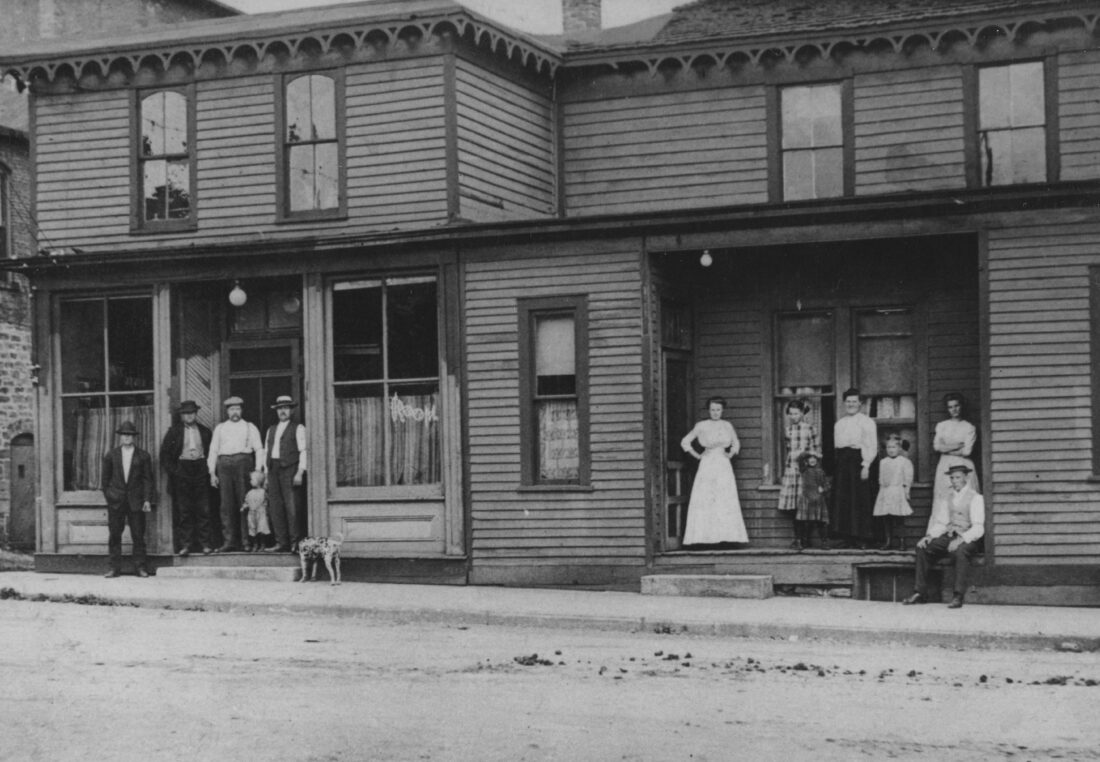
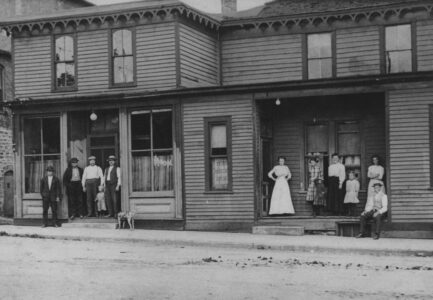
Winkka's Saloon on South Third Street, before Prohibition. (Photo courtesy of the Marquette Regional History Center)
Leander Winkka was born in 1880 in Vaasa, Finland, part of a large family of at least 13 children. When he was 16, he immigrated to America with two of his brothers to find work, or perhaps a fortune.
In 1905 Leander married Anna Tuuri in Marquette and soon after became a U.S. citizen. The couple lived with their four daughters on the corner of Lake Street and Baraga Avenue, where he operated a saloon. Many saloons were close to the busy harbor to take advantage of passenger and sailor arrivals.
Over the next few years Leander had saloons on Washington Street (now WZMQ 19 News) then on south Third Street (now Remie’s Tavern). By 1916, there were 78 saloons in Marquette County, 20 of which were in the city of Marquette. Mr. Winkka remained in business on south Third Street until the state of Michigan outlawed the making and sale of alcoholic beverages.
Many prohibitionists felt that a ban on alcoholic beverages would reduce crime while improving family life and worker productivity. It was felt that alcohol was a gateway drug which caused stunted growth and poor health.
World War I also affected the push for prohibition, with reformers claiming that drinking was pro-German due to many major breweries having German names. Prohibitionists argued that the manufacture and transportation of liquor was taking away from needed resources that were already scarce going into the war. They contended that Congress would have conserved grain and coal much earlier had liquor interests not been placed above public welfare.
When the state law went into effect, Marquette became a “dry” town, although many citizens had stockpiled alcoholic beverages for later consumption. Only pharmacists could apply for a license to prescribe alcohol for medicinal purposes.
Three years after Michigan enacted its prohibition law, the 18th Amendment (Volstead Act), implemented Prohibition nationwide. However, these laws did not stop people from continuing to make wine and home brew in their basements, barns and woodland stills. The Mining Journal newspaper contains reports of violations of the law almost every day in the years 1918 through 1933.
Some of the saloon keepers opened soft drink parlors and switched to producing soda. However, for the right price, stronger drinks could secretly be purchased. We all have heard of speakeasies and the criminal activity of gangs during this period of the Roaring ’20s.
During Prohibition smugglers began bringing alcohol from Canada through Michigan. Detroit was the heart of the illegal alcohol trade in the United States during Prohibition, with an estimated 75% of illegal alcohol in the country crossing over the Detroit River. The Detroit Border Patrol tried to stop the smuggling but were unsuccessful.
Michigan officials lacked the resources to stop the contraband from entering the state. Many community leaders and law enforcement officers did not agree with prohibition and took bribes for their silence. One evening, the Michigan State Police raided a speakeasy in Detroit and found 800 people inside, including a Michigan congressman, a sheriff, and Mayor John Smith.
In Marquette, the Winkka family took in some boarders as a source of income, but Leander had multiple run-ins with the law over selling and/or possessing intoxicating liquor. In 1919 he lost his beverage shop license for his “soft” drink establishment on south Third Street after “an abundance of testimony that he had not only permitted liquor to be dunk in his place of business…but that he had also, on several occasions, sold whiskey at $10 a quart” (approximately $187 today).
In late 1921 a federal prohibition officer called Winkka, “the king bee of prohibition law violators in Marquette County.” At the same time an informant claimed that Winkka had made $15,000 in a single sale (approximately $280,500 today). It is not known where the alcohol originated but it would appear that Leander was a significant distributor and in early 1922, he was sentenced to six months in the Detroit House of Correction.
In May 1923 he was sentenced to an additional three months in prison. He was arrested again within weeks of his release and received another three months in prison in October 1923. Then in June 1924, he was sentenced to 90 days of hard labor at the county jail for drunk driving.
By 1929, rum-running was considered Detroit’s second-largest industry, behind automotive. There were between 16,000 and 25,000 speakeasies operating in the Detroit area alone. Over the thirteen years of Prohibition, Detroit and hundreds of other cities found many problems with the law, including a loss of jobs, an increase in violence and crime, and law-abiding citizens losing their patience with the authorities for harassing them and raiding their homes. Some of these were the same problems the law was originally intended to eradicate.
In April 1933, Michigan became the first state to ratify the 21st Amendment, voting to repeal Prohibition. The Amendment was ratified in December 1933 and saloon businesses quickly sprang up again.
Unfortunately, Leander Winkka didn’t live to see the day. He passed away in 1926 at the age of 46 from uremia, a kidney disease, at his home on Bluff Street. Friends and family were shocked as he had been fishing in Big Bay only 5 days earlier and seemed to be in good health.