Fishing with George
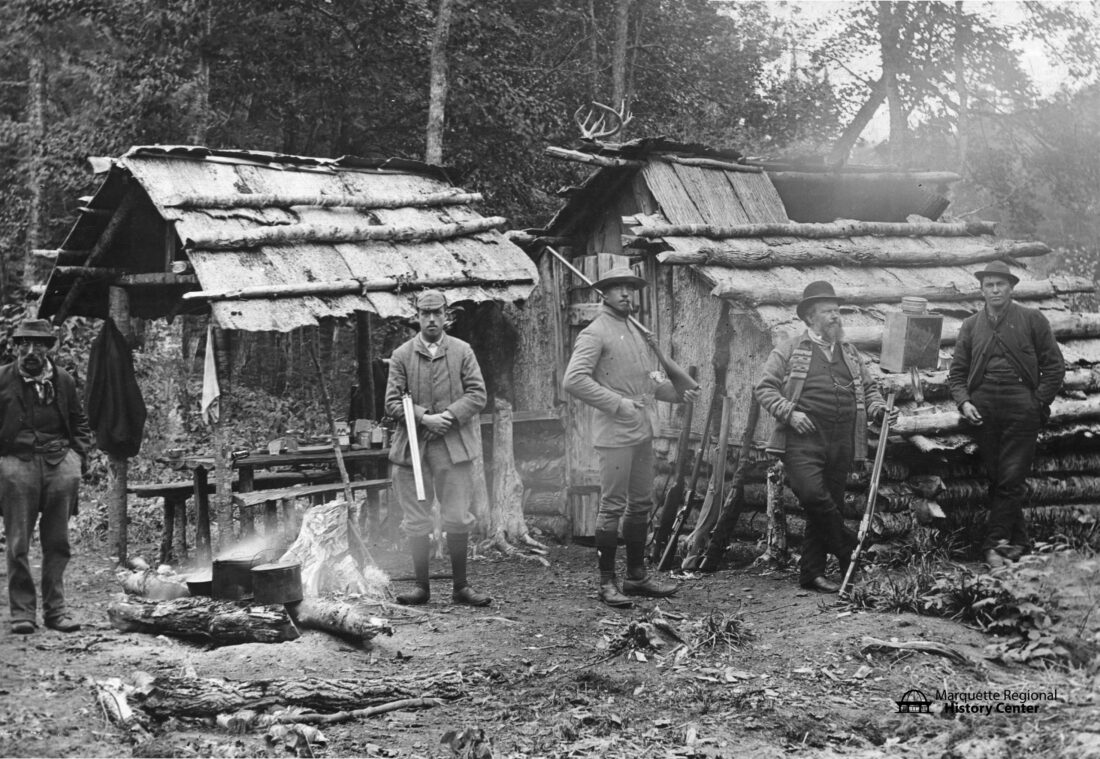
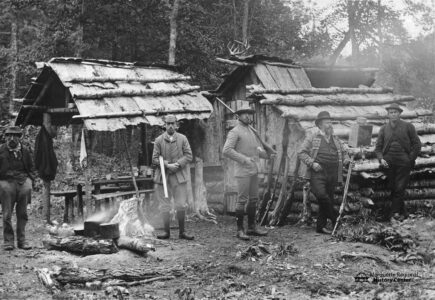
Fiddling Cat, Peter White's hunting camp in Alger County. L-R Jack La Pete, Young Brassy, George Shiras III, Peter White, and Fred Cadotte. (Photo courtesy of the Marquette Regional History Center)
George Shiras III wrote in his biography of his father, Justice George Shiras, Jr. of Pittsburgh, “The wilderness of the Lake Superior region, which was to attract four generations of the Shiras family for a period of more than 90 years, was first called to the attention of George Shiras Sr.” Unlike others who came to mine iron, George Sr. came to fish.
George Shiras Sr. was the father of Supreme Court Justice George Shiras Jr. and grandfather of noted naturalist and wildlife photographer George Shiras III. Born in Pittsburgh, Pennsylvania in 1805, George Sr., followed in his father’s footsteps and became a brewer. By 1840, success in brewing allowed him to retire comfortably. He purchased a farm and moved to the country. A criterion for selecting the farm was it being close to a good fishing hole.
George was passionate about fishing. He tied his own flies and made his own rods and nets. In 1848 he heard from friends who had visited the Marquette Iron Range of an abundance of large, speckled trout in Lake Superior. George enthusiastically planned a trip for the following summer. After a stagecoach to Cleveland and a boat trip on Lake Huron, George arrived in Sault Ste Marie in June 1849.
Sault Ste Marie, a village of about 500 along the St. Mary’s River, had a few hotels, taverns and warehouses. Trolleys carried goods through town, from ships below the rapids to ships on Lake Superior. Chippewa fishermen were seen with hoop nets, balancing their canoes on the roaring rapids. George enjoyed the community and on future trips to the Upper Peninsula, he made a point of stopping to fish in the St. Mary’s River. Eventually locals called him the “lone fisherman.”
After a few days, George boarded a boat to travel to the Keweenaw Peninsula. Along the way he fished when possible. As he passed the majestic Pictured Rocks, he came upon the sandy shores of Munising Bay, which became a favorite camping site. Across the bay lay Grand Island, where more than 50 years later his grandson, George Shiras III, would conduct wildlife photography experiments.
The south shore of Superior did not disappoint. George loved nature and was taken with the beauty of the wilderness and the number of bears, wolves, beavers, grouse, and enormous flocks of wild pigeons he saw.
On his return trip, George stopped at a small settlement located in a beautiful hilly wilderness, near the Carp River. Members of the Marquette Iron Mining Company arrived shortly before Shiras. They were building a mining community that they named Worcester (later renamed Marquette).
Deciding to fish a few days in the Chocolay River and Lake Superior, George enjoyed meeting Robert Graveraet and others, including 18-year-old Peter White. Shiras and White would become lifelong friends, and George’s grandson, George III, would marry White’s daughter Frances in 1885.
George returned to the Upper Peninsula year after year to fish. He loved the area and made Marquette his summer home. Over the years he documented fishing trips in letters to family and friends.
In a letter dated July 19, 1856, he reported success fishing on the Chocolay River and at a picnic on Presque Isle. On the Chocolay he wrote, “In two and a half hours, we caught 95, some of them weighing two and a half pounds,” The next day, he caught trout in Lake Superior, providing lunch at the picnic. He concluded by speaking enthusiastically about fishing up the coast. “We took 18 that weighed 42½ lbs., four of them over 4 pounds each, on one trip that was about 3 miles up the lake from Presque Isle.”
In the summer of 1859, George Sr. introduced George Jr. to fishing for speckled trout on Lake Superior. After graduating from Yale Law School, George Jr. had married Lillie Kennedy, also from Pittsburgh, and was practicing law. A number of Lillie’s sisters moved to Marquette and married successful businessmen. Her brother William visited during the summers and was George’s fishing partner. They sailed to many parts of Lake Superior, including the Canadian shore to fish.
George Jr. spent close to 65 summers in Marquette, eventually purchasing a home. He cherished his time hunting and fishing in the peaceful forests. It was a welcome break from his hectic pace of life in Pittsburgh and Washington D.C., especially during his years as a U.S. Supreme Court Justice.
George Jr. introduced his son George III, age 11, to the area during the summer of 1870. As mentioned, George III later married Francis White. He was also a lawyer and served as a member of the U.S. House of Representatives for Pennsylvania. But he was known nationally for his wildlife photography, and as a naturalist who first introduced legislation that led to the Migratory Bird Act.
Like his father and grandfather, George III enjoyed fishing, hunting, and exploring the wilderness. As time went on, he and his assistant John Hammer, spent many hours on Whitefish Lake near Deerton, honing his wildlife photography.
In 1937, George and Frances established a philanthropic endowment entitled the Shiras Institute. Still active today, the endowment supports beautification, recreation, and cultural projects that enhance the lives of people living in Marquette and neighboring communities.