
CRAZY FOR CRAZY QUILTS
2 prominent local women and their amazing quilts
Trending
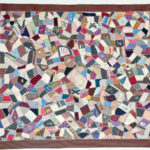
MARQUETTE -- The Marquette Regional History Center quilt collection is fortunate to include some exquisite quilts made by two very prominent women from the Marquette community. Our research found many interesting connections between Flavia Barbeau (Mrs. James) Pendill and Margaret Childs (Mrs. Frederick) Read but none quite as striking as their needlework skills as masters of Crazy Quilting.
The heyday of Victorian Crazy quilting was circa 1885 however these quilts were made from 1880 until the early 1900s. Several events helped fuel this crazy mania for this new type of quilting. The 1876 Philadelphia Centennial Exposition was a huge event in Victorian society with over 20 percent of the U.S. population attending the fair.
The Japanese pavilion with its crazed ceramics, textiles and asymmetrical decorative art inspired a totally different form of artistry. Women were eager to incorporate this new look into their quilts and with the help of popular women’s magazines, the making of crazy quilts became the rage.
In addition, the American Aesthetic Movement began during this same period time and it stressed that a beautiful home would advance the morality and productivity of the family members living it. During the Victorian period, homes could not have enough embellishment.
Women threw themselves into decorating every inch of their homes using their artistic abilities in needlework, painting and arrangement of fancy embellishments. High-style crazy quilts were never intended for daily use as warm bed covers, but instead were meant to be draped over a sofa, table, piano or as a decorative display in a parlor, hence, they are often referred to as show quilts.
Crazy quilts were originally made by those women in the wealthy classes who had the time and money for expensive silk fabric often imported from Europe and Japan. As American silk production increased, dressmaker scraps, discarded clothing and kits became more readily available, other women found ways to get into the crazy quilting fad. All of these events helped push women away from traditional quilt designs and into this new quilt craze.
The most detailed crazy quilts include a wide variety silks, silk velvets, brocade and ribbon and are highly embellished with embroidery, painting, commemorative ribbons, initials and names, dates and words. Embroidery motifs include numerous flowers, insects and animals, initials or names.
Fans are often found which suggest the influence of the Japanese exposition. Ribbons were often used that reflected organizations, political themes or travel. Several of the museum quilts include mourning ribbons as quilts were often made during the mourning period for a family member or significant political or social figurehead.
By using a wide variety of fabrics, stitches and threads, the maker often tells us a story about herself and allows us in to share in a brief glimpse of her life, her social status, her interests and her family. Crazy quilts are puzzles where you study the clues and combine them with known facts to better understand the message the maker was conveying. If we know the maker or perhaps the donor, some initials, names or dates can fit into the story of the quilt. Other times they lead to more questions.
Flavia Marie Therese Barbeau Pendill was born in 1832 and died in 1908. In 1985 the museum received a significant donation from Jane and Sue Egan, the great-granddaughters of Flavia Barbeau Pendill. That donation included five quilts from the Marquette Pendill home which we believe were made by Flavia. James, a very successful businessman and Flavia were highly respected members of the community and their wealth gave Flavia access to the best of materials.
It was hard for us to choose a favorite from Flavia quilts but one shining star stood out as it provided us with so many clues that helped connect details about her life to the story within the quilt. Her initials are prominent in this quilt as well as an acorn embroidery which she used on many of her quilt pieces. The embroidered name of Flavia's daughter Olive appears as well as a ribbon signifying the death of Ulysses S. Grant on July 23, 1885. In 1885, Flavia was 53 years old when her husband died quite suddenly. Could this be a mourning quilt for her husband?
The gem of the MRHC crazy quilt collection is without a doubt a quilt made by Margaret Childs Read. Margaret was born in 1851 and died in 1937. She came to Marquette at age 15 to live with an aunt and uncle. The Reads were a very prominent Marquette family, and much like Flavia Pendill, Margaret's quilts show exquisite detail and workmanship made from only the finest fabrics.
Every aspect of this quilt is a joy to behold. Margaret placed the 16-inch blocks on point but then carefully covered the intersecting blocks and seams with appliqueswand embroidery. There is a large variety of embroidered leaves, flowers, insects, people, birds, and insects plus appliqued fans, moon, roses, pansies, leaves adorn the quilt top. There are numerous initials including J. C. which might be for her father, James Childs, a possible mourning ribbon with the name Esther K. Childs 9, however we do not know her link to Margaret. One corner has the date 1882. Margaret would have been 31 at that time and it was also prior to her marriage to Frederick Read. The back of the quilt is also breathtaking and full of detail. This amazing quilt provided us with hours of delight and astonishment enjoying Margaret’s skill and creativity. A major museum or collector would be grateful to have such an amazing example of the Victorian Crazy Quilt period.
The MRHC quilt collection contains over 20 different examples of Victorian Crazy Quilting including quilts, piano scarves, bench/chair cushion covers and pillow covers. Since the crazy quilts were part of the first quilts donated to MRHC, more often than not, we have no information on dating or the maker's or donor's names.
There were, however, occasions we were able to "guess" about possible connections by closely examining the needle skills of the maker, and the motifs or designs, as well as the fabrics she chose.