
House where King planned Alabama marches moving to Michigan
Trending
By COREY WILLIAMS
Associated Press
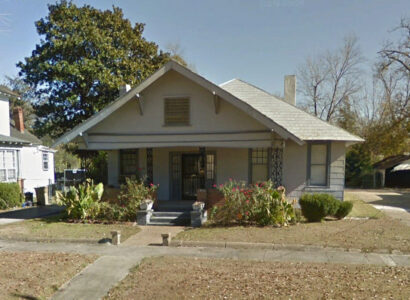
DEARBORN-- A lot was happening in March 1965 in the bungalow in Selma, Alabama, that then-4-year-old Jawana Jackson called home, and much of it involved her "Uncle Martin."
There were late-night visitors, phone calls and meetings at the house that was a safe haven for the Rev. Martin Luther King Jr. and other civil rights leaders as they planned the Selma to Montgomery marches calling for Black voting rights.
The role the Jackson House played was integral to the Civil Rights Movement, so Jackson contacted the The Henry Ford Museum near Detroit about a year ago to ask if it would take over the preservation of the Jackson House and its legacy.
"It became increasingly clearer to me that the house belonged to the world, and quite frankly, The Henry Ford was the place that I always felt in my heart that it needed to be," she told The Associated Press last week from her home in Pensacola, Florida.
Starting this year, the Jackson House will be dismantled piece-by-piece and trucked the more than 800 miles north to Dearborn, Michigan, where it will eventually be open to the public as part of the history museum. The project is expected to take up to three years.
Owned by dentist Sullivan Jackson and his wife, Richie Jean, the 3,000-square-foot home was where King and others strategized the three marches against racist Jim Crow laws that prevented Black people from voting in the Deep South.
King was inside the home when President Lyndon Johnson announced a bill that would become the Voting Rights Act of 1965.
"There was a synergy going on in that house during those critical times," Jawana Jackson said. "Whether that was when Uncle Martin was praying the morning of the Selma to Montgomery march or whether he was talking to President Johnson (by phone) in the little bedroom of that home, I always got a sense of energy and a sense of hope for the future."
The house and artifacts, including King's neckties and pajamas, and the chair where he sat while watching Johnson's televised announcement, will be part of the acquisition by The Henry Ford. The purchase price is confidential.
Named after Ford Motor Co. founder and American industrialist Henry Ford, the museum sits on 250 acres and also features Greenfield Village where more than 80 historic structures are displayed and maintained. The Jackson House will be rebuilt there, joining the courthouse where Abraham Lincoln first practiced law, the laboratory where Thomas Edison perfected the light bulb, and the home and workshop where Orville and Wilbur Wright invented their first airplane.
Also among the collection's artifacts are the Montgomery city bus whose seat Rosa Parks refused to give up to a white man in 1955 and the chair that Lincoln was sitting on in 1865 when he was assassinated at Ford's Theatre.