
Trending
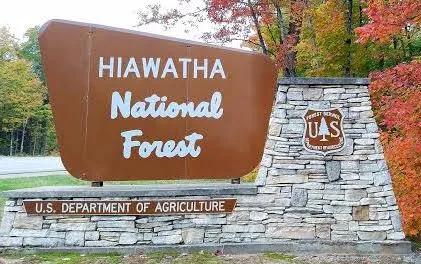
GLADSTONE -- The U.S. Forest Service is looking for a few, well, a lot more than a few, good pinecones, to support an effort that could help shape the region's forests for decades to come -- one pinecone at a time.
Beginning today, the agency will accept jack and red pinecones as part of its annual reforestation program. Members of the public can collect cones and earn money while providing seeds that will eventually become new trees on the Hiawatha.
Reforestation is an important part of forest management, replacing trees that have been harvested or lost and helping maintain healthy forests for wildlife, recreation and future generations.
"Your pinecones can help shape the next generation of forests on the Hiawatha," the Forest Service said in announcing the program.
The agency said seeds collected from jack and red pinecones will be used to grow young trees that support wildlife habitat, local outdoor traditions and the long-term health of the forest.
Collectors will be paid $80 per bushel for jack pinecones and $110 per bushel for red pinecones. The collection period runs through Nov. 25, or until collection goals are met. Cones can be brought to the Hiawatha's Munising, Rapid River or St. Ignace district offices.
The Forest Service said cones should be clean and free of twigs, branches, needles and other debris. Excessive debris can reduce the estimated volume of a collection and, consequently, the payment. Cones should also be free of insect bore holes and kept in a cool, dry location before being delivered as soon as possible after collection.
Collectors must gather their cones within the's Upper Peninsula. Collection is permitted on Hiawatha National Forest lands, although the Forest Service will not provide specific collection maps.
Those collecting on state, county or private property may need permission or a permit and are responsible for obtaining any required approvals. The Forest Service also cautioned that cutting down trees or pruning branches to collect cones is illegal on Hiawatha National Forest land.
Collectors should keep cones from different locations in separate bags and be able to identify where each collection was made.
Payment will be made by check within one week of drop-off. Same-day payment may be available depending on staff availability.
Appointments are required at least 24 hours in advance on open collection days.
The Munising office will accept cones today and Oct. 21 and Nov. 4 and 18. The Rapid River office will be open for cone collection on Oct. 14 and 28 and Nov. 12 and 25. The St. Ignace office will accept cones by appointment only.
Residents interested in participating should contact their local district office and ask for the appropriate point of contact to schedule a drop-off or get answers to questions.
Cone collection contacts
Munising:
Steve Jastrzemski -- 906-387-2512, ext. 1028
Ryan Sabo -- 906-387-2512, ext. 1024
Rapid River:
Joe Smith -- 906-474-6442, ext. 2130
Ally Crouch -- 906-474-6442, ext. 2143
St. Ignace:
Marjorie Allmaras -- 906-643-7900, ext. 125
Josh Leduc -- 906-643-7900, ext. 126
For many Upper Peninsula residents, forest management is most visible through activities such as prescribed burning, timber harvesting, local mills and logging trucks. The Forest Service says those activities are only part of the process.
Reforestation provides the next step -- helping ensure that today's forest management contributes to healthy forests for generations to come.