
What’s flying
Blizzard impacts feathered friends
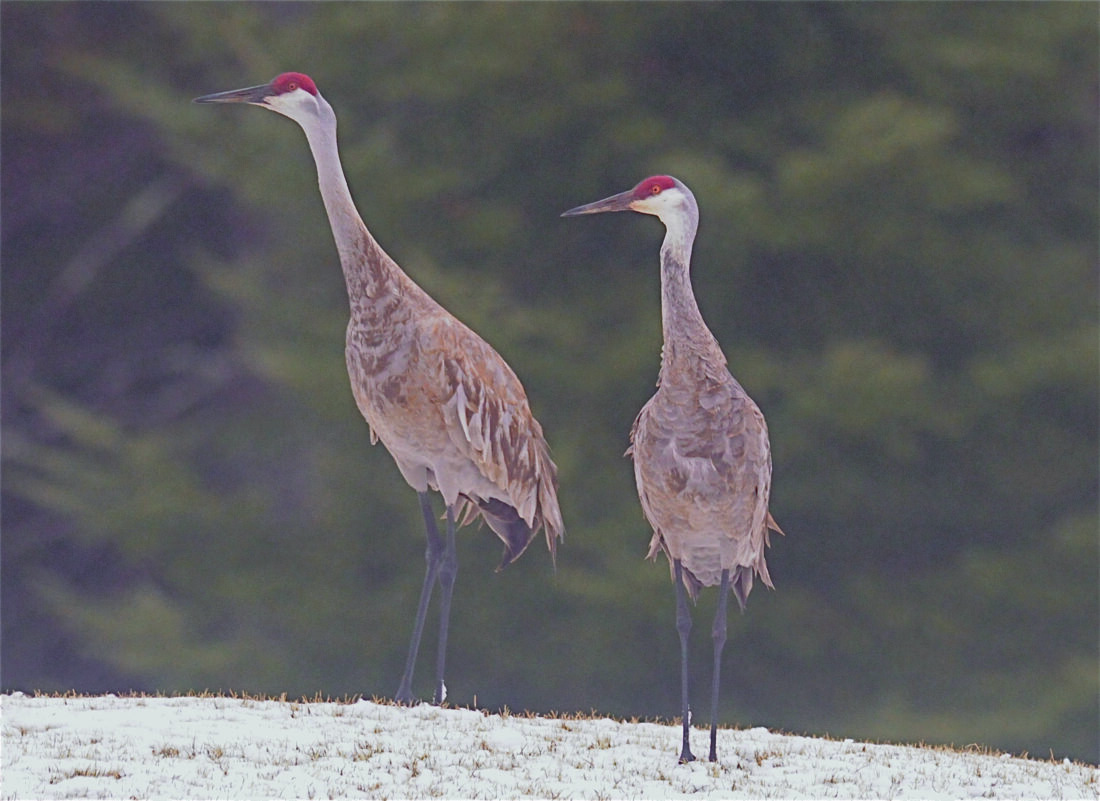
A pair of sandhill cranes are pictured. (Scot Stewart photo)
“Such a good bit of news Spring starts today because I am a bit weary of the thought of any more snow.” – Anonymous
The best part of the snow with the recent blizzard is being able to claim being a part of it all. It definitely was better even to witness than a wildfire, hurricane, tornado or flash flood. The official start of spring today with the equinox officially set at 10:46 EDT as the rays of sun shine directly on the equator and the earth continues tilting the North Pole toward the sun. Today, on the vernal equinox, the sun rises directly from the east and sets directly west. The length of the day is nearly twelve hours, at 12 hours and 13 minutes long.
During the blizzard, some songbirds put on impressive shows, braving the 40-50 mph daytime winds to cling to black-oil sunflower feeders, at least briefly before retreating to the increased shelter of nearby bushes before jumping back into the fray. At Presque Isle, a 58 mph gust was measured at the MooseWood Nature Center weather station http://tinyurl.com/mkm8ytfn and http://tinyurl.com/473tyj3w. These two links report current conditions and daily summaries for the site.
Three of the most impressive feeder visitors were American goldfinches, mourning doves, and northern cardinals. Although none of them were able to cling to perches all the time, they were able to hold on, even for extended durations during most of the windier gusts and remain in the general area all day both Sunday and Monday. Part of what may have made birding at some feeders so good was the lack of both wild sources food, recently covered by newly formed drifts of snow, and fewer area feeders getting food replenished due to challenging weather.
Raptors continue to patrol some of the Marquette area feeder stations. A merlin spotted catching a pine siskin last week in Trowbridge was possibly the same one caught plucking a mourning dove as it left its perch on the east side of town. Cooper’s and sharp-shinned hawks have also made visits to various sites around town but have not been seen catching anything. All three raptors nest in the Upper Peninsula during the summer months, but many more migrating through next month will continue on to Canada for the summer.
Snowy owls have been continuing in Chippewa County. Two were seen there this past Tuesday near Rudyard where most of this winter’s sightings have occurred. They should be heading northward back to the tundra of Alaska and northern Canada in the next two to three weeks.
Elsewhere in the county, there have been some of the more usual sights of bird migration in March. Also on Tuesday, a pair of golden eagles and a quartet of bald eagles was noted at Whitefish Point. Eagles are very early migrators through Michigan, and they often follow Upper Peninsula shoreline areas along the Great Lakes. Whitefish Point, the Mackinac Straits, north of Marquette toward Sugarloaf and the Keweenaw Peninsula are all good spots to look for migrating eagles, especially when weather conditions, particularly wind, are favorable.
There should be plenty of golden eagles sliding past Whitefish Point during the next month. Good number pass over Brockway Mountain too, but it is a pretty sure bet the only way to get up there this spring during migration is by snowshoes, skis, or snowmobile. The watch is quite dramatic, as many raptors like hawks, vultures and the eagles pass beneath the ridge through the valley below.
Despite the severe weather, a number of newly arrived migrants have held on and stuck around. At least a half dozen robins overwintering in Marquette have continued to search out crab apples and other fruits to eat until the snow clears and bare ground can yield up earth worms and other invertebrates. An eastern bluebird was seen between Daggett and Cedar River and an eastern meadowlark showed up under feeders between Bark River and Escanaba. Common grackles and a few red-winged blackbirds have been seen at a number of locations in the central U.P.
Some other interesting reports have come from other scattered reports recently. At Kitch-iti-Kipi State Park in Schoolcraft County, sandhill cranes were heard last week, just before the big storm. They also can be early migrants, arriving before the snow is gone. They may attempt to forage near the edges of wetlands or near spring -fed waters where warmer conditions can provide snow free areas where then can probe the soil for roots and invertebrates.
Over in Sault Ste. Marie a pair of American wigeons were seen in the Sault locks. Difficult to know their previous status. They are dabbling ducks usually preferring shallow waters for foraging and migrating after the divers. Long-tailed ducks, some of the best divers, seem to be moving northward, with two spotted in the Lower Harbor of Marquette this week trumpeter swans are also continuing to pop up. Several may still be on various parts of the Dead River and ten were seen on AuTrain Lake this past week.
With recent snow falling as far south as Chicago this past weekend, migration will be slowed. As temperatures climb many early migrants will start head slowly north again. Ice cover on the lakes will help waterfowl gage best times to begin their northward push.
This will be a critical period to help songbirds by making the best attempts to keep bird feeders, especially suet and sunflower feeders, full. As robins, bluebirds, and other songbirds arrive, chopped fruit like apples, blueberries, and meal worms will be welcome. Spring is coming!
Local
MDHHS hosts public hearing on weatherization state plan April 6
MARQUETTE — The Michigan Department of Health and Human Services is hosting a virtual public hearing on its 2026 ...
Superiorland Yesterdays
30 years ago MARQUETTE – A downstate television station owner has applied for a permit to build a new station ...

State launches Michigan Member Benefits Program
UP Notable Book Club presents Q&A with Ellen Lord, author of ‘Vigil’
CRYSTAL FALLS — UP Notable Book Club: The Crystal Falls Community District Library in partnership with the U.P. ...
What’s flying
Police, fire pension board session canceled
MARQUETTE — The regular meeting of the Marquette Police and Fire Pension Board scheduled for March 24 has been ...