
Outdoors North
Toboggan run from the past
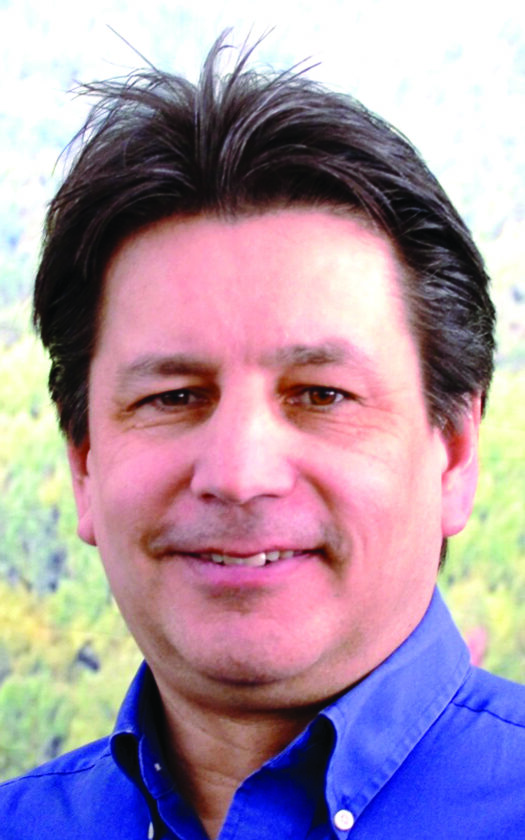
John Pepin, Michigan Department of Natural Resources
A crow glides over a snow-covered farm field, its black and glossy wings outstretched. The bird lands on a wooden fence post.
He announces his presence with caws loud enough to rattle the breakfast dishes on the farmhouse table at the head of the property.
Maybe he’s lonely and looking for connection. Maybe he’s hungry, with food a struggle for crows to find during the wintertime.
Maybe he’s just angry about something, nothing or everything, like a lot of us.
Whatever his motive or intention, he doesn’t stay long to discuss it before he lifts himself off the fence post into the cold, gusting wind.
He flaps and floats his way to another fence post at the far edge of the field and repeats his repertoire.
These days in the depths of winter are characterized typically by cold temperatures, biting winds and all-you-could-want emptiness and silence. The snow enhances the effect by muffling sounds, covering the landscape in a blank and solemn nothingness.
Animals that aren’t hunkered down in their own versions of warm hiding places, like cedar stands and brush piles, often use roads, power lines and water courses for travel.
Like humans, they seek the path of least resistance.
For me, there’s a time each winter when my body tells me that I have acclimated to the wintry conditions. For this winter, that time occurred a few days ago.
I was out enjoying the beauty and pleasure of an afternoon, thinking what a wonderful day it was to be outside, breathing fresh air, feeling the sunshine on my face and getting some exercise.
Out of curiosity, I decided to check the temperature. It was 8 degrees. If I was cool in 8 degrees, I was clearly acclimated.
I was out with a group of revelers enjoying the fun at a local tube slide.
Just like when I was a kid, I loved the thrill of careening down the smooth and glistening side of a big hill – the faster and farther the better.
This hill was luxuriously maintained, provided inner tubes and even had a tow rope to pull me back up to the top to race down again.
The Queen of Shebis was there, as was our little friend, Nathaniel, who is 7 years old.
We held our tube straps together and we all went down the hill at the same time. With our combined weight, we were able to slide out onto the surface of a frozen lake at the bottom.
We also took several turns riding solo, and I went down with Nathaniel in the same tube with me. So did the Queen. On one run, Nathaniel dumped himself into his tube head-first and went down the run with his legs sticking up in the air.
It was his first time being at the tube run and he was incredibly excited about the whole experience. With his boundless energy, he was up and down the hill, probably three times as many times as I was that day.
When I was growing up, this tube run was used as a ski hill. In those olden times, we found similar thrills on a toboggan run located in the woods nearby.
We’d start from the top of the hill, which was just outside a winter lodge. The iced run would take us rushing down alongside a different inland lake, this one much smaller in size and depth.
That toboggan run is no longer operating, but the tube run – with its higher height, longer run, less waiting and tow rope – is a wonderful replacement. Today, there is also access from the top of the hill to the lake by snowmobilers traveling to and from their distant ice-fishing shacks dotting the ice.
The day I was out at the run, the public was able to tube ride for free, thanks to an invite from the Superior Connections Recovery Community Organization, which “exists to cultivate a culture of long-term recovery by creating connections and reducing barriers for those affected by substance use.”
It was a really great opportunity, though a bit of a stretch for me.
As activities go, I will almost always prefer doing whatever it is alone or with one or two close friends. It takes something crucial like tubing to get me out in a group of dozens of people.
It was so much fun. I can’t wait to get out there again.
Little Nathaniel didn’t want to leave, but he had to keep his appointments, which included an afternoon birthday party to attend.
My muscles were sore the next day, but that’s OK. The Queen and I fired up the sauna and enjoyed the cold evening easing our aches and pains away.
Welcome to the Great North Woods.
While there are several weeks of wintertime activities left to come, in some ways, my mind is already aware that the next season ahead is springtime.
The Queen and I were watching television when there was a scene that showed rain falling into a mud puddle.
“Yuck,” she said.
However, my spontaneous reaction was an excitement that shot through my chest. The sight immediately made me think of trout fishing in the rain and about how I just can’t wait for that.
I also thought about how long it has been since I’ve heard thunder. I visualized one of those summer thunderstorms, being outdoors with it being so warm and green. It’s great to know those days are on their way.
We are down to just under six weeks before the spring robins arrive, and 71 days until trout season opens. To that end, I’ve begun the wintertime organizing of fishing tackle and shopping for replacement lures and other items I may be low on or out of.
The last couple of days, I have again been watching the three crows we have around our house – Los Tres Amigos.
I wanted to set out some peanuts in the shell for the crows, as I’ve heard that is one of their favorite foods. To reduce the competition from squirrels, blue jays and woodpeckers, I put the peanuts out on top of a wooden barrel we have on our deck, away from our bird feeding station.
I guess crows are accustomed to familiarity; another trait animals share with humans.
Consequently, the crows didn’t find the peanuts on the first day even though they were still visiting the nearby feeding station. The three birds were in competition with each other for pieces of suet dropped to the ground by the pileated and red-bellied woodpeckers.
The following day, the first thing I saw when I looked outside was a gray squirrel sitting atop the wooden barrel, nibbling one of the shells away from the peanuts inside.
The squirrel picked up another peanut in its mouth and jumped off the barrel onto the ground. He buried the peanut in the snow and went back to the barrel.
Just then, the amigos arrived.
One landed on the barrel and began picking up as many peanuts as it could hold in its beak before flying into the woods. There, the bird buried the peanuts in the snow at the base of a tree.
Meanwhile, one of the other crows was hopping along the ground, following the squirrel tracks. It located the place where the squirrel had buried a peanut in the snow. The crow helped itself to the treat.
The third crow seemed very apprehensive. It stood on a snowbank trying to view the top of the barrel. It then flew up over the barrel.
In mid-air, it stopped and tried to drop itself down on the barrel lid. Instead, it flew off and landed back on the snowbank. I never saw that bird land on the barrel.
The peanuts were gone quickly, largely through the efforts of the first crow that was loading itself up with peanuts and then flying off to bury them. It came back several times in just a few minutes.
Deep relaxation and peacefulness can come from watching birds and other wildlife. It’s one of the many gifts that nature provides. I am thankful for them all.
There’s light snow in the air today. The temperature has risen and it’s another pleasant day to be outside.
I spotted two ruffed grouse sitting in the upper branches of a deciduous tree, trying to snap off a bud or something else to eat.
This is a scene I see occasionally. I don’t usually see the birds land in the tree or fly away from it, but I do see them eating.
I walk a short way down the road, trying to keep my mind on the bright side of life.
Meanwhile, in the distance off in the woods, I hear a single crow loudly cawing.
I keep walking, shaking my head.
EDITOR’S NOTE: Outdoors North is a weekly column produced by the Michigan Department of Natural Resources on a wide range of topics important to those who enjoy and appreciate Michigan’s world-class natural resources of the Upper Peninsula.
Local
Baraga County chamber announces scholarship opportunities
BARAGA — The Baraga County Chamber of Commerce is now accepting applications for its annual $750 one‑time ...
Woodpecker vs. winter
Superiorland Yesterdays
30 years ago ISHPEMING – The Marquette County Road Commission will scale back the number of employees working ...
$25,000 to CLK Schools Childcare for second consecutive year
LAURIUM — For the second year in a row, the Keweenaw Health Foundation has stepped up to support local families ...

Talk with the Doc
History honors to be awarded
MARQUETTE — The Marquette Regional History Center is pleased to announce the annual history award recipients for ...