
What’s Flying: Time will tell what the new year will bring
Trending
"Learn from yesterday, live for today, hope for tomorrow." - Albert Einstein
"Approach the new year with resolve to find the opportunities hidden in each new day." - Michael Josephson
Happy New Year! will be the exclamations soon! As another crazy year winds down, birders discovered they too had one filled with a wildness now becoming "more the norm" here too. American flamingos, whooping cranes, limpkins, and black-bellied whistling ducks across the northern states were big highlights, but they did not make it to the Upper Peninsula. Not sure if that was bad news or good news. Climate change, bringing on warmer temperatures, colder temperatures, bigger Atlantic storms, droughts, and forest fires wreaked havoc on many parts of the continent and places overseas this summer delivering a wide variety of alterations to almost everything. After all the unusual weather and
Numbers did play a big part in the story of U.P. birding this year, particularly during migration. April was a mix of some warm spells interspersed with several snowstorms and wintery stretches. The late thaw slowed the northward movement of many early migrants, including a huge flock of diving and dabbling ducks that dropped down in Lake Superior April 16. A stretch of the lake from Hawley Street to Picnic Rocks held a crowded flock of an estimated 3000 dabblers and divers. One birder pondered the thought of walking across to the Picnic Rocks on the backs of the ducks there were so many. Most left that night, but a few lesser scaup, bufflehead, ring-necked and ruddy ducks all stuck around in the Upper Harbor for about two weeks to the delight of a number of birders.
Fall saw large numbers of ducks too, but at the Straits of Mackinac. There an estimated 8000 redheads and red-breasted mergansers rafted again this fall under the Mackinac Bridge. It is a common gathering of ducks in late fall, but with literally no ice there the ducks have continued on. Hats off to the birders attempting make number estimates there while crossing the bridge, hopefully while others were doing the driving.
Swans were also a part of the spring migration in Marquette, with several trumpeter swans stopping again on the Dead River, as they have the past few springs. More were back with tundra swans in the fall with a mixed flock of five foraging with ducks, grebes, and otters for a spell in October.
2023 was filled with plenty of U.P. sightings of vagrant birds dropping in from western regions. This winter and very early last winter featured swirling flocks of bohemian waxwings across the U.P. coming down from western states and provinces. Last winter the waxwings were replaced by pine grosbeaks and a single Townsend's solitaire feeding at the Holy Cross Cemetery into February. This winter has seen flocks in the hundreds of waxwings in very skittish patterns across the tops of the many full mountain ash trees in town. Single Townsend's solitaires have appeared at numerous sites this fall from Manistique to the Keweenaw Peninsula.
Other vagrants in Marquette have included a single snowy owl in March but none this fall reported across the U.P. Last winter did see more than a dozen around Rudyard-Pickford in Chippewa County. A western meadowlark at Presque Isle in April, an eared grebe in Marquette's Lower Harbor in October and a black-legged kittiwake at the mouth of the Dead River in early November were other highlights. The biggest appearance in Marquette also happened in November. For the second year in a row a barn owl was seen in Marquette. Classified as extinct in the state for some year, their appearances in Michigan are considered extremely rare and almost unbelievable for Marquette.
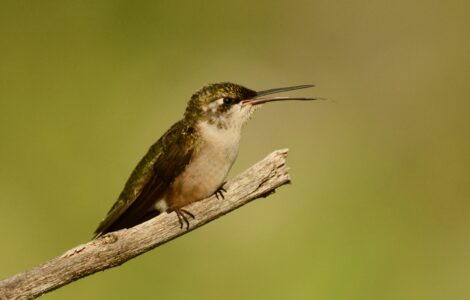
Elsewhere in the U.P. notable sightings included a first for the state black-chinned hummingbird in Copper Harbor. The U.P. has seen several extremely rare to Michigan hummingbirds over the years and many have shown up at the shore of Lake Superior. A ruby-throated hummingbird also hung up in the Keweenaw until late this fall.
The fall migration totals at Whitefish Point this year were 230 species and 171,000 total birds counted during the official count. It compares to 219 species and 119,000+ last year and 236 and 119,000+ individuals in 2021. Good weather through fall may have contributed to the higher number of individuals seen, as the species count was comparable to the past few years.
Other sightings in the U.P. this fall with possible weather connections include more reports of northern cardinals and red-bellied woodpeckers as these permanent residents with expanding populations. Blue-gray gnatcatchers, least bitterns, and red-headed woodpeckers also turned up here more this year. While these sightings may not all have weather-related explanations behind them, the first two have more southerly ranges, and the red-headed woodpeckers is a past nesters in the U.P. looking to be returning. Warblers were another interesting bit to the autumn in the U.P. A whopping trio of three made the Marquette Christmas bird count, with yellow-rumped, orange-crowned and palm found. Another orange-crowned warbler was seen in Manistique this past week, and a black-throated green warbler had been seen since December 10 at Seul Choix Point in Schoolcraft County.
Peregrines returned to Marquette again this year and may have nested in two separate locations in town. One nest was at a natural cliff and did experience some weather storm difficulties this summer. The success of the nestlings was not known. Following all these threads continues to help understand the impact of urban development and climate change in many ways. Time will tell what the new year will bring.
Scot Stewart is naturalist at the MooseWood Nature Center, a writer and photographer.