
Meat processors key to Hunters Feeding Michigan’s efforts
Trending
MARQUETTE -- Half a million servings of nutritious, high-quality protein. It's hard to quantify how much that means to Michiganders who don't have enough food, but - by any measure - 138,000 pounds is a lot of meat.
It's how much venison the Hunters Feeding Michigan program processed in fiscal year 2026. And since 2005, the program has provided over 3.5 million servings of venison to those in need.
How does that staggering amount of meat get to people who need it?
First, generous hunters donate deer they harvest. And, thanks to the Michigan Department of Natural Resources' partnership with the Food Bank Council of Michigan and Feeding America, that donated venison goes to food banks, pantries, shelters, soup kitchens and other agencies across the state.
But there's a step in between that's essential to the program's success.
"Without the support of our processors, the program simply wouldn't be possible," Joe Presgrove, DNR Hunters Feeding Michigan program specialist, said.
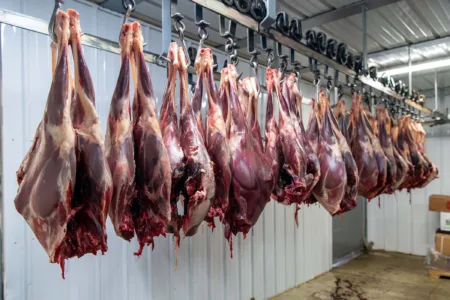
A network of participating meat processors around the state turns donated deer into the ground venison that Hunters Feeding Michigan distributes. There is no cost to the deer donor. Monetary donations, from those who buy a hunting or fishing license and from others who contribute online, help pay for the processors' work.
"When people choose to donate while purchasing a license, or through our contribution site for nonhunters, they're not only helping neighbors in need through local food banks - they're also supporting small businesses in their own communities," Presgrove said.
In the past five years alone, more than $1.2 million has been raised to support Hunters Feeding Michigan processors.
"Hunters Feeding Michigan is a wonderful program that brings together hunters, local meat processors, and communities to make a real difference in the lives of Michigan families," Barbie Kolodica, president of the Michigan Meat Association, said. "Small, independent meat processors are the backbone of this program. These businesses already work long hours during hunting season, yet they step up to donate their time, skills, equipment and resources to help turn donated venison into nutritious meals for families facing food insecurity."
Carson Village Market in Carson City, a family-owned business, has been processing deer since 1979. Owner Adam Eller got connected to the Hunters Feeding Michigan program through hunting.
"It sounded like a great program, and we've been involved a long time," he said. "It's been growing every year."
Eller said his store's participation in the program started out small, but now they're one of the top contributors of donated venison in the state.
"That's amazing to think about," he said.
Carson Village Market processed 26,000 pounds of venison for Hunters Feeding Michigan in fiscal year 2026.
A good portion of that stems from the store processing deer that come in during donation drives throughout the state, which some other processors may not have the capacity for.
"It's hard for some processors to take on more work in addition to their own normal processing load," Eller said. "We have developed an efficient system so we can take on extra workflow."
The store has also implemented a unique incentive for people to donate to Hunters Feeding Michigan. When hunters buy a deer license at Carson Village Market, they get a punch card - five deer donated gets them a discount on processing for their own deer.
Eller sees the benefits of Hunters Feeding Michigan to his community on multiple fronts.
For farmers dealing with deer population issues or hunters trying to get the buck-to-doe ratio a little closer, but who can't eat all the deer they harvest, he said, "It gives them an out - no cost to them, deer get utilized, everything about that is good."
In his small community, Eller also hears from churches about venison donated through the program.
"They say how wonderful it is to have that protein," he said. "They're struggling, and it's a big help to them."
He also sees the program as a way to show that hunters give back and are feeding people in need.
"Hunters are some of the biggest conservationists and get such a bad name in some eyes," he said. "This is a good thing hunters do, and people can see that."
Tim Nimtz and his wife Amanda started their processing business, Clear Water Meats in Eau Claire, Michigan, in 2015. They also have a family farm, mostly hay but also cattle and some grain crops, operating since 1916.
He said the business became part of Hunters Feeding Michigan because there definitely was a need for it in his area: "There were no processors around."
Nimtz calls it a "good partnership," explaining that, because he and his family are also farmers, "We understand the need to address overpopulations of deer and to keep everything in balance in the ecosystem."
Many of the deer donated to Hunters Feeding Michigan at his facility are harvested with deer damage permits, issued to farmers experiencing crop damage by deer. The program provides refrigerated trailers to landowners across southern Michigan, allowing them to store these deer until they can be processed and to donate them.
In this way, Nimtz said Hunters Feeding Michigan is "bridging the gap between farmers trying to reduce deer populations and people in need.
"We don't like to see anything go to waste."
Aside from farmers, Nimtz said, the program also provides opportunities for those who want to hunt but don't necessarily have room for venison, don't like to eat it or don't have the funds for deer processing.
He said Clear Water Meats also has participated in Hunters Feeding Michigan's Give a Pound pilot program, where hunters can drop a pound or 2, or 5, of their own processed venison into a chest freezer in the store.
"That went over very well," Nimtz said. "Filled that thing all the way to the top."
And - because the program doesn't have to pay for processing in this case - "that's completely donations."
Soderman's Meat Processing in Gladstone has been in business about 40 years.
Laura Soderman and her husband have owned it for the last six years. She said they always used to donate meat, from pigs raised for fairs, to local food pantries.
Hunters Feeding Michigan, she said, "helps bring donations to an organization that's willing to distribute evenly among Michigan."
Her business gets several phone calls a day, making sure they're still taking deer donations.
Soderman said she hears from hunters in her community that they are "happy their meat is being used, that the meat won't go to waste."
If hunters just want to keep the hide or the cape from their deer, but want to donate the meat, there is no charge to the hunter for that.
"We're just happy to be there to help, to help the hunters if they don't have any place to drop off donations and to help those who need the meat," Soderman said.
Kolodica echoed the thought that, for participating processors, it's about more than processing meat.
"It is an opportunity to give back to their communities, build relationships with local hunters, and demonstrate the important role small businesses play in fighting hunger," she said. "The Michigan Meat Association is incredibly proud of the processors who participate in Hunters Feeding Michigan. Their dedication shows that even small, family-owned businesses can make a tremendous impact. Every pound of donated venison represents more than just food on a table; it represents neighbors helping neighbors and communities coming together to take care of their own."
She said she hopes to see even more processors get involved as the program continues to grow.
Presgrove hopes to be able to expand Hunters Feeding Michigan beyond what it can accomplish with current funding from donations.
"With additional funding, the program could feed even more Michiganders and continue to support small business,” he said.
How can you help?
There are several ways to join Hunters Feeding Michigan's efforts to help provide food for families in need:
Donate a deer at a participating processor or at a deer donation drive event, taking place at several locations around the state Nov. 20-22 and Dec. 12-13.
Help offset the cost of processing and packaging venison by making a monetary donation when you purchase your hunting or fishing license. If you purchase your license on DNR eLicense or the Michigan DNR Hunt Fish app, you can add your donation at checkout.
If purchasing your license at a store, simply tell the retailer that you want to make a donation to the Hunters Feeding Michigan program. If you're not a hunter or angler, you can also make an online donation.
Learn more about the program at Michigan.gov/HuntersFeedingMichigan.