
Coast Guard wraps up seasonal autonomous vessel evaluation on Great Lakes
Trending
MARQUETTE -- The U.S. Coast Guard is wrapping up its 2026 seasonal evaluation of six autonomous vessels on the Great Lakes ahead of forecasted winter icing conditions, marking another step in the service's efforts to determine how emerging technology can support maritime safety and operations.
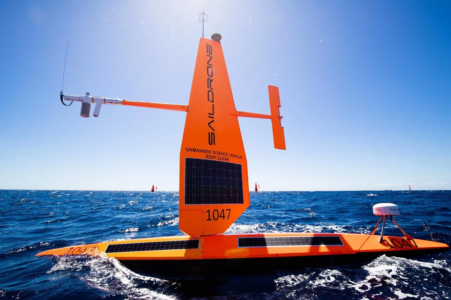
The six Saildrone Voyager Unmanned Surface Vehicles operated across the Great Lakes from April through November, providing Coast Guard command centers and boat stations with real-time offshore weather information and operational insight across thousands of square miles of open water.
The Coast Guard plans to conduct an additional testing and evaluation period in spring 2027 as part of a broader, service-wide initiative to assess how autonomous technologies can enhance missions and assist personnel.
"The U.S. Coast Guard is testing and evaluating autonomous systems across the Service in various areas of responsibility and environments to ensure these technologies help perform our missions and assist our operators," said Rear Adm. Russell Dash, commander of the Great Lakes District. "Our scheduled seasonal deployment of six Saildrone unmanned surface vehicles on the Great Lakes provided valuable insight into how autonomous platforms support Coast Guard missions in a freshwater environment.”
Coast Guard officials emphasized that the autonomous vessels are intended to supplement personnel rather than replace them. The technology serves as a force multiplier, allowing cutters, boats and aircraft to concentrate on high-priority search-and-rescue and law enforcement missions.
Among the vessels’ primary functions is collecting offshore weather and wave data that can help rescue crews respond to emergencies. Great Lakes weather conditions can deteriorate rapidly, creating dangerous situations for boaters and other mariners.
The Saildrones measure wind speed, wave height, water temperature and barometric pressure, giving Coast Guard personnel a better understanding of conditions in areas where a rescue may be needed.
The vessels also provide information about seasonal recreational boating and commercial shipping activity across the Great Lakes, which cover approximately 94,000 square miles. That information can help Coast Guard watchstanders identify unusual activity, including disabled vessels, potential navigation hazards and unsafe activity after dark.
Another potential benefit is improved maritime boundary monitoring. The Great Lakes share an international border with Canada, and information collected by the autonomous vessels can assist fisheries enforcement officers in monitoring commercial fishing activity and helping ensure vessels operate on the appropriate side of the boundary.
The technology also offers a way to reduce the need for Coast Guard boats and crews to conduct routine offshore observations or weather checks, allowing personnel to remain available for emergencies and other operational demands. The information can also support coordination with Canadian maritime partners.
Each Saildrone Voyager measures 33 feet long and is primarily powered by wind, with solar energy supporting its onboard systems. The vessels also feature an auxiliary 4-kilowatt electric motor.
Their equipment includes marine radar, an Automatic Identification System transceiver, meteorological instruments and an optical camera. Despite their autonomous capabilities, the vessels are remotely piloted around the clock by human operators at mission control centers operating across three time zones to help ensure safe navigation around recreational and commercial traffic.
The Coast Guard also addressed privacy concerns associated with the technology. According to the service, the vessels’ cameras capture periodic still photographs rather than continuous video. They do not use facial recognition software and are not designed to identify, track or process recreational boat hull numbers.
The Coast Guard also retains control over the operational information collected during the deployment. Under its contract, the service is the only party authorized to use the data and retains rights to it after the contract ends. The vendor is prohibited from selling or sharing Coast Guard operational data with other customers.
The Great Lakes evaluation builds on previous Coast Guard autonomous technology assessments in the Southeast, Southwest and Northeast districts.
Officials say testing the systems in different geographic environments will help determine where autonomous platforms can best support the service’s missions as it continues modernizing its fleet and technology.
With the 2026 Great Lakes evaluation ending ahead of winter, the planned spring 2027 testing period will provide another opportunity to assess how the technology performs and how it can help Coast Guard personnel respond to the changing demands of maritime operations.