
War against invasive
U.S. Fish and Wildlife Service applies lampricide to Chocolay River
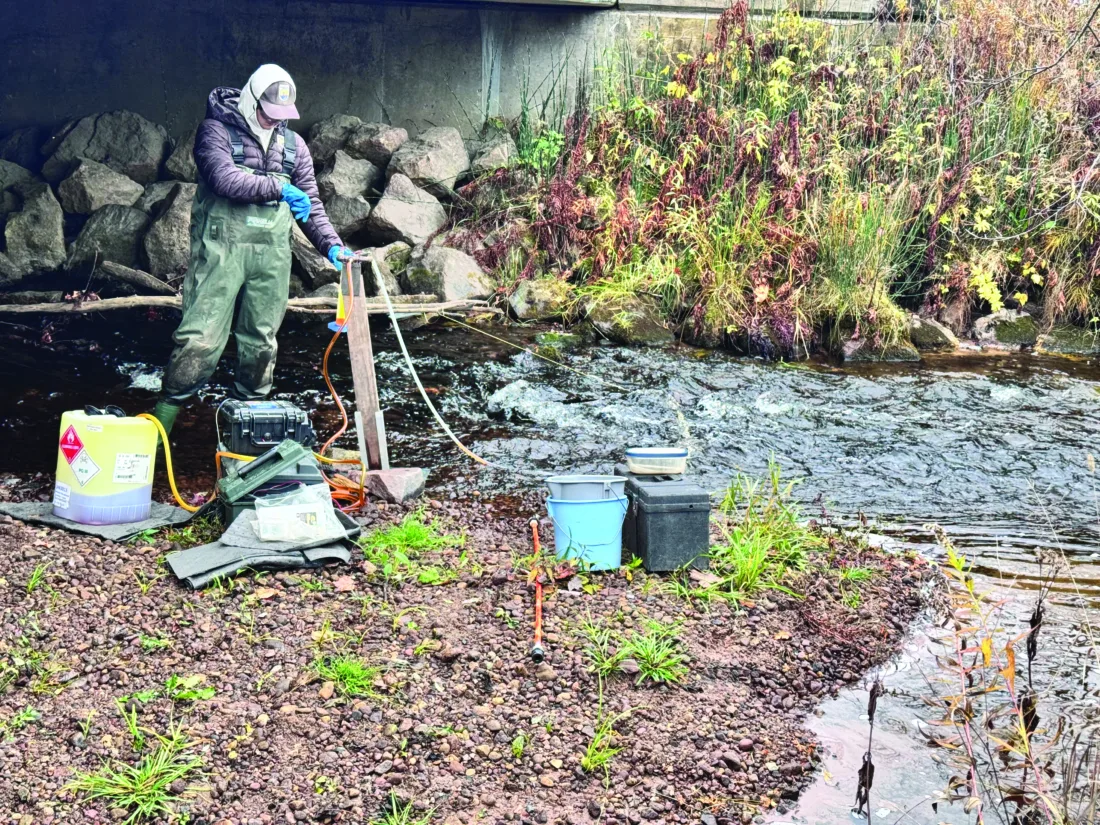
U.S. Fish and Wildlife employee Sam Zwiefelhofer performs a water test during a lampricide application at the Chocolay River in Skandia Township Tuesday. (Journal photo by Annie Lippert)
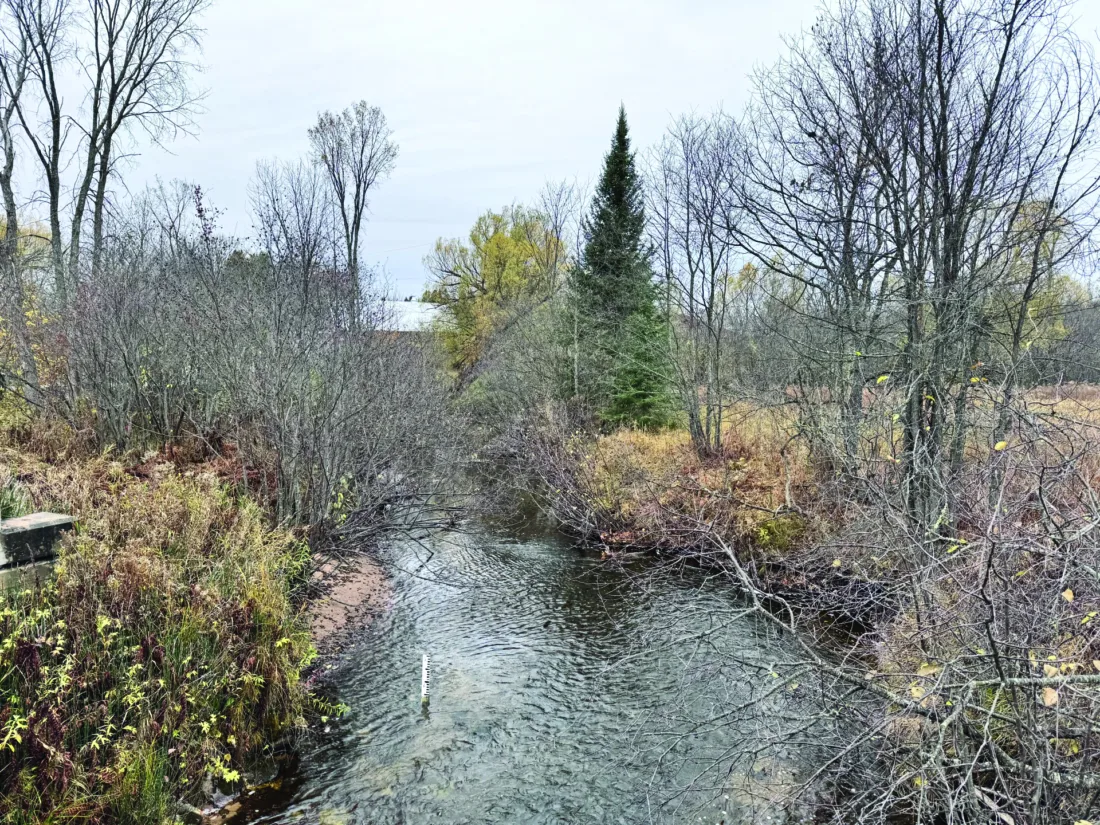
Pictured is the Chocolay River in Skandia Township. (Journal photo by Annie Lippert)
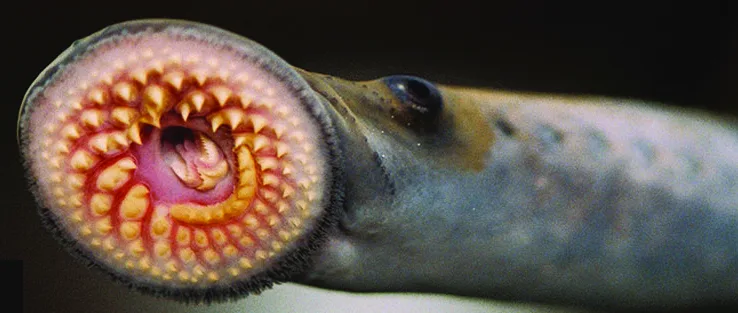
A sea lamprey, up close and personal. (Photo courtesy of Great Lakes Fishery Commission)
U.S. Fish and Wildlife employee Sam Zwiefelhofer performs a water test during a lampricide application at the Chocolay River in Skandia Township Tuesday. (Journal photo by Annie Lippert)
Pictured is the Chocolay River in Skandia Township. (Journal photo by Annie Lippert)
A sea lamprey, up close and personal. (Photo courtesy of Great Lakes Fishery Commission)
Trending
SKANDIA -- The U.S. Fish and Wildlife Service applied lampricide to the Chocolay River this week, as part of a larger, decades-long effort to control the population of invasive sea lamprey in the Great Lakes.
Sea lamprey are native to the Atlantic Ocean, but spread to the Great Lakes in the late 19th and early 20th century thanks to the development of the Great Lakes shipping industry and the bypassing of Niagara Falls. According to the Great Lakes Fishery Commission, sea lampreys were first spotted in Lake Erie in 1921 and had arrived in Lake Superior by 1938.
Sea lamprey have a negative effect on native fish populations. Prior to their arrival in the region, yearly fish harvests on the upper Great Lakes averaged 15 million pounds. By 1960, that number had dropped to 300,000 pounds - 2% of pre-sea lamprey harvests.
Starting in the 50s, efforts began to control the sea lamprey population, and now their numbers are controlled using regular application of the chemical TFM, colloquially referred to as lampricide.
"(In the 50s,) they went through several thousand chemicals through trial and error to find this one that worked," said Christopher Gagnon, Supervisory Fish Biologist for the U.S. Fish & Wildlife Service.
Lampricide works by building up in lampreys and affecting their mitochondria, which is the part of the cell which generates energy. The trick was finding a chemical which killed lamprey, but did not kill other fish.
"There are some sensitive species, like young of the year lake sturgeon (that are affected by lampricide)," said Ganon. "When we know this, a lot of times we'll time our treatments so that the interaction doesn't occur."
That could look like applying lampricide during the fall in sturgeon-spawning streams, so that the sturgeon yong aren't affected.
"Once (the sturgeon) get to a certain length, they're much less sensitive (to lampricide)," said Gagnon.
Lamprey spawn in streams, and their filter-feeding larvae can live in those streams for 3-10 years before undergoing metamorphosis and moving to the Great Lakes. Lampricide targets lamprey and lamprey larvae in those streams.
"If we have a good treatment, it is generally between 98-99% effective," said Gagnon.
The Chocolay River typically harbors about 400,000 sea lamprey larvae before treatment. Gagnon said that enormous number is possible despite the effectiveness of the lampricide because one female sea lamprey can lay up to 40,000 eggs at a time. The sea lamprey's fertility rate is part of what makes it such a menace to Great Lakes fisheries.
"Since we started the program, I think it knocked (the lamprey) 90% of what they were historically," said Gagnon. "They're always gonna be in here. We're just trying to do the best we can to keep them at really low levels, so that we can still have lake trout and salmon fisheries."
Complete eradication of sea lampreys remains an unrealistic goal, as there will always be a couple who escape the chemical by hiding in pockets of freshwater, such as in a beaver dam. And where there's two sea lampreys, there are tens of thousands more.
Thankfully, sea lamprey building up resistance to lampricide does not seem to be an issue so far.
"It's not a major concern right now, but certainly we're gonna keep monitoring it going forward," said Gagnon. "If there are areas that don't meet that minimum lethal concentration, where we need to be above that in order to kill (the lamprey) ... say we don't have a great treatment, and it comes in below that. So they can survive, because they can expel the chemical fast enough, so they were exposed to the chemical ... could that help lead to resistance?"
It's a fine line between treating the river enough that the minimum lethal concentration is met, but not so much that other species are affected.
Before treatment is applied, teams come in to test the river for a variety of metrics.
"We have a larval assessment team that comes in with electrofishing backpack units," said Gagnon. The team will use those units to determine how far up the sea lamprey are in the stream. "We only treat as far up(stream) as we have to," said Gagnon.
The monitoring continues while the chemical is being applied.
"Depending on how far down we have to treat, maybe 5 miles downstream we might have to do what's called a boost application," said Gagnon. That process involves setting up a second application site, if readings suggest that the chemical is at a lower concentration further downstream.
"We're constantly monitoring the system," said Gagnon. "What really drives how much chemical we have to put in is the pH ... we usually do at least 2 or 3 days of preliminary data collection with pH and stream measurements, before we even do anything with chemicals."
The higher the pH, the less active ingredient is available in the lampricide, so the more chemical needs to be applied. And pH can vary at different points in the same stream, so having multiple measurement points is key.
Treatments go on for 12 hours at a time, with data collection occurring throughout.
"We do a lot of post-treatment collections as well," said Gagnon. "Just to make sure that we did in fact kill lamprey, but we also do non-target surveys to make sure we didn't kill any non-target organisms."
That work is followed up by yet another larval assessment team, who will visit the area with electrofishing equipment a second time to make sure that the treatment was successful.
"Some of the times that affect the treatments are if we have really high or really low water," said Gagnon. "So if they come in the following year and find a whole bunch of lamprey that we missed, then I put it up for treatment again."
Typically streams are only treated once every few years -- the Chocolay River is treated approximately every 3-4 years.
In addition to the Chocolay River, other rivers and streams that are regularly treated in the Marquette area include the Huron River, the Carp River, the Little Garlic and Big Garlic rivers and Harlow Creek.
"There's a lot of productive streams up here," said Gagnon. Lamprey prefer clean streams with good flow and gravel for spawning, which are abundant in the U.P.
In addition to those main waterways, tributaries like Foster and WIlson Creek are treated as well, to avoid a situation where lampreys use them as a means of escape, and to avoid water flowing from those tributaries diluting the chemical.
Because a lot of this work occurs on private property, "we really rely on landowners," said Gagnon. "We really appreciate the support we get from landowners -- a lot of people here allow us to go downstream and do sampling, stuff like that ... reach remote access spots."
Across the Great Lakes, there are approximately 100 lampricide treatments applied each year.
More information about sea lamprey is available at https://glfc.org/sea-lamprey.php.
Annie Lippert can be reached at 906-228-2500, ext. 550. Her email address is alippert@miningjournal.net.