
Hiawatha National Forest, Michigan Nature Association Plant Seeds of Hope for threatened daisy
Partnership culminates in planting of 70 seedlings to establish a new population of lakeside daisy in region
Trending
MARQUETTE -- A rare yellow wildflower with a limited range in the Great Lakes region is getting a new chance to thrive in the Upper Peninsula, thanks to a long-term partnership between the Hiawatha National Forest and the Michigan Nature Association.
In May, staff from both organizations planted 70 lakeside daisy seedlings in Mackinac County, marking a significant milestone in a conservation effort that began with an idea nearly two decades ago. The project aims to establish a new population of the federally threatened perennial plant and contribute to its recovery.
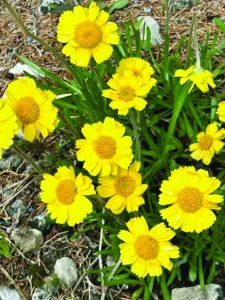
The lakeside daisy (Tetraneuris herbacea) may resemble a common dandelion at first glance, but its survival depends on specialized habitats, including alvars, gravel prairies and northern fens. The species is native only to the Great Lakes region of the United States and Canada, and its distribution remains limited.
According to the Forest Service, approximately 95% of the global population occurs on Manitoulin Island and the Bruce Peninsula in Ontario, Canada. In the United States, the vast majority of the population is concentrated on Ohio's Marblehead Peninsula, while additional occurrences are found in Michigan's eastern Upper Peninsula and northern Illinois.
A conservation effort years in the making
The effort to establish a new population on the Hiawatha National Forest dates to 2009, when local botanists conducting field surveys identified suitable habitat for the plant. The surveys were part of a broader effort to protect the species, whose existing populations faced potential threats from their locations along roadsides and utility corridors.
The establishment project began in 2020, with field staff identifying a suitable planting location in Mackinac County. At the time, Michigan had only five known occurrences of lakeside daisy, all in Mackinac County. One of those occurrences is located where National Forest System lands meet Michigan Nature Association property.
A proposal seeking funding for the project was submitted to the Forest Service's Great Lakes Restoration Initiative program in 2021. The proposal was selected for funding in 2023, paving the way for a formal partnership between the Hiawatha National Forest and the Michigan Nature Association in June 2024.
The plants' biological life cycle meant the partners had to wait until June 2025 to collect seeds from plants growing at a Michigan Nature Association sanctuary.
Association staff carefully gathered seeds from 50 plants and transported them to Wildtype Native Plant Nursery in lower Michigan, where they were germinated and grown into healthy seedlings.
Planting the future
The planting of 70 seedlings in May represented the culmination of years of planning, coordination and patience.
For the staff involved, the day marked more than the planting of a rare wildflower. It represented the realization of a shared conservation vision and the development of a partnership among people committed to protecting the region's natural heritage.
The work, however, is far from finished.
Over the next several years, Forest Service botany staff will monitor the seedlings to determine how well they survive. Depending on the results, the new population may be supplemented with additional seedlings or seeds.
The project's long-term success will depend on the plants' ability to establish themselves and persist in their new location. By creating another population, conservation partners hope to strengthen the species' presence in the U.P. and help reduce its vulnerability.