
Hazardous air quality to continue through at least today, likely longer
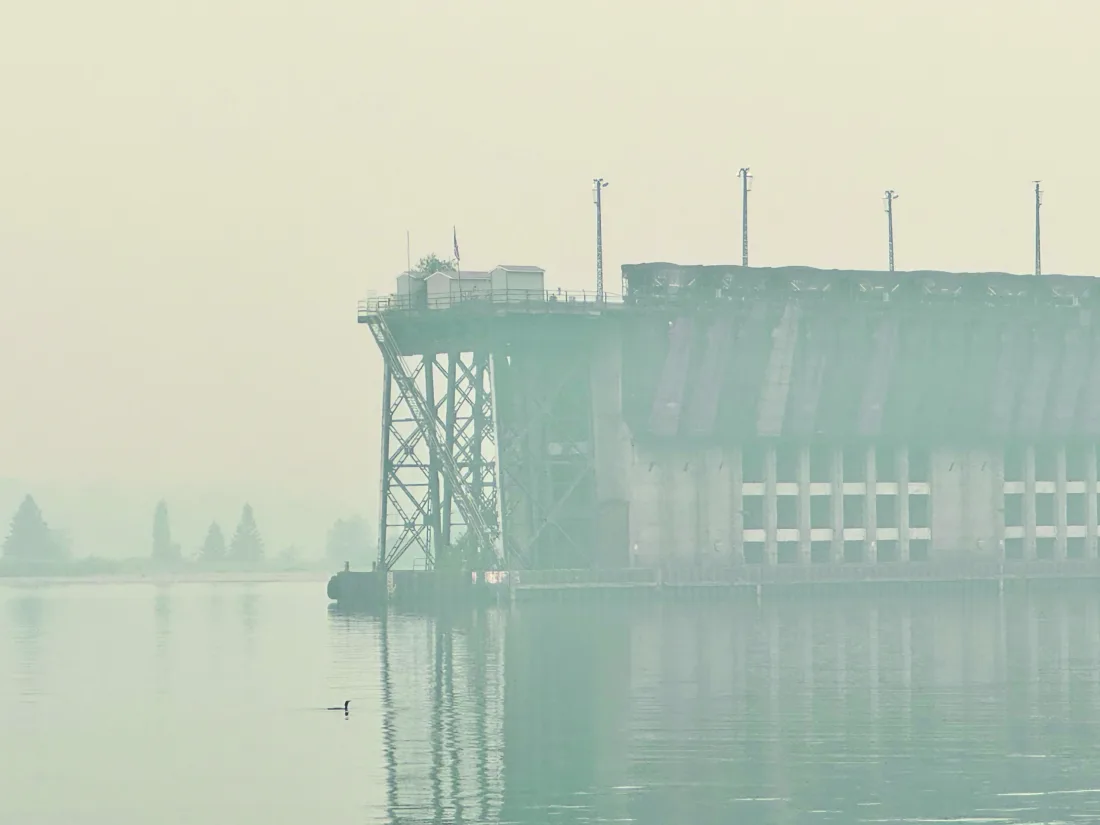
Pictured is the Ore Dock at Presque Isle, photographed from the breakwall. (Journal photo by Annie Lippert)
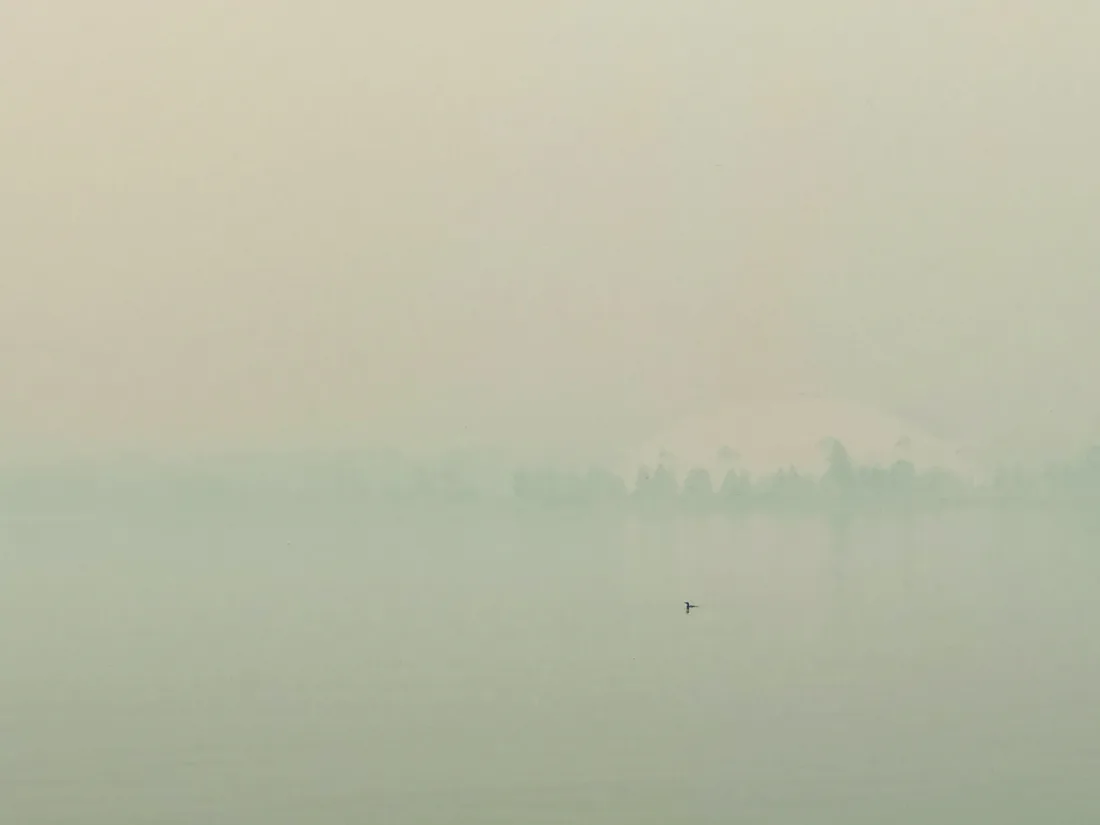
A cormorant swims in front of a barely visible Superior Dome on Thursday. According to the Audubon Society, birds are more vulnerable to air pollution than humans and other mammals due to a respiratory system designed to maximize oxygen intake for flight. (Journal photo by Annie Lippert)
Pictured is the Ore Dock at Presque Isle, photographed from the breakwall. (Journal photo by Annie Lippert)
A cormorant swims in front of a barely visible Superior Dome on Thursday. According to the Audubon Society, birds are more vulnerable to air pollution than humans and other mammals due to a respiratory system designed to maximize oxygen intake for flight. (Journal photo by Annie Lippert)
Trending
MARQUETTE -- Hazardous levels of wildfire smoke will continue through at least today in the Upper Peninsula, according to the Michigan Department of Environment, Great Lakes and Energy. As of Thursday, the entire state of Michigan was experiencing air quality in the "hazardous" range.
"A statewide Air Quality Alert remains in place, along with heat advisories for Thursday as Canadian wildfires north of the Minnesota arrowhead continue to burn, out of control, and are spreading ... unfortunately, those conditions will persist throughout Thursday and into Friday.
"Observed smoke concentrations are unprecedented and far exceed the smoke events of 2023 and 2025. This can be blamed on the nearness of the fires (north of the Minnesota arrowhead region) and the sheer number and size of fires in that area. A front dropped through the region on Wednesday, trapping and dragging that smoke southward to complete the picture."
According to Nick Langlieb, meteorologist from the National Weather Service Marquette office, the smoke has caused visibility to be reduced below 2 miles across a wide swath of the Midwest including Wisconsin, Michigan and Minnesota.
"The big question is how long this will last," continued EGLE. "Indications are that Friday will likely be a repeat of Thursday. As such, we will be keeping the forecast ranging from Very Unhealthy to Hazardous."
According to EGLE, the models which predict smoke levels and air quality only predict out 48 hours. Those models are showing some improvements on Saturday, in part due to forecasted rain, but "it is likely that smoke will linger and recirculate for a while."
Langlieb said that, to clear the air, "the number one best thing would be to get some widespread rain in Ontario to extinguish the fires." At present, though, while there do seem to be chances for rain and thunderstorms, they don't appear to be widespread.
News outlets in Minnesota, such as Minnesota Public Radio and the Minnesota Star Tribune, are reporting that the fires there could continue until snow falls.
Currently, a wind out of the north is pushing smoke down into the U.P. and as far as southern Lake Michigan and beyond, said Langlieb. Thursday night and Friday will see that wind shift to come out of the south, but because the smoke has traveled so far to the south already, that wind will likely push that smoke back north, over the U.P. again. And on Saturday, winds look like they will be back out of the North. It could be a while before we see clear skies; however, Langlieb said that the rain and thunderstorms forecasted for today should help a bit.
"In the meantime, it is recommended to avoid strenuous outdoor activities, especially those with heart disease and respiratory conditions like asthma," said EGLE. "Watch for symptoms including wheezing, coughing, chest tightness, dizziness, or burning in nose, throat and eyes.
"You can help reduce air pollution by limiting activities such as outdoor burning. Keep windows closed overnight to prevent smoke from getting indoors and, if possible, run central air conditioning with MERV-13 or higher rated filters."
For those who must be outside, N95, KN95 and P100 masks are effective in filtering out wildfire particles.
However, these masks are sold out or almost sold out at most area stores, and the Lowe's in Marquette ran out of air purifiers as early as Wednesday. Menards was almost sold out as of Thursday afternoon.
According to the Canadian Climate Institute, "Accelerating climate change, largely from the burning of fossil fuels, makes wildfires bigger, hotter, and more destructive (Climate Atlas of Canada n.d.). With Canada warming twice as fast as the global average (Government of Canada 2019), and home to more than a quarter of the world's boreal forests, the country is experiencing this consequence of global heating firsthand."
As the planet continues to experience climate change and warming temperatures, therefore, Canadian wildfire seasons such as this one and their subsequent impacts on U.P. air quality is likely to continue.
Updates on the air quality and tips on how to respond are available at https://www.michigan.gov/egle/newsroom.
Annie Lippert can be reached at 906-228-2500, ext. 550. Her email address is alippert@miningjournal.net.