
Michigan restricts buckthorn, other invasives, as landscapers cry foul
Trending
LANSING -- A quiet moment of disbelief spread through the room after the Commission of Agriculture and Rural Development unanimously voted to add six invasive plant species to the state's prohibited and restricted species lists.
Conservation advocates who had submitted comments and attended hearings since October looked at one another after the vote.
"We really got this done," said Carolyn Miller, the president of the Wildflower Association of Michigan. "We're beyond happy."
The Michigan Nursery & Landscape Association had opposed expansion of the list.
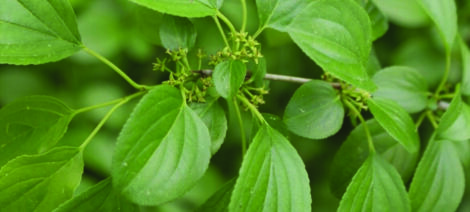
The commission voted to prohibit the sale and spreading of water hyacinth and water lettuce beginning June 19. It also voted to restrict common buckthorn, glossy buckthorn, Callery pear and Japanese barberry beginning Jan. 1, 2028.
State law defines invasive species are defined as nonnative species that cause or are likely to cause harm to the environment, economy or public health.
The Department of Agriculture and Rural Development "is committed to protecting Michigan's agricultural and natural resources so that they may be enjoyed by present and future generations," said Director Tim Boring, adding that the decision "was the culmination of a long, comprehensive process that included rigorous, science-driven risk assessments and extensive public comment."
For environmental advocates, the vote marked what they called a long-awaited step toward limiting the spread of invasive plants.
Miller said conservation groups began mobilizing after the department proposed the additions last fall. Organizations encouraged residents to submit public comments ahead of hearings held in March and May.
Dave Putt, the vice president of the Wildflower Association and chair of its Environmental Advocacy Committee, said advocates were especially concerned about the four terrestrial species because many cultivars, or varieties produced by selective breeding, are still commonly sold in Michigan nurseries.
"We knew that we were going to face opposition," Putt said.
Putt said the decision was especially significant because it applies not only to the parent species, but also to cultivars.
"That was critical," Putt said.
Advocates argued the invasive plants have escaped cultivation and spread aggressively because they lack natural predators in North America.
"They are ruining Michigan habitats," Miller said.
Putt said the decision helps Michigan "catch up" with surrounding Great Lakes states that had already restrict or prohibit many of the species. Miller added that Michigan had not added plants to its invasive species lists in about a decade.
Miller said millions of taxpayer dollars are spent trying to remove invasive species from natural areas across the state.
Advocates expect continued debate from parts of the nursery industry
"There's going to be a fight," Miller said. "But we're one step closer."
EDITOR’S NOTE: Isabella Figueroa Nogueira is an environmental reporting intern through a collaboration of the Capital News Service, the MSU Knight Center for Environmental Journalism, the Mott News Collaborative and Bridge Michigan. This story was produced for Bridge Michigan.