
Bay Mills Indian Community issue notice on wild rice
Trending
MARQUETTE -- The Bay Mills Indian Community has issued a notice on how to be mindful of manoomin, or wild rice, during a critical period of growth.
"After spending the winter resting in the sediment, manoomin seeds begin to germinate as the ice leaves our lakes and wetlands," said the notice. "The young plants grow upward toward the water’s surface.
"Once the plants reach the surface, their leaves lay inconspicuously on the water for most of June. During this period, manoomin roots are slowly developing but maintain only a loose connection to the sediment. Because the plants are easily uprooted during this time, it is known as the sensitive period for manoomin. Any physical disturbance can uproot and kill a plant.
"Manoomin has sustained Anishinaabe people for generations and remains an important part of our culture, traditions, and ecosystem. As you enjoy our lakes and wetlands this season, please be mindful of these young plants as they continue to grow."
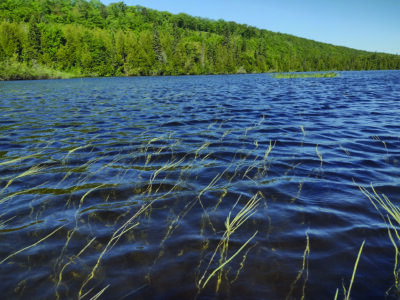
In early summer, manoomin can be identified by their green, floating leaves which lay on the surface of calm, shallow water. Later in the season, the plant will develop a stronger root structure and a long stalk emerging from the water.
"What we're looking for is for people to be good environmental stewards," said Frank Zomer of Bay Mills Biological Services. "This is when the plants are most susceptible to disturbance; physical disturbance, but also herbicides, as well.
"Because (the plants) are so inconspicuous, we just want to put them on people's radar. It's not something anyone would see and think manoomin, it just looks like a long, skinny plant on the water's surface, but we wanted to put it on people's minds. If they're driving their boat to their fishing spot and notice that the boat is chopping through weeds, we just want it to be more front of peoples' minds.
"Think about what your impact to the environment is when you're doing things like that."
Annie Lippert can be reached at 906-228-2500, ext. 550. Her email address is alippert@miningjournal.net.