
Why Michigan’s rural schools wrestle with funding, staffing challenges
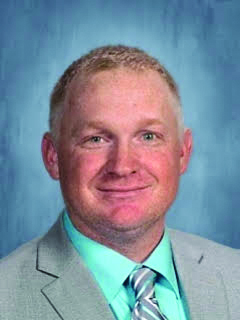
Tom McKee, superintendent, Rudyard Area Schools
LANSING – Public education advocates are pushing for more per-pupil state aid to schools in high-poverty areas and isolated rural communities and for special education students.
Alex Stamm is the education policy analyst at the Michigan League for Public Policy, a research and advocacy organization. She said the current system of per-pupil funding can be unfair to rural schools. With per-pupil funding, each district receives a set dollar amount for each student.
“Even though these schools are small, they still have to pay for a principal, they still have to pay for the buildings and the electricity, so their overhead costs do not decrease proportionally to that student population funding,” Stamm said of rural districts.
Stamm said the state has begun to change funding to rural schools through the creation of an “Opportunity Index.”
“What we do now is calculate the dollars that go to the school based on the concentration of poverty,” Stamm said.
She said that children in poverty who live in areas with higher poverty rates bring in more money than children in poverty in schools with low rates.
Regardless of recent changes, she said rural schools still might find themselves underfunded because they have so few students.
“It’s just less money than if you had thousands of students in your building,” Stamm said.
Stamm said that can make it hard for rural districts to pay their staff a competitive salary.
“It’s not a one-to-one ratio that if you lose a kid, you don’t have to pay a teacher,” Stamm said. “That’s not how that works.”
Tom McKee is the superintendent at Rudyard Area Schools, which serves seven townships in the Eastern Upper Peninsula.
He said that teacher appreciation is the key to staff retention.
“Whether it’s a cook, whether it’s a bus driver, whether it’s a teacher or parapro, what they’re doing adds value to students’ lives,” McKee said.
McKee added that’s especially true in rural districts where many staff members play multiple roles.
“We don’t have somebody that can be dedicated only to pupil accounting,” McKee said. “We have to have somebody that does that part-time, but then also directs special education a third of the time and then teaches three classes.”
Stamm said that’s extremely common in small schools.
“The superintendent isn’t just the superintendent,” Stamm said. “They’re also driving the bus, or they’re substituting in classes, or they’re working as the business manager.”
McKee has driven the bus and said it’s not easy.
“Kids are going nuts in the background, other drivers that are kind of crazy are out on the roads and here you are responsible for 77 kids that are crammed into your bus,” McKee said.
He also said many potential employees are dissuaded by the split schedule that comes with being a bus driver.
Those factors led to a shortage of drivers at Rudyard.
“When I first started, we struggled finding people that would take on a job like bus driving because it is a tough job,” McKee said. His solution was to pay them more.
“How do you get adults to do something? You’ve either got to feed them or pay them, right?” McKee said.
Funding transportation can be especially hard for rural schools with long routes, like Rudyard, where McKee said some students ride the bus for up to two hours.
Despite the challenges, McKee said working in a rural school is rewarding.
“I walk up and down my halls and I know 625 names and my teachers do too,” he said. “In rural communities, the kids are more than a test score.”
Front Page News
There’s a storm coming
Why Michigan’s rural schools wrestle with funding, staffing challenges
Northern Michigan University police officer wins Marquette County Law Enforcement Officer of the Year
Naloxone available at 2 new community locations
MARQUETTE — In addition to having Naloxone available at the Marquette County Health Department lobby, the ...
Sheriff Zyburt endorses Callie Barr