U.P. farms hit hard by blizzard
Farmer forced to bring piglets in after mother pig stops caring for them
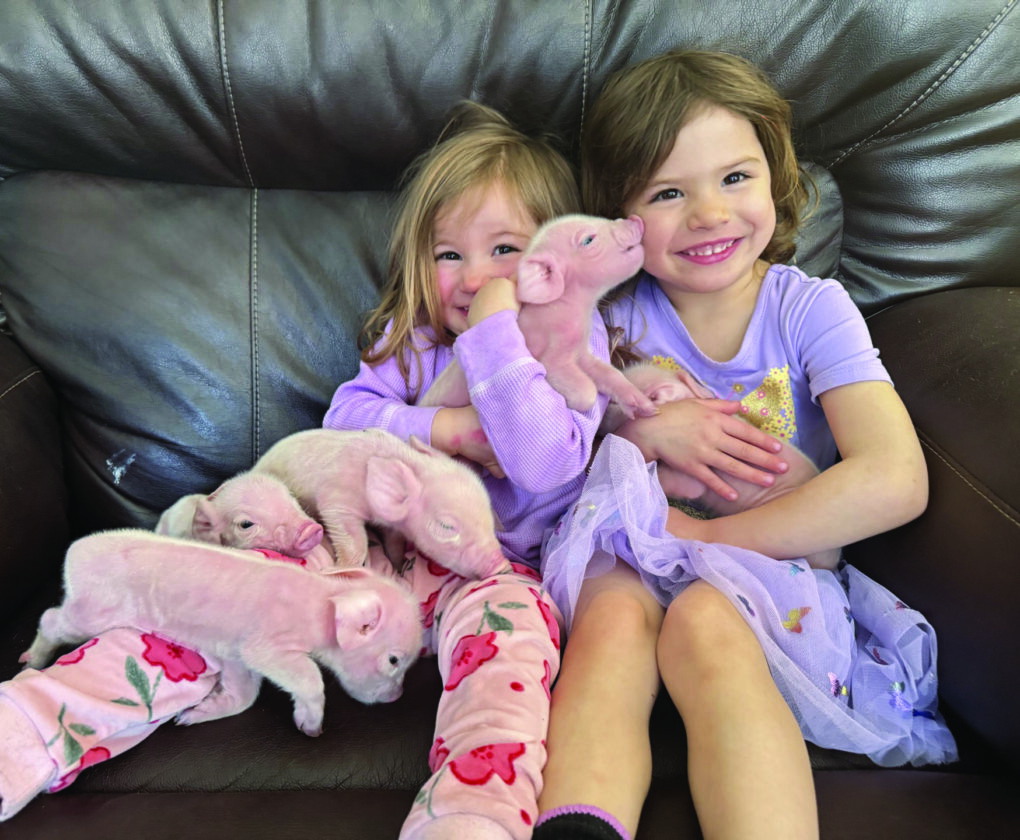
Trevor Case’s daughters hold piglets which had to be brought inside after their mother stopped caring for them during the recent blizzard. (Photo courtesy of Trevor Case)
UPPER PENINSULA — Local farmers were already dealing with a snowier-than-usual winter when the blizzard hit last weekend. Now, even more snow means more strain on them, their fields and their animals.
“We’ve only been operating for nine years, so this is definitely more snow than we’ve ever, ever had to deal with, especially in one storm,” said Trevor Case of Case Country Farm in Chatham.
“It’s been extremely challenging. The way I handled it is I staged things like food and water and the necessities for the animals close to them so I didn’t have to get those things to them after the storm. There was lots of prep before it came. You do the best you can; it’s a survival situation. We aren’t trying to get anything accomplished this week, we’re just trying to keep everyone alive.”
This storm came during piglet season, an especially busy and challenging time on Case’s farm.
“We lost two greenhouses this winter; one in a previous storm, and one in this storm. That’s normally where we have piglets born. So since the storms took them out, we don’t have anywhere to have piglets. That’s our normal piglet farrowing barn.”
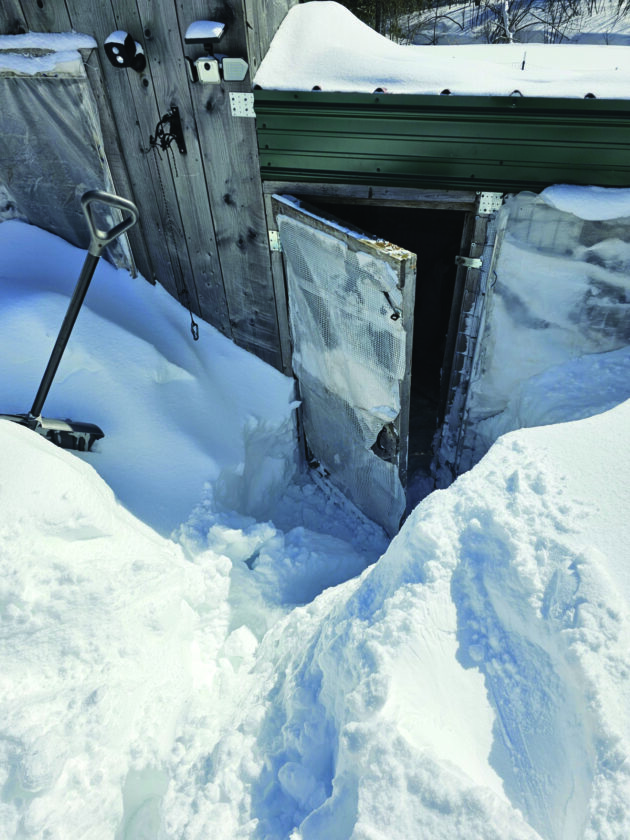
An outbuilding at Pileated Farms in Chatham, seen here snowed, in after the recent blizzard. (Photo courtesy of Olivia Kingery)
“We are makeshifting everything possible. We’
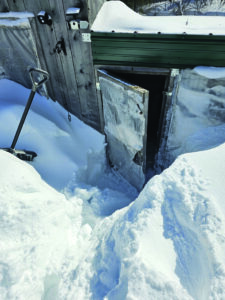
“We have not only gotten more snow than recent past years, but we got it early and then the snow pack stayed,” said Olivia Kingery of Pileated Farms, also in Chatham. Pileated Farms is a homestead farm which specializes in vegetables and chicken eggs, and Kingery also keeps sheep and goats. “Usually we get a few good thaws in January and/or February, but those reprieves never came. And after this drop, there isn’t much more room to put it all!”
While the volume of snow has been difficult, it isn’t all bad.
“Snow helps put nitrogen back in the soil, so the act of snowfall alone is beneficial for soil. And while I am a snow gal, this has been a lot. The difficulties will be having clear fields when needed to start planting. It obviously has the animals feeling pent up, but we will all survive.”
While the storm may have been stressful for the farmers, the animals have taken it in stride.
“They can handle the weather way better than most think. My chickens are in a covered run that had some snow blow in, but otherwise kept them out of the wind and room to move around,” said Kingery. “They get extra feed and treats, and they actually laid the most eggs in months during the peak of the blizzard. The goats and sheep get extra hay and bedding, and they don’t mind the weather at all. Now the challenge we all are facing is buried fences and wandering animals!”
Both Case and Kingery brought up the difficulties of a high snow pack when caring for animals; once the snow gets high enough, fences stop being effective.
“When the snow pack gets so high that animals can walk right over, there’s nothing we can do about it,” said Case. “Most of the animals, during the winter they slow down and don’t try to travel. If they have a warm bed, straw, food and water they wont leave that area. Even if we lose our fence, if the animals have what they need they wont venture out in this deep of snow. We can control where they go and what they do with the snowblower.”
Despite all of these difficulties, U.P. farmers keep going.
“There’s not that many places where you can still afford to buy land and farm,” said Case. “I have two daughters, and I do it for them. I want them to have an engaging and fun childhood, and they’re having a blast.
“In this horrible storm we had a mom who didn’t want to take care of her piglets, so now we have 6 piglets in the living room that we’re bottle-feeding. The girls love that. They get to be engaged in something few people get to do and see. Giving my daughters a good childhood is what motivates me.
“And producing quality food for my customers who appreciate what we do. Especially in Marquette; people really appreciate how hard we work and what we do, and they’re willing to pay a premium for that. Input costs in the U.P. are a huge burden for anyone, because we can’t grow our own feed and fodder. Those all cost more to get here. If someone wants to support us doing that locally, it costs a little bit more. And many people would rather support that than a CAFO operation out of Iowa, or out of another country.”
“Being able to steward the land and be stewarded in return by the land is the magic,” said Kingery. “I work to keep it safe, and I feel it reciprocates that action however possible. And the local food community up here is incredible. We all live in the middle of nowhere and there are countless people waiting on the wings to help support farmers in so many ways – that is what keeps me joyful and growing.”
Annie Lippert can be reached at 906-228-2500, ext. 550. Her email address is alippert@miningjournal.net.
Front Page News
U.P. farms hit hard by blizzard
UPAWS, Jacobetti staff brave blizzard to care for animals, veterans
Death of two-year-old boy remains under investigation in Ironwood
IRONWOOD — The Gogebic County Sheriff’s Office continues to investigate the death of a two-year-old boy from ...
Great Lakes are wasting a massive source of clean energy

Robbins Sports Surfaces supports NCAA Division I Men’s basketball programs