
Back from Alaska
Dr. Tim Hunt becomes the first person to compete, serve as race veterinarian and judge the Iditarod
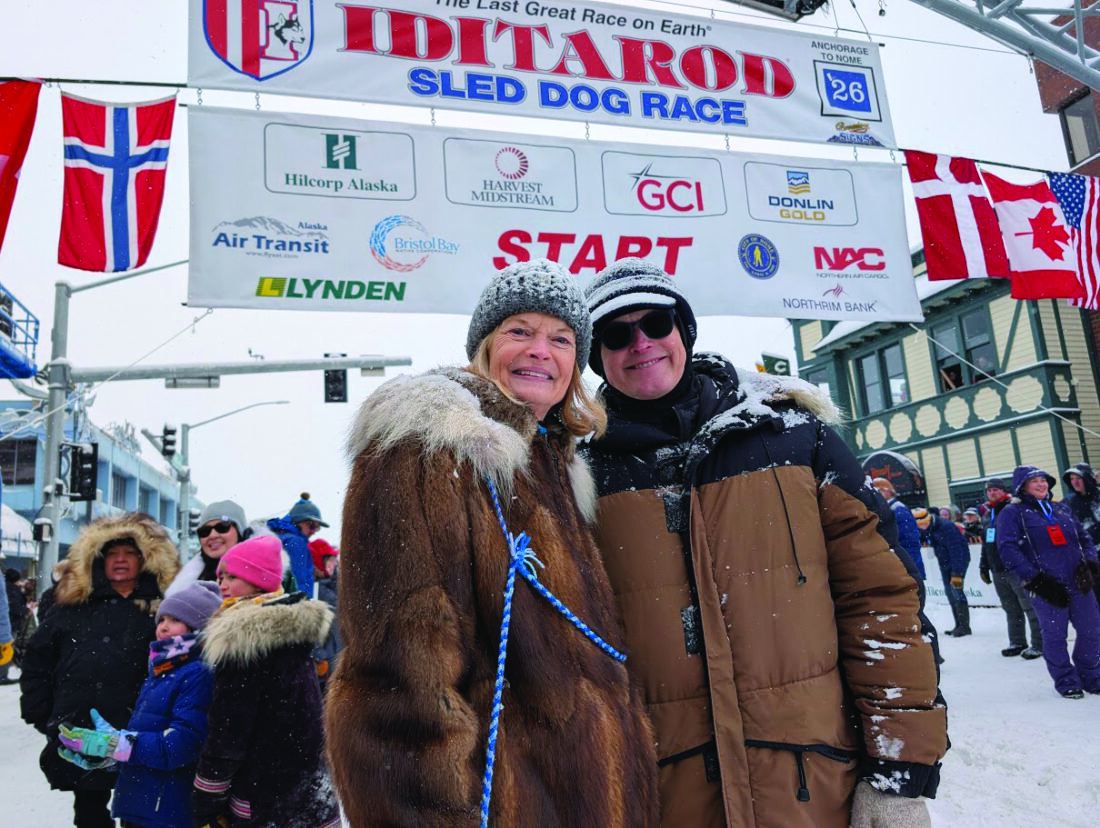
Dr. Tim Hunt is seen with Alaska U.S. Sen. Lisa Murkowski. (Photo courtesy of Dr. Tim Hunt)
-
- Dr. Tim Hunt is seen with Alaska U.S. Sen. Lisa Murkowski. (Photo courtesy of Dr. Tim Hunt)
-
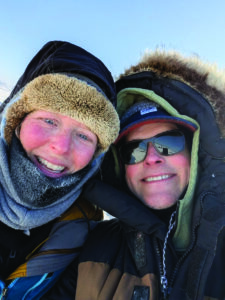
- Dr. Tim Hunt is pictured with one of the Iditarod mushers. (Photo courtesy of Dr. Tim Hunt)
-
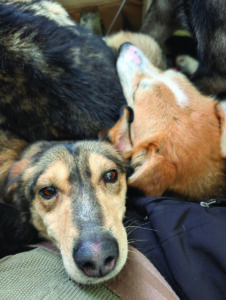
- Here are several of the sled dogs that pulled sleighs in the most recent Iditarod. (Photo courtesy of Dr. Tim Hunt)
“I worked the Rohn, McGrath, Ophir, Ruby and Unalakleet checkpoints,” said Hunt, who arrived back in Marquette on Saturday in time to perform surgery on someone’s pet the next day. “And I got to Nome to see some finishing.”
Much of Hunt’s time in Alaska was spent in small bush planes, traveling from checkpoint to checkpoint.
“Flying over Alaska is just amazing,” said Hunt. “There’s no better way to see Alaska than by a little plane.”
Accompanying him in the planes were often several dogs curled up together. On the trail it is common for dogs to be dropped from their teams for reasons like paw and shoulder injuries, or excess exhaustion. Because the Iditarod is such a long and remote trail, these dogs have to be airlifted out.
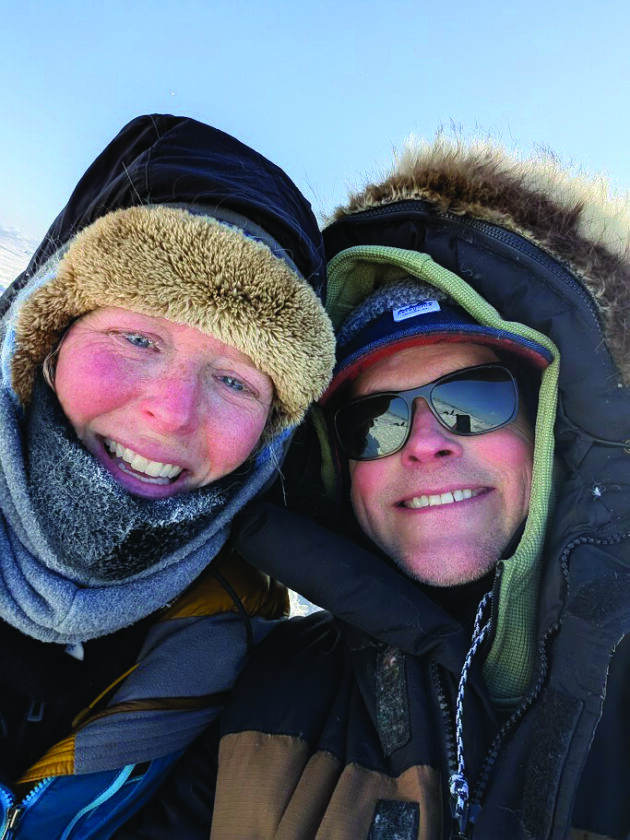
Dr. Tim Hunt is pictured with one of the Iditarod mushers. (Photo courtesy of Dr. Tim Hunt)
“Being a judge, I got to experience it from a different angle than before,” said Hunt. “Going from checkpoint to checkpoint (mushing) was much harder than anything else. Being a vet was probably the next hardest, where you have to work a lot, checking all the dogs out. Being a judge, you’re overseeing more. You just have a bit more responsibility in some aspects. But since it was the first race I’ve done for them up there, I worked with another vet or another judge for the first three checkpoints, and then I worked alone. I learned a lot from that.”
While judging may be less physically arduous than mushing or serving as a race vet, it comes with a lot of responsibility. A big part of judging is staging each checkpoint so that mushers can pick up supplies and rest on the trail.
“We have to make sure all (of the mushers’) bags are there and staged properly, so that when they come in they can find their stuff,” said Hunt. “We usually bring it to them, along with straw, buckets of water and heat. Heat is something that doesn’t freeze in minus 40 degrees, and that’s what they use to fuel their cookers. That’s to boil water, to pour on their frozen meat to thaw and then feed it out as a stew.”
A photo Hunt took showed all of the different foods that sled dogs eat during the race laid out on the ground. Frozen pork belly, beaver meat, chicken quarters, beef, various types of fish, horse meat and cat food were only a few of the items on offer.
“You can’t just feed dry,” said Hunt. “Meat is a huge component of dogs that race at this level.”
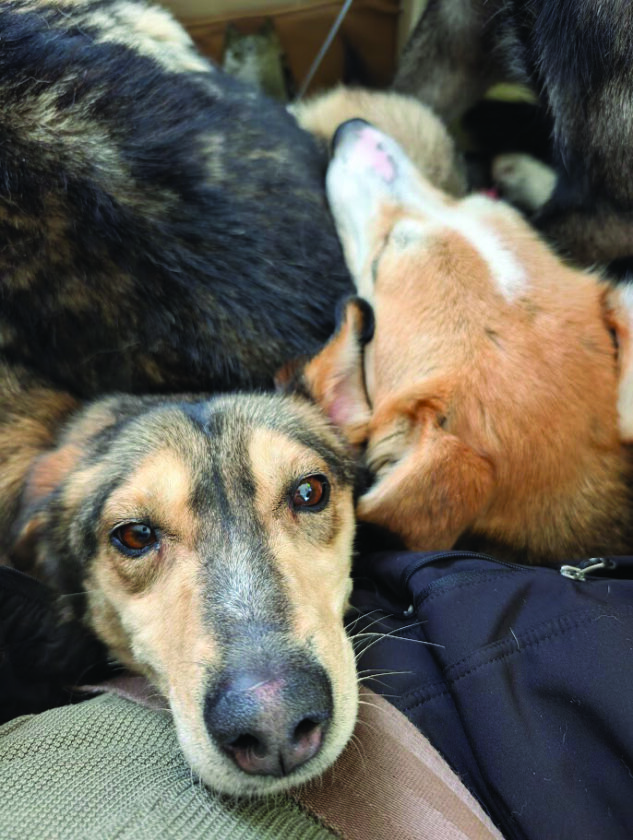
Here are several of the sled dogs that pulled sleighs in the most recent Iditarod. (Photo courtesy of Dr. Tim Hunt)
Even though Hunt wasn’t racing himself, he experienced some tough conditions. Water had to be fetched from frozen rivers, necessitating him cutting holes into the ice, fetching the water in buckets and boiling it after hiking back to the checkpoint.
“It got very cold, and you don’t have your propane tanks inside of the tents, so (the tanks) usually froze around 2 in the morning,” said Hunt. “It was 35 below. You’d wake up because it was so cold.”
Some nights, Hunt was sleeping outside at 55 degrees below zero.
“With the right gear it isn’t so bad,” said Hunt. “It’s not fun, though.”
Another role as judge was checking mushers’ gear, and helping them determine whether they were safe to proceed along the race route.
“There were certain places you had to make sure their bags were checked, making sure they had their gear, but there’s a lot of expectation that they have it together,” said Hunt. “A lot of the judges’ job is to make sure that people that might not be as experienced get advice on how to proceed or not. So they can kind of learn on the fly, versus someone that’s done the race thirty times.”
At one point in the race, judges had to make the call to hold mushing teams back during adverse weather conditions.
“There was a large storm at the end, and it came through what’s called the blowhole, just before safety,” said Hunt. ‘Safety’ is the last Iditarod checkpoint, located 22 miles from the finish line in Nome.
“The wind all comes down to this funnel point, and it can be 60 to 80 miles an hour steady. You can’t get through it. It’s a really narrow, 500-yard spot of intense wind. If the wind comes a certain way, they know it’s going to create this blowhole thing and they’ll shut the race down, which they did, because the last eight people weren’t experienced and they wanted them to finish rather than go through something that could be dangerous for them and their dogs. So they waited it out, and they sat for 10 or 12 hours. The blow went by, and they then all finished. Which is great.”
Weather conditions have a huge impact on a sport like mushing. Apart from the storm delays, teams moved slowly in general this year due to snowpack levels.
“This year, the race had a lot of snow, so despite it being very cold, typically 15 to 40 below for the majority of the trail, the teams didn’t move super fast,” said Hunt. “That typically leads to fewer injuries. Typically in the gorge, where there’s a big drop in the Alaska Range, they can go too fast and end up getting injured. This year, because the snow was deeper and it was slower, the teams went down the gorge slower, which resulted in very few injuries. When I was in Rohn we had maybe 6 or 8 dogs get dropped, where typically you might see 30 due to shoulder injuries from going too fast and mushers losing some control. This year that wasn’t the case, so in the end it led to larger team sizes by the coast, which led to healthier team sizes at the finish.”
Despite being present in a judging capacity and the general trend of fewer injuries, Hunt did find himself working double duty as a veterinarian.
“I did have some vet opportunities,” said Hunt. “We had some pneumonia cases going through, and one got really bad, which we had to address.”
The dog in question was placed on oxygen and recovered. Hunt also ended up performing some human first aid; applying muktuk, or whale blubber, to a man’s frostbitten nose to heal it overnight.
Despite the difficulties, Hunt has already signed up to judge again next year. “You’re out there for ten, twelve days, and don’t have to answer the phone. That’s pretty cool.”
Annie Lippert can be reached at 906-228-2500, ext. 550. Her email address is alippert@miningjournal.net.
Front Page News
Cinder Pond Marina opening delayed due to storm damage
Former state rep Sara Cambensy announces run for state senate
Back from Alaska
Swajanen announces campaign launch event for Marquette County District Court bench
Republicans float property tax proposals
LANSING – House Speaker Matt Hall says he wants to reduce property taxes to make housing more affordable. It is ...