Store safely reports positive results in the U.P., seeks to recruit more families
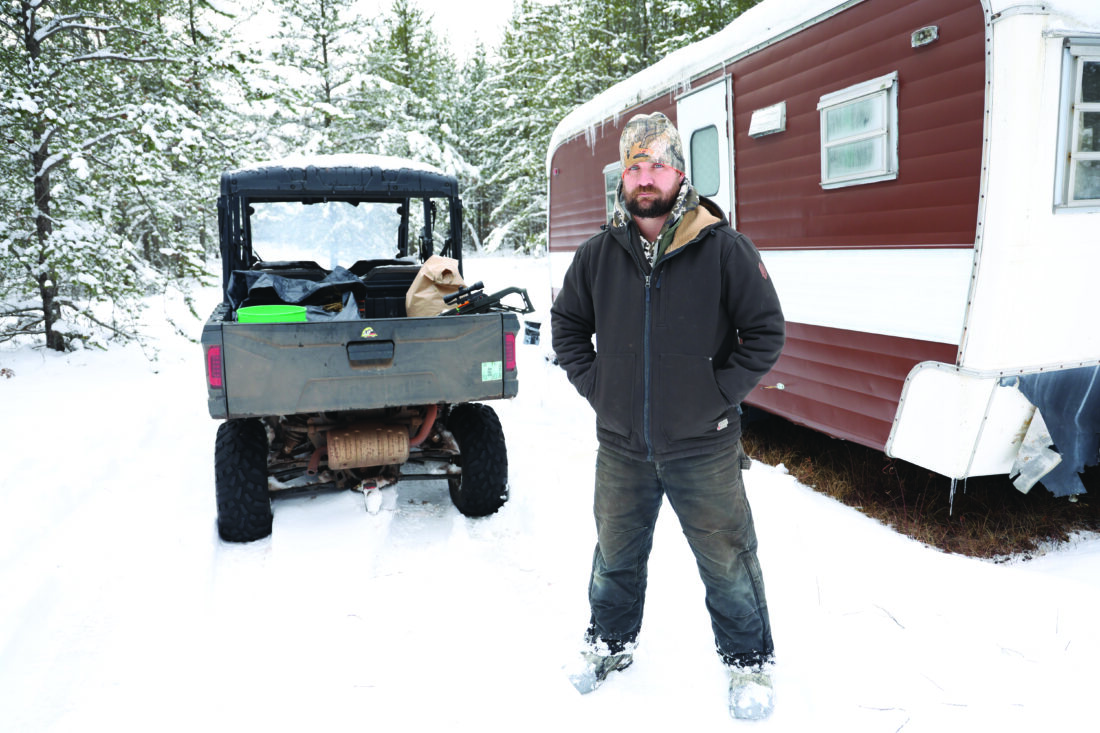
Outdoorsman Dustin Milner, a Store Safely participant, is seen in front of his hunting camper near Gwinn. (Photo courtesy of Jeremy Marble)
MARQUETTE COUNTY — Cynthia Ewell Foster, a University of Michigan clinical professor of psychiatry, began piloting a program in Marquette several years ago to encourage secure storage of firearms in partnership with Sarah Derwin of the Marquette County Health Department, as well as Cheryl King and Christina Magness, a team of collaborators from the University of Michigan’s institute for Firearm Injury Prevention and an advisory board of 35 community members.
The program is called Store Safely and involves a five-step online program that provides “tailored tools and resources so that families can help prevent injuries and firearm misuse among children and teens in rural areas,” said Greta Guest, State Communications Manager for the University of Michigan.
“Research has found that children and teens from rural communities are at an elevated risk for unintentional injury and suicide caused by firearms,” said Guest. “Firearm injury is the leading cause of death for youth in America.”
Marquette County reported 31 suicide-related deaths caused by firearms from 2017 to 2020. The Upper Peninsula has some of the highest rates of suicide in the state, driven largely by firearm suicides.
“Our initial work to develop Store Safely focused on all of Marquette County, in partnership with Sarah Derwin, public health educator at Marquette County Health Department and the MCSPA (Marquette County Suicide Prevention Alliance),” said Ewell Foster. “Sarah (Derwin) and I have been working together since 2016 when MCHD received a SAMHSA grant to implement a comprehensive public health approach to suicide prevention for a rural community. We are currently doing a larger scale evaluation of Store Safely with families across the entire Upper Peninsula.”

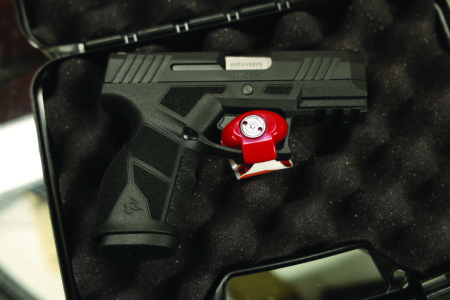
Pictured is a pistol with trigger lock. (Photo courtesy of Jeremy Marble)
Ewell Foster said the risk for children of death by firearm in rural areas is twice that of suburban and urban kids for a number of reasons–including that firearms are more available in rural homes, and that kids are trained in safe handling and have the expertise to use them.
“It becomes more of an available means for kids when they’re not doing well,” Foster said. “And so I think that’s one of the things that our project Store Safely is really meant to focus on is making sure that when kids aren’t doing well, that they don’t have easy access to such a lethal way to end their lives.”
Health care providers often offer well-meaning messages that the safest home for a child is one without guns.
“And I understand why they’re saying that. The data is actually pretty clear that when there are firearms in the home, there is elevated risk empirically,” Ewell Foster said. “But for families that take safe handling really seriously, for families that take safe storage really seriously, messages like that don’t land well.”
Early research conducted by Ewell Foster and Derwin found that, while firearm safety was a strong community value, only 12% of respondents said that secure storage was “a primary component of firearm safety.” Some respondents, for example, reported keeping firearms on their nightstands for protection or expressed concerns about the need for quick access to firearms in an emergency.
“The sense that growing up with and respecting firearms would protect youth from injury or death was pervasive among participants,” said Guest.
“Just having been born and raised here, I know the importance of hunting and firearms and gun ownership,” Derwin said. “And that’s where the collaboration with the University of Michigan helped us create an intervention that really speaks to our community.”
The initial pilot research for the program involving 43 Marquette County families has had positive results.
“We have been so encouraged at how positively families have responded to the program,” said Ewell-Foster. “It is clear that firearm safety is a key value in the U.P. Many families have shared that they appreciate the way the program was intentionally designed to reflect U.P. values and culture.”
98% of enrolled families reported engaging with all intervention components, 86% completed a home firearm safety checklist, and 40% reported making a change to their firearm storage, such as purchasing gun locks, safes or lockboxes, separating ammunition from weapons, reviewing the safety of current storage practices and relocating firearms to a location harder for children to access.
-
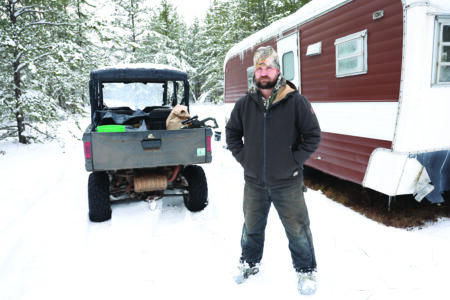
- Outdoorsman Dustin Milner, a Store Safely participant, is seen in front of his hunting camper near Gwinn. (Photo courtesy of Jeremy Marble)
-
- Pictured is a pistol with trigger lock. (Photo courtesy of Jeremy Marble)
Thanks to funds from the Centers for Disease Control, Store Safely is expanding and looking to recruit 600 additional families in the Upper Peninsula to participate in the intervention. To qualify, families must live in the U.P., have a child under the age of 18 living at home and have at least one firearm on their home or property. Families can earn up to $170 for participating in the current evaluation.
“Learning about gun safety and safe handling is important,” said Ewell Foster. “In fact, many of the families we have worked with have their children enrolled in hunter’s safety programs or describe the safe handling training their children have received from grandparents or family elders. However, for very young children, secure storage of firearms at home (locking the firearm and keeping the ammunition separate and also locked) is the best way to prevent unintentional injuries.
“And for teens, we want to ensure that if a teen is distressed, that they don’t have easy access to firearms. We are seeing concerning increases in teen firearm suicides in rural areas across the US and in too many cases, the firearms used in teen suicides come from the family or extended family home. Secure storage puts time and distance between a firearm and a youth who is experiencing mental health concerns and that extra time can allow us to get them the help they might need.”
Information on how to enroll is available by emailing storesafely@med.umich.edu.
“We are so grateful to all of the UP families who have helped us to design this program and who are currently helping us to ensure that it is as effective as possible in enhancing safety for rural kids and teens,” said Ewell-Foster.
Annie Lippert can be reached at 906-228-2500, ext. 550. Her email address is alippert@miningjournal.net.
Front Page News

Nature’s magic at the lakeshore
Urgent need!
MARQUETTE — The U.P. Regional Blood Center in Marquette is experiencing a critical need for blood donations of ...
Store safely reports positive results in the U.P., seeks to recruit more families
Here we go again
Fox Motors announces key leadership realignment