
SALAMANDER SAFETY
It’s going to improve under work by the Superior Watershed Partnership & Land Conservancy
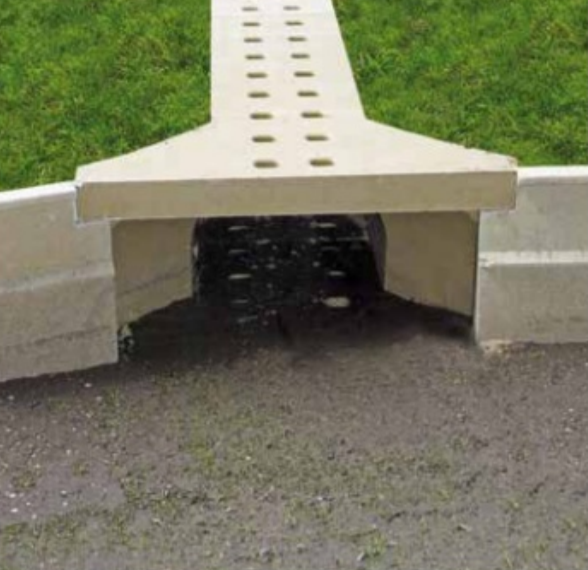
A completed salamander safety tunnel is seen. (Photo courtesy of the Superior Watershed Partnership & Land Conservancy)

This is an example of the blue spotted salamander.(Photo courtesy of the Superior Watershed Partnership & Land Conservancy)
A completed salamander safety tunnel is seen. (Photo courtesy of the Superior Watershed Partnership & Land Conservancy)
This is an example of the blue spotted salamander.(Photo courtesy of the Superior Watershed Partnership & Land Conservancy)
Trending
MARQUETTE -- A Michigan Department of Natural Resources Wildlife Habitat grant of nearly $30,000 has been awarded to the Superior Watershed Partnership and Land Conservancy which will, in cooperation with the city of Marquette, build specialized amphibian crossing tunnels at Presque Isle Park.
This will be in support of the blue spotted salamander, which crosses a park street in large numbers during its annual spring migration to nearby wetland breeding grounds.
"Installing these innovative wildlife crossings is another important project to mitigate the unintended potential impacts of foot traffic, car traffic and bike traffic," said SWP education specialist Kathleen Henry. "We want to do everything possible to make their annual migration a continued success."
The annual migration takes place between late winter and early spring when thousands of salamanders make their way to the pools at Presque Isle Park.
Oftentimes, the critters must traverse sections of paved roads, an obvious hazard dur to passing traffic.
To combat this, the SWP, the city of Marquette Parks and Recreation Department and Northern Michigan University's Department of Biology close sections of road to help facilitate the safety of the salamanders. The project began nearly four years ago in the spring of 2020.
One year earlier, cars were reportedly killing more than 400 blue spotted salamanders, said Tyler Penrod, SWP land conservancy and program manager for the Great Lakes Climate Corps.
"After SWP partnered with the city of Marquette to begin closing the road in 2020, only three salamander fatalities were observed," he said.
As the road closures prove to be a viable solution to decreasing the fatalities of these salamanders, now a new threat has arisen. With the rise of social media attention on this migration, it has led to an increase in nighttime visits by residents and tourists alike to observe the amphibians.
On some nights, hundreds of people have come to the park. With this increase, foot traffic has overtaken car traffic as the leading cause of salamander deaths and now poses the most concern.
Working with the city of Marquette Parks and Recreation Department, the SWP will determine the final locations for these migration tunnels.
They will begin construction, though it's unclear when it will be complete.
Along with helping to mitigate the fatalities of the salamanders, this project also helps protect and connect wetland and forest ecosystems that many species rely on.
Antonio Anderson can be reached at 906-228-2500, ext. 550.