
Carbon Neutrality Plan finalized
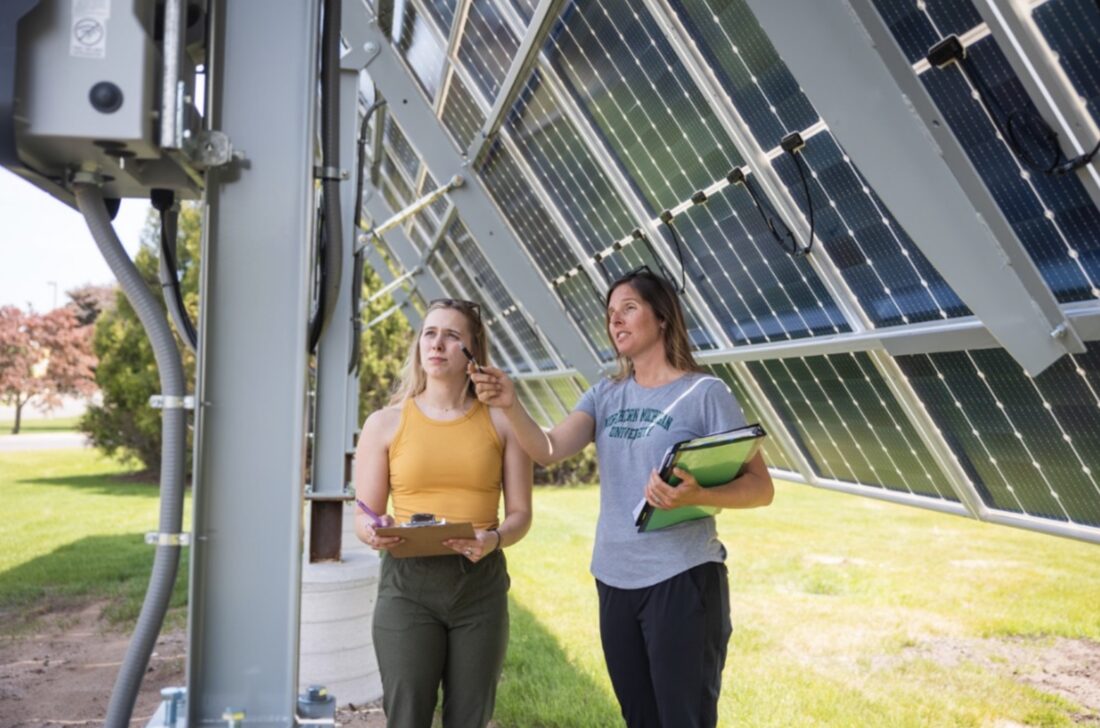
Jes Thompson, right, and an unidentified Northern Michigan University student are seen by the solar array installed on the Marquette campus. (Photo courtesy of NMU)
MARQUETTE — Northern Michigan University’s Path to Carbon Neutrality by 2050 plan has been finalized, including a new commitment to sustainable investing.
While NMU has already reduced its carbon footprint by more than 30% since 2010 and has one of the smallest footprints among Michigan’s public universities, it is striving to decarbonize the campus.
“The plan is just the first step in an exciting journey,” said Jes Thompson, NMU’s newly appointed assistant vice president for sustainability and member of the NMU Carbon Neutrality Task Force. “We know where we’re heading, and now we need to figure out how to get there. The path to carbon neutrality will require continued creativity, innovation and monitoring.”
As one of the leading greenhouse gases contributes to climate change, time is of the essence. The plan outlines strategies for acheiving the 2050 goal, including targeted reductions in carbon emissions for each decade along the way: reducing emissions 25% by 2030, 50% by 2040 and eliminate remaining emissions by 2050.
Of the five key strategies for acheiving the goal — reduced energy use, optimized infrastructure, maximized efficiency of existing buildings, increased carbon sequestration and renewable energy investments — the finalized plan includes prominent changes to NMU’s investment portfolio.
According to the finalized plan, “Northern Michigan University is making a commitment to not invest in any stand alone fossil fuel investment endeavors. Currently, NMU does not actively invest in fossil fuels; in fact, less than 5% of the university’s investments include fossil fuels. In December 2023, the university’s Board of Trustees approved an investment policy that exemplifies this commitment. The Endowment Fund will divest from direct or indirect ownership in companies involved in the extraction, production and distribution of fossil fuels by 2028.”
Thompson predicted that their divestment in fossil fuels could be nearly halfway completed by nest January. In addition to divesting, the NMU Board of Trustees agreed to increase sustainability-related investments by up to 15%. The move expands on related initiatives, such as creating Thompson’s new position and enhancing trustee support for the EcoReps student organization.
Alexandria Bournonville can be reached at 906-228-2500, ext. 506. Her email address is abournonville@miningjournal.net.
Front Page News

Delta County woman arrested after biting state trooper during animal neglect investigation

3 fans, 60 Super Bowls: This might be their last time going to the big game
At-fault driver ID’d in Marquette hit and run
MARQUETTE — The Michigan State Police Negaunee post have identified the at-fault driver in a hit and run accident ...

Ex-governors urge civility: Minneapolis ‘could be any place in Michigan’
Homeland Security shutdown grows more likely as Republicans rebuff Democrats’ ICE demands
WASHINGTON — Senate Majority Leader John Thune said Thursday that demands made by Democrats for new restrictions ...
LoveMarq Church to offer sober Super Bowl celebration
MARQUETTE — At 5:30 p.m. on Sunday, LoveMarq Church at 728 West Kaye Avenue will be hosting its fourth annual ...