
Gone but not forgotten
Dead River Basin’s 20th century Finnish population
Trending
NEGAUNEE -- One woman who grew up in Negaunee recalls her dad and grandfather building a Finnish log cabin in the 1940s -- which still stands to this day.
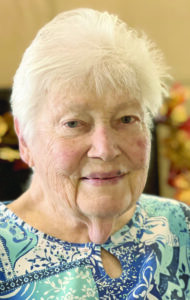
Jean Bosio, born Jean Mantela, didn't always live in Arizona. She was born in 1936 in Negaunee to parents Arne and Lempi Mantela -- both children of Finnish immigrants.
"Most Finnish immigrants would fit that model, which is people of my mom's age, it would have been their grandparents. There were about 300,000 Finns that came from Finland and they all came, generally speaking, (in the) late 1800s to the early 1900s," said Glenn Bosio, Jean's son.
Her parents spent their 1935 honeymoon at a cabin belonging to a fellow Finnish family, the Siltalas, placed along the Dead River Basin. Aside from the moon, the only other source of light was kerosene lamps.
"It would reflect on the water," Jean described. "Oh my goodness. It was a sight to behold … the moonlight, it's beautiful. That little lake was protected down there and it would be so calm sometimes."
Five years later, Lempi and Arne would return to the river in order to clear land and build a camp of their own.
For $50 a year, the Mantelas leased the land from local company Longyear.
Arne enlisted the help of Lempi's father, John Iskola, a Finnish man who immigrated to the United States from Finland in 1905. John was a skilled wood craftsman, very knowledgeable in the art of building a solid Finnish-style cabin.
John immigrated to the U.P. in order to avoid Russia's compulsory draft of Finnish men in their war against Japan. He did so by leaving a goodbye note to his parents and left in the middle of the night.
John, Arne and Lempi retrieved every single log their cabin was built from the Dead River after the construction of the McClure Dam.
"They flooded (the river) so all the trees died," Glenn said. "They went and sawed the trees down, dragged them up to the shore and peeled off all the bark…. They started row by row and built a two-story cabin."
According to Jean, the first thing many Finns in the area would build is a sauna. Since the Mantelas already had a small tool shed at their Negaunee residence, they simply hauled it to the river and converted it into a sauna, which is also still standing today.
Glenn said the sauna provided a place for them to sleep instead of having to drive all the way back to Negaunee on bumpy roads. He said, "They could just put a little mattress or something down on the floor and they could actually sleep and then work the next morning."
"When they got you working all day long, hauling logs and stuff, it was sweaty," Glenn said. "So they light up a little fireplace there and take a sauna. They'd feel better the next day … and they could jump in the lake and refresh afterwards, because remember … that jumping in the lake is like giving yourself a baptism over again, that feeling of rebirth and renewal."
He described the sauna as the cornerstone of Finnish culture, as many Yoopers are already aware.
The Finnish technique for building these structures required logs flatly squared with dovetail corners that fit together perfectly without the use of nails. There was also no use for chinking -- sealant material used to fill the gaps between the logs in a log cabin -- found in many American-style cabins.
Broad axes were used to fashion the square shape of the log. They would also add a concave edge on each log to make a V-shape between each row to repel water and to prevent rotting.
In addition to Arne Mantela and John Iskola's cabin, Arne's father -- Gusi Mantela -- also built a cabin on the Dead River with the same logs retrieved from the flooded water.
"That cabin no longer exists," Glenn said. "They didn't have John Iskola's expertise."
While all of this construction was going on, 5-year-old Jean was responsible for gathering berries.
"We kept them well fed," Jean said.
After the cabin was built, the Mantelas enjoyed many nights on the river surrounded by other Finnish families and immigrants. Glenn claims that "almost every camp that was built on that land had a Finnish name attached to it."
Jean recalled days spent together playing cards, drinking coffee and talking for hours in both Finnish and English as they played Finnish music on their Victrolas. Her neighbors also prepared a traditional Finnish snack to go along with their coffee: pulla, a cardamom-infused bread.
The Mantela's Victrola, featuring the wooden needle, is currently at Jean's residence in Arizona.
"The camps all had primitive paths, you could walk (to) the camps," Glenn said. "The pople who trampled that path were the homeowners, so you could find your way to have that coffee. We thought that was always kind of neat."
Jean even has other memories of walking with her father to eat dinner at a lumberjack camp, going fishing with her grandfather on the Dead River, playing with her childhood friends, trips to the Vista Theater in Negaunee and the time she was almost attacked by a bear.
"We had a variety of animals come visit us every night," Jean said. "We were raspberry picking one summer. It was (on) one of these logging camps … the five of us went out there and we all had a bucket and we started filling it up and all of a sudden, I saw my grandpa running down the road. I said, 'Where are you going?' He said, 'Put your bucket down on the road. We need to get out of here quick!' I said 'Why?' He said, 'There's a bear coming after me!' We listened to him, we put the bucket down and (the bear) had all our berries."
These memories, and many more, took place on the Dead River Basin where many other cabins have since rotted away, but John Iskola's craftsmanship holds strong, even in 2023.
Alexandria Bournonville can be reached at 906-228-2500, ext. 506. Her email address is abournonville@miningjournal.net.