
Putting down roots
Marquette City Community Gardens always popular produce option
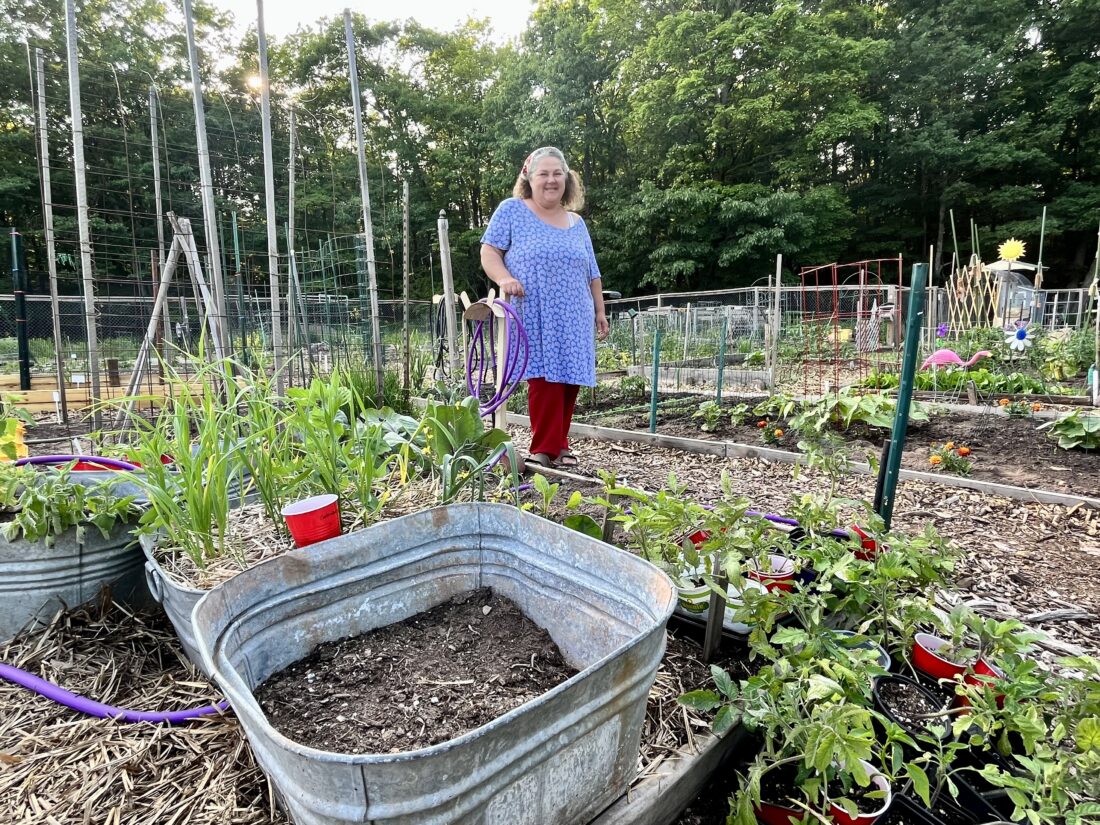
Marquette City Community Gardens Board President Tina Taylor displays her garden for the 2023 growing season. (Journal photo by Alexandria Bournonville)

City resident and community gardener Todd Leigh stands with his garden. (Journal photo by Alexandria Bournonville)
Marquette City Community Gardens Board President Tina Taylor displays her garden for the 2023 growing season. (Journal photo by Alexandria Bournonville)
City resident and community gardener Todd Leigh stands with his garden. (Journal photo by Alexandria Bournonville)
Trending
MARQUETTE -- As the summer season ramps up, many things are growing in Marquette and one group of city residents is focused on sustainability.
Presque Isle, as well as Park Cemetery, is home to Marquette City Community Gardens. Each year, the beds await their stewards to return to the land for the U.P.'s short growing season.
Formed in 2003, the Marquette Community Gardens were funded by the Marquette Rotary Breakfast Club. Its two locations house varying-sized garden beds that can be used for a small fee -- $15 or $25, depending on its size.
Beds are rented in a series of sign-up periods. Those who are already members in good standing of the community gardens have the right to re-rent their beds first. Then gardeners have the option to switch beds. The next period is set aside for those on the waiting list and the final is open to the general public.
"I have been the person responsible for signing people up for garden rentals ... since COVID hit ... I can attest to the fact that it is in high demand. I think the further we got into COVID and people's food insecurities became more prevalent, the fact that everyone wanted a garden space became an issue. We literally already have a waiting list of 17 people for next season and we haven't really even started this season," Marquette Community Gardens Board President Tina Taylor said.
One of her goals as president is to expand the community garden project.
The general upkeep of the gardens are taken care of by the gardeners themselves, President Taylor explained.
"We ask that you weed around a one-foot perimeter around your bed and from there you're obligated to do one ... chore per growing season and it can be anything from weeding a public area ... refinishing the old picnic table...helping repair the rabbit fencing ... moving wood chips, different things like that."
One couple, Grant and Kathy Soltwisch, have been working at the community gardens for over a decade. A blue rag is placed near the garden of someone who'll be out of town, Grant Soltwisch explained. That lets the gardener's neighbors know they need to keep an eye out for wilting plants and extra weeds in their beds.
"Our yard is very shady. Very hard to get anything decent to grow, but I'm doing decent there on potatoes now," Kathy Soltswisch said.
"Fifteen dollars a year and the city provides the water? How can you beat it?"
Dan Weingarten, in charge of communications, added, "Everybody does volunteer work and keeps the garden running ... it's a really nice place for people who don't have a sunny spot at their house, or if they live in an apartment. We have a lot of college students, we have a lot of retirees."
Inefficient growing conditions is the case for one couple, Eric and Pam Marcott, whose house is shrouded with shade, just like the Soltswisches.
The gardens even provide for the larger Marquette community.
"We do have what we call the giving beds," Taylor said. "Any of the produce that is grown in those beds will be distributed to food pantries and some of the community places where people might be in need of good vegetables."
Not only do the gardens provide those in need with food, but they also teach the gardeners, old and young, how to become more self-sufficient. Taylor cites this as an important lesson, since "our climate does produce emergency situations sometimes."
With so many benefits to the garden beds in Marquette, it's hard to see a downside. Perhaps the only problem with the gardens seems to be the chipmunks.
As Kathy Soltwisch said, "As soon as there is a tomato that begins to be even a little bit pink, the chippies get it!"
Alexandria Bournonville can be reached at 906-228-2500, ext. 506. Her email address is abournonville@miningjournal.net.