
Snow safety
Winter hiking tips, precautions shared
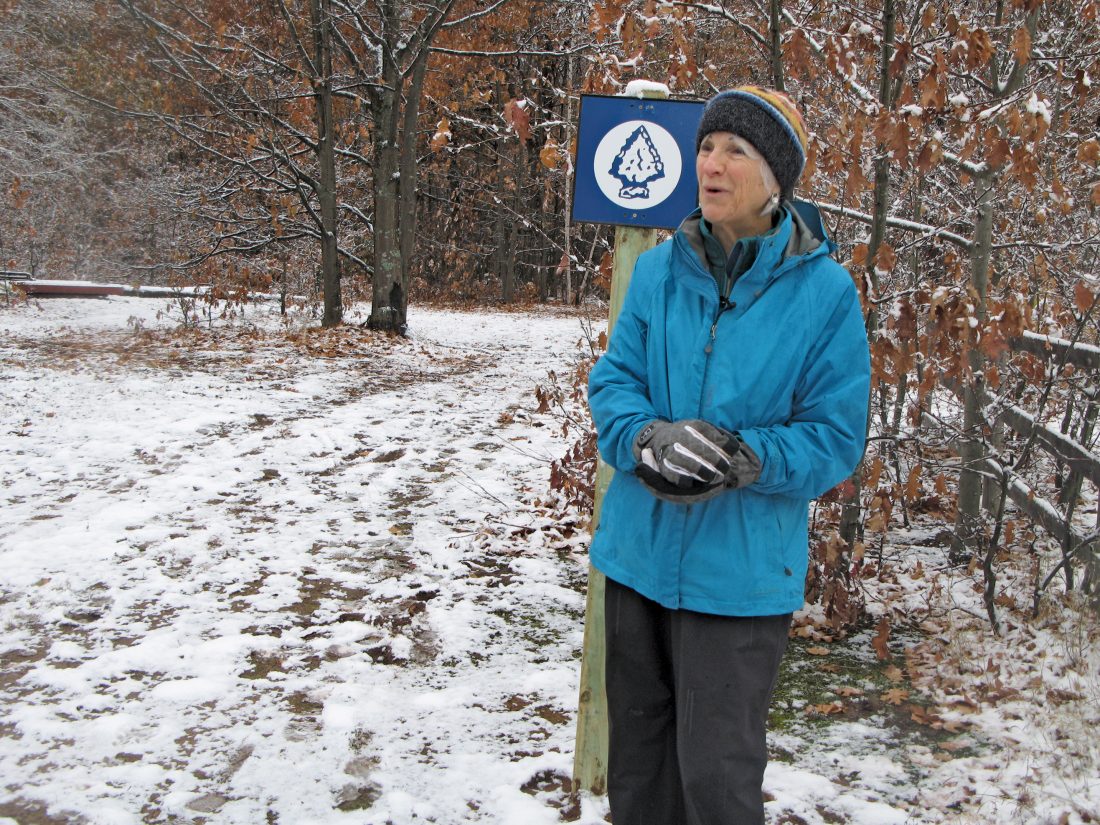
In the photo at left, Lucy Wilcox, a member of Powell Township Parks and Recreation, stands at the beginning of a connector trail that allows Powell Township School students, as well as the community, to connect to the Big Bay Pathway. (Journal file photo)
MARQUETTE — If you were to ask someone what they think of when they think of the Upper Peninsula, you can be pretty safe in assuming that the region’s cold, snowy winters and wide array of outdoor activities would be two of the top answers.
Throughout the U.P.’s 15 counties, there are many opportunities for outdoor recreation. The miles and miles of bike trails in the Keweenaw Peninsula, the sandy beaches of Marquette and the campgrounds of the Porcupine Mountains are just a few of the options that U.P. residents have for outdoor fun.
However, the frigid, snowy winter season can cause many people to stay indoors for months. Being cooped up indoors without the ability to exercise in the fresh air can wreak havoc on physical, mental and emotional well-being.
While there are plenty of things to do during the wintertime, many of these activities can be cost prohibitive for some. Pastimes like snowmobiling, skiing and fat tire biking can make winter bearable for a lot of people, but those activities can require a considerable financial investment to get started.
That is why hiking can be the ideal winter activity. It’s cheap, fun and allows people to enjoy all that nature has to offer.
-
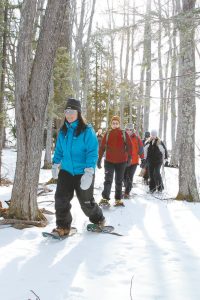
- In the photo at right, snowshoe instructor Sue Krakowski leads a group of women along a trail through the woods during the Becoming an Outdoors Woman event at Bay Cliff Health Camp in Big Bay. The North Country Trail Association is spreading the word about how to stay safe during a winter hike. (Journal file photo)
-
- In the photo at left, Lucy Wilcox, a member of Powell Township Parks and Recreation, stands at the beginning of a connector trail that allows Powell Township School students, as well as the community, to connect to the Big Bay Pathway. (Journal file photo)
-
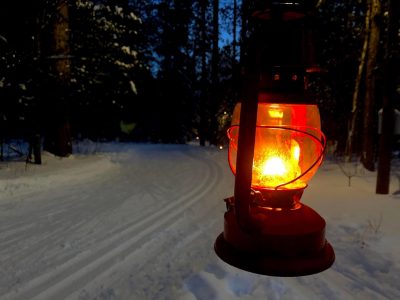
- This is how the Lantern-Lit Ski at Blueberry Ridge Pathway in Sands Township looked on Friday night. The trail was lined with lanterns to put the area in a different “light.” (Photo courtesy of Kristi Evans)
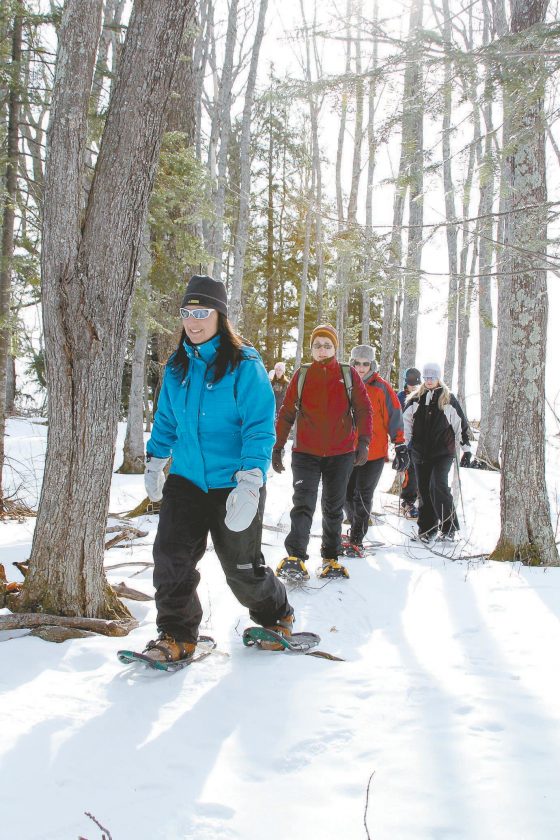
In the photo at right, snowshoe instructor Sue Krakowski leads a group of women along a trail through the woods during the Becoming an Outdoors Woman event at Bay Cliff Health Camp in Big Bay. The North Country Trail Association is spreading the word about how to stay safe during a winter hike. (Journal file photo)
Hiking in the U.P. during the winter can be beautiful. There are many advantages to being in nature during this time of year. First of all, it’s quiet. During the summer, many locations — and parking spots — are filled by other hikers, bikers and runners. Going during the winter months allows people to enjoy the natural beauty with minimal distractions.
Second, people get to view familiar landscapes and locations in an entirely new light. Ice formations near bodies of water can be as beautiful as any work of art. Familiar views look entirely different covered in sheets of snow glistening in the sun.
Now, the downside. Hiking in the U.P. during the winter can be extremely dangerous. Subzero wind chills and heavy snows can be a deadly mixture. Getting lost in the woods when the snow is heavy can happen to even the most experienced hikers and being exposed to extreme low temperatures can lead to dire outcomes.
However, that doesn’t mean that people have to rule out winter hiking. It is just a matter of taking precautions. Keeping safe in the woods doesn’t have to be difficult.
The North Country Trail Association has a guide on its website that gives six tips for staying safe during a winter hike.
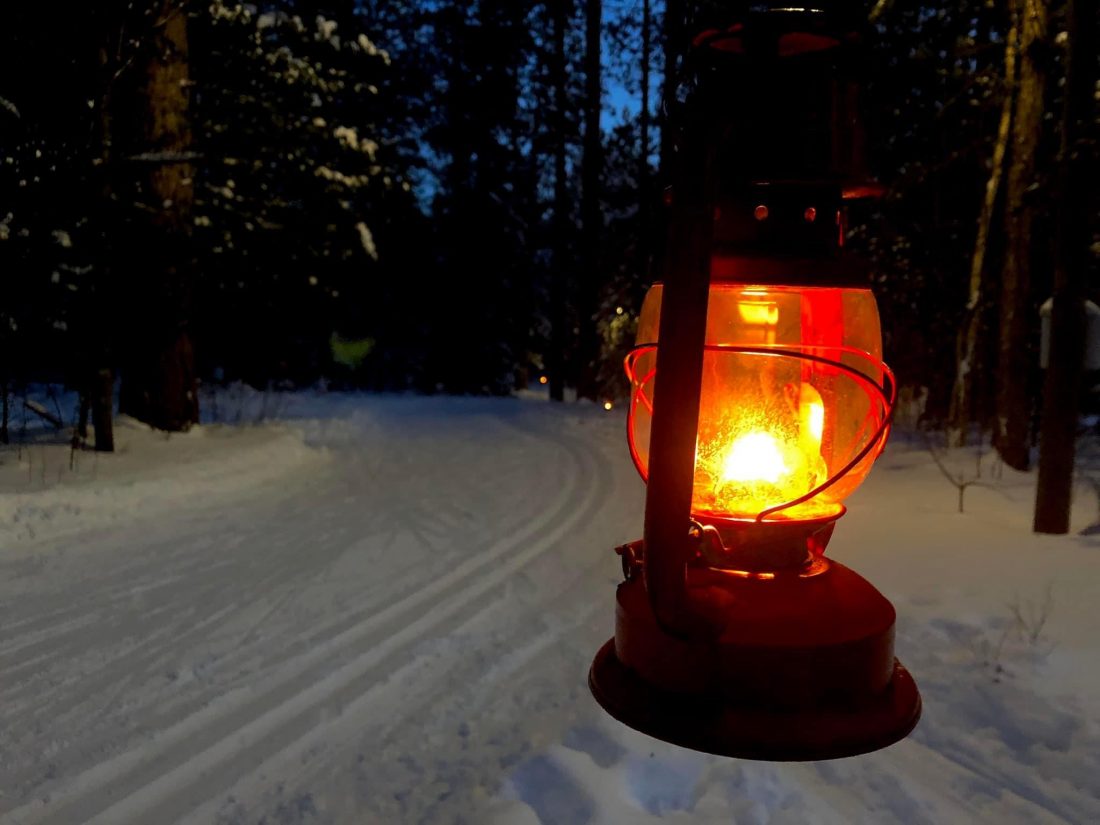
This is how the Lantern-Lit Ski at Blueberry Ridge Pathway in Sands Township looked on Friday night. The trail was lined with lanterns to put the area in a different “light.” (Photo courtesy of Kristi Evans)
≤ Never go alone and make sure that somebody knows where you are going. Losing your way in the woods can be dangerous no matter what time of year it is and losing your way in winter can turn deadly in a very short amount of time. That is why it is important for hikers to make sure they aren’t alone or that somebody knows where they are and what their route is.
≤ Beware of reduced visibility. Heavy snow can come without warning. A good way to mitigate this danger is for hikers to keep a light, like a headlamp, on them at all times. It’s also important to bring a map and other navigation tools.
≤ Carry the essentials. When out in the wilderness, it is best to expect the unexpected. Bringing essentials like water, food, a phone or GPS, extra layers of clothing, a first aid kit and a multi-use knife tool can help keep hikers safe at any time of year.
≤ Wear proper footwear. Waterproof footwear with a deep tread are an essential part of safe winter hiking. Keeping feet warm and dry is one of the most important parts of winter safety. Hikers will also need the tread for grip on the slippery and icy trails. There are additional ways to get traction for boots, products like Yaktrax give additional grip and allow hikers to walk in icy conditions without slipping.
≤ Know the signs of hypothermia. When people heavily exert themselves on a hike, they can begin to sweat, which can be extremely dangerous. If a person starts to feel sleepy, confused, clumsy or is having a hard time breathing, it is time to get to a warm, safe place.
≤ Stay hydrated. It can be tempting to drink something hot like coffee or tea when out in the cold, but those beverages can be dehydrating. Hikers can begin to sweat during exercise, so it is vital to stay hydrated.
Following those six steps can help people to enjoy the great outdoors even during a U.P. winter.
Visit www.northcountrytrail.org.
Randy Crouch can be reached at 906-228-2500, ext. 242. His email address is rcrouch@miningjournal.net.
Front Page News
Trump says US will blockade Iran in the Strait of Hormuz and will charge ships for safe passage
DUBAI, United Arab Emirates — U.S. President Donald Trump said Monday that the United States is "reinstating" a ...
It’s hot out there!
State: Watch for spotted lanternfly this summer, squish it, report it
LSSU receives capital outlay investment to transform CASET building
Plan would allow Lower Michigan hunters to harvest ‘bonus’ buck