Governor visits Upper Peninsula State Fair
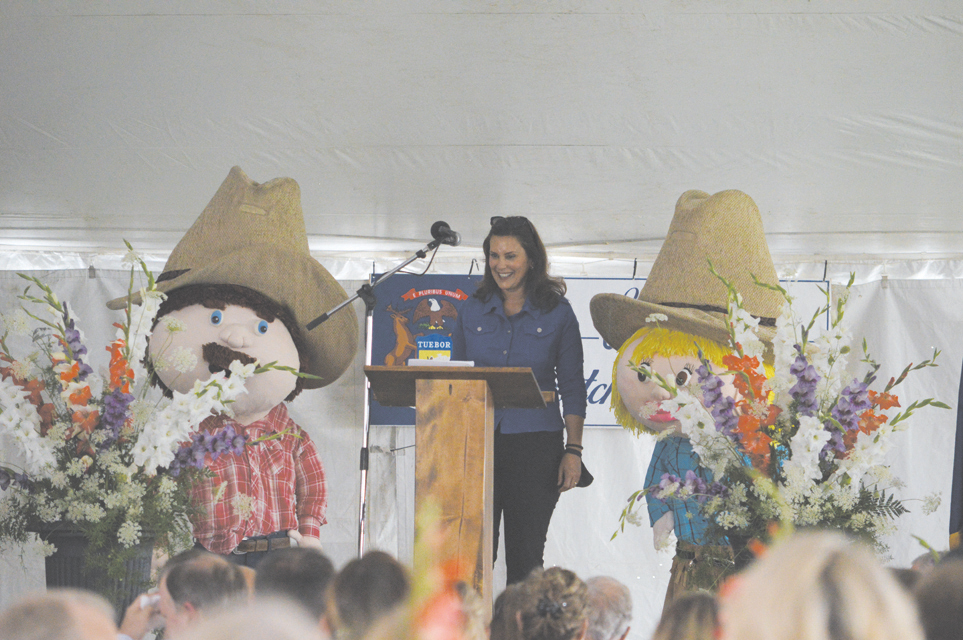
Gov. Gretchen Whitmer shares the stage with two cartoon characters at the lunch with the Governor event at the Upper Peninsula State Fair in Escanaba Thursday. (Escanaba Daily Press photo by Ilsa Minor)
ESCANABA — Gov. Gretchen Whitmer made an appearance Thursday at a special luncheon held in her honor at the Upper Peninsula State Fair.
After words about the fair and an introduction by state Sen. Ed McBroom — who was named the Michigan Association of Fairs & Exhibitions Legislator of the Year at the start of the luncheon — Whitmer took to the stage to comment on the state of the state during what was the capstone of her weeklong trip to the U.P.
“By the end of this trip, I think it’s really important to be able to go back and tell the world about some of the incredible things that are happening here in the Upper Peninsula,” she said.
Whitmer spoke briefly about her work to make school aid funding more equitable for students across the state, how the state had turned an estimated $3 billion deficit into a $3.5 billion surplus, how some of those surplus funds were targeted toward making child care and housing more affordable, and the state’s work to ensure the Biden administration moved forward with its promises to support the Soo Locks with a $480 million investment in the Army Corps of Engineers.
“Even though we’ve all been focused on COVID — and rightfully so because it’s just been a global nightmare — even though we’ve been focused on that, we’ve been doing a lot of the foundational things that improve the quality of people’s lives, and I’m proud of that,” she said.
After her remarks, the governor stayed on the stage to answer a few questions from the crowd.
The first issue she addressed was how she planned to address the mental health crisis that has been exacerbated by the ongoing COVID-19 pandemic. Whitmer drew on her own experiences writing a victim’s impact statement during the sentencing of a group of men that planned to kidnap and kill her during the height of the pandemic, as well as recognizing the stress the pandemic put on schoolchildren, those affected by pandemic-related isolation, business owners and those who were already struggling before the pandemic hit.
“I am committed to ensuring that we are prioritizing mental health because I know that it’s not just some, it’s not just a few, this is an issue that everyone is confronting to some extent or another and we’ve got to make sure that we’ve got the supports that people can navigate mental health,” she said, noting the state’s budget surplus and additional federal funding were an “opportunity” to address the issue.
Whitmer also was questioned about the Enbridge Line 5 pipeline, which her administration has worked to decommission. The pipeline provides propane to the Upper Peninsula, and while the issue is still largely a legal battle between Enbridge and the state, residents across the Upper Peninsula have questioned how decommissioning the pipeline could affect energy costs while also wondering how leaving the pipeline in place could threaten the waters of the Great Lakes.
While noting that courts have decided the existing agreements between Enbridge and the previous gubernatorial administration for the construction of a tunnel to house a new pipeline were valid, she noted her administration was working to get the current pipeline out of the water and pointed to the work of the U.P. Energy Task Force. The task force aims to create reliable and cost effective energy options to U.P. homes and businesses that do not rely on Line 5.
“We can supply energy in an affordable way and be good stewards and protect our Great Lakes, and we can’t have false choices where it’s one or the other. We have to do both. We are up to this task, it can be accomplished and I will work my tail off to make sure we’re successful on both fronts,” she said.
For the last serious question of the luncheon, Whitmer was asked how the state would determine when to stop the extended benefits and other programs designed to help those financially impacted by the pandemic while also keeping those people afloat.
“There’s no certain moment where we can be done with it,” said Whitmer, referencing the pandemic, “but what I do know is we’ve got to continue to make efforts to help those who are struggling, whether it is keeping a roof over their head or feeding their family.”
After the serious questions ended, Whitmer took time for a question submitted by a young girl named Emma: how old do you have to be to be the governor?
“Not old enough to know better,” Whitmer joked, before suggesting Emma run for governor.
“It’s about time the U.P. had a governor,” she said.
Front Page News

Arrest made in Chippewa County drug overdose death

MSHS, NMU alumn celebrates ‘KPop Demon Hunters’ wins
Opponents worry over tunnel construction as Line 5 report released

Confirmed details in child’s death released
Superior Extrusion achieves milestone