
Pakistani astronaut joins Chinese launch to Tiangong space station
Trending
ISLAMABAD
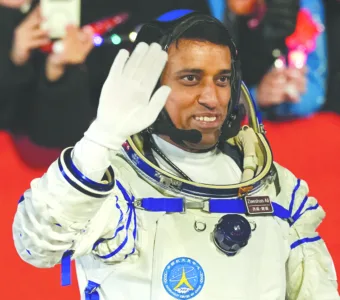
An astronaut for the Shenzhou 24 mission, Muhammad Zeeshan Ali of Pakistan waves as he attends a see-off ceremony for the manned space mission with Chinese astronauts Wu Yi and Tang Hongbo at the Jiuquan Satellite Launch Center in northwestern China on Wednesday. (AP photo)
Muhammad Zeeshan Ali, 40, flew alongside Chinese astronauts Tang Hongbo, 51, and Wu Yi, 39, on the craft that blasted off from the Jiuquan Satellite Launch Center in northwestern China on Wednesday. They later entered the space station and took group photos with three other astronauts from the Shenzhou 23 mission.
Sharif expressed Pakistan’s gratitude to China for providing the opportunity to participate in the mission, according to a statement after a meeting with Chinese Ambassador Jiang Zaidong at the prime minister’s office in Islamabad.
He said that the mission represented the journey of 240 million Pakistanis and embodied the dreams and aspirations of the Islamic nation’s youth and scientific community.
The mission marked the first joint flight by Chinese and foreign astronauts in the history of China’s crewed space program. It’s part of an agreement signed by Pakistan and China in February 2025. The crew will conduct more than 90 scientific experiments and technology tests during the mission.