
Marquette’s iron lungs
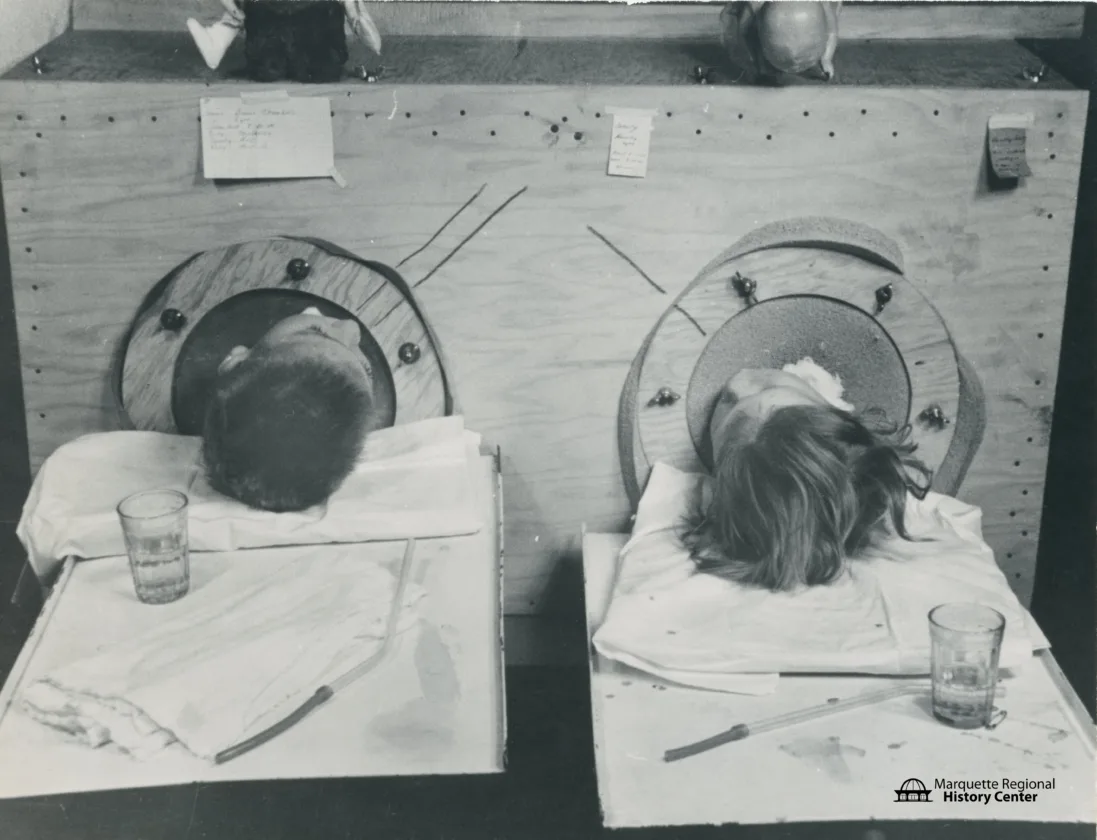
Seen are two children in a double iron lung during the 1940s polio epidemic. (Photo courtesy of the Marquette Regional History Center)
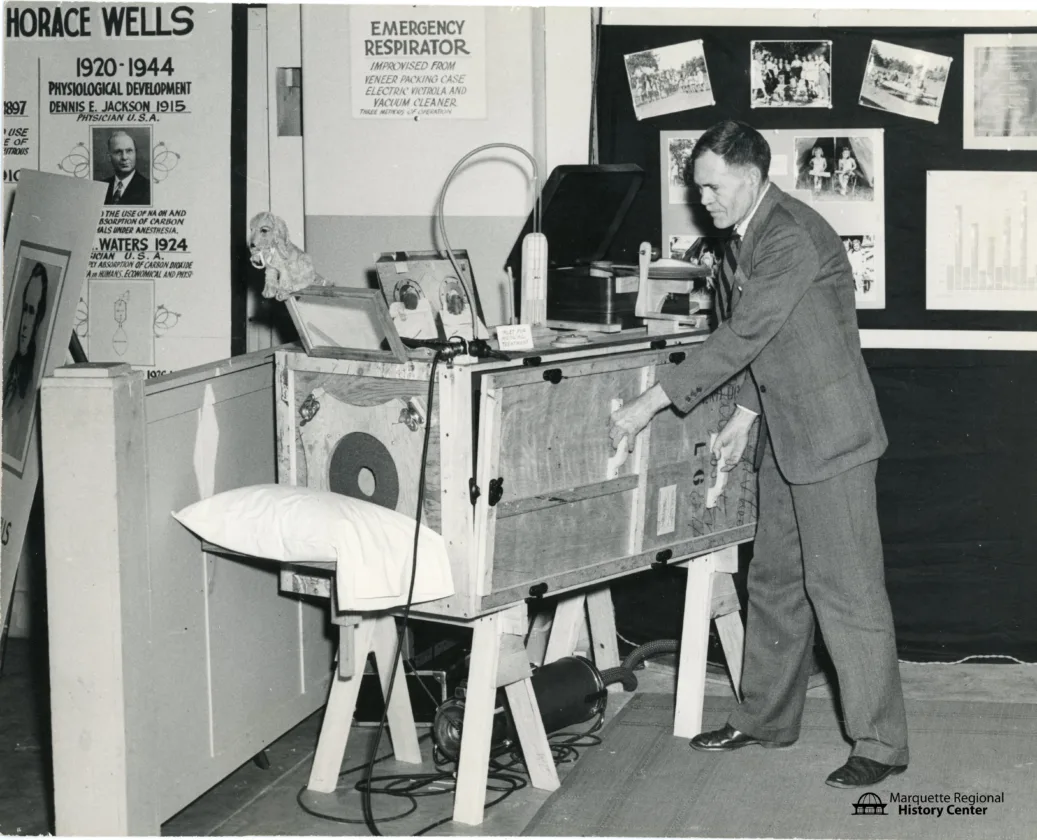
Seen are two children in a double iron lung during the 1940s polio epidemic. (Photo courtesy of the Marquette Regional History Center)
Seen are two children in a double iron lung during the 1940s polio epidemic. (Photo courtesy of the Marquette Regional History Center)
Seen are two children in a double iron lung during the 1940s polio epidemic. (Photo courtesy of the Marquette Regional History Center)
Trending
MARQUETTE -- The last polio patient in the United States who used an iron lung, Martha Lillard, died in late June 2026 in Shawnee, Oklahoma. With her passing, a significant era of medical care came to an end.
In the early 20th century, poliomyelitis, or polio, struck fear in parents around the world. Poliomyelitis is an infectious viral disease that affects the central nervous system. Often, it only creates a mild illness but in serious cases it attacks the central nervous system and leads to temporary or permanent paralysis of muscles, including those involved in breathing. Historically, only about 1 in 200 infections (0.5%) lead to irreversible paralysis and among those paralyzed, 5-10% died when their breathing muscles became immobilized.
A polio outbreak began in 1938 in the Upper Peninsula and by the beginning July 1940, the outbreak peaked with "unprecedented severity." Three hundred twenty cases of polio were confirmed. Although only nine patients were residents of the city of Marquette, 148 other cases from around the U.P. were transferred to Marquette, mainly St. Luke's Hospital, for care. The effects of this outbreak were unusually life-threatening, with the number of respiratory cases estimated to be near 10%. Thirty-three patients had respiratory complications, and 13 required respirators or iron lungs.
The reason patients were sent to Marquette and St. Luke's was the iron lung. An iron lung was a negative pressure ventilator. The person using the iron lung was placed into the air-tight chamber from the neck down. Pumps that controlled airflow periodically decreased and increased the air pressure within the chamber and particularly, on the chest.
When the pressure was below that within the lungs, the lungs expanded and atmospheric pressure pushed air from outside the chamber via the airways to keep the lungs filled; when the pressure went above that within the lungs, the reverse occurred, and air was expelled. In this manner, the iron lung mimicked the physiological action of breathing: by periodically altering intrathoracic pressure, it caused air to flow in and out of the lungs.
Early in the epidemic St. Luke's was equipped with a single iron lung. At the time, an iron lung cost about $1,500, roughly the same price as the average home. The cost of running the machine was also prohibitive, as patients were encased in the metal chambers for months, years and sometimes for life.
By the end of August 1940, the staff at St. Luke's knew that one iron lung wasn't going to be enough. Growing concerned about the condition of two hospitalized children, the hospital called local businessman, Max Reynolds, to see if he could improvise a way to place two children in the one iron lung. It was decided that it wasn't feasible to retrofit the ventilator while it was occupied.
But working with hospital engineer Lowell Reynolds [no relation], who provided instructions from a pediatric magazine and several other men, including engineers, machinists, carpenters, ship-joiners, painters, sailmakers and errand boys, they set up shop in Max Reynold's boathouse (now the Lake Superior Theater) and got to work building a new iron lung. As they worked, they received calls from the hospital telling them to hurry because the patients were deteriorating and manual artificial respiration had begun.
In just under four hours, they managed to construct a double unit, which could hold two children, out of spare parts and scrap materials. By the time they finished, one of the children had died but a third child was already developing respiratory symptoms. The first homemade unit was operated manually, with nurses and other volunteers opening and closing a valve every few seconds around the clock. Two days later, a record player was added to motorize the valve, turning it into an automatic unit.
Nine of these home-made iron lungs were made using these elements, two of which were double units. In December 1940 it was reported that Marquette had the largest grouping of respirators ever accumulated in the United States (unfortunately that record did not last long). The iron lungs were made from salvaged materials including iron barrels and wooden crates. One of these crate lungs is on display in the main exhibit gallery at the Marquette Regional History Center.
One polio survivor recalled how quickly the disease progressed: "I had a headache like you wouldn't believe, nothing helped. Then I went to the hospital. That evening they took a spinal tap. The next day, I asked the nurse to open the window. I thought it was just stuffy. The next day I was in an iron lung." Another patient recalls the challenge of being bathed while in an iron lung: "They used to open the respirator [to bath me] and when I turned blue, they'd shut it for a while. I'd pass out every time."
International Rotary's annual World Polio Day on Saturday is an effort to raise awareness and funding to eradicate polio. As part of their participation, the Rotary Club of Marquette, Marquette Harbor Rotary and Ishpeming Rotary are uniting for a local awareness walk at 11 a.m. from Frazier's Lake Superior Theater Boathouse along the bike path to the MRHC, 145 W. Spring St., Marquette. They are also sponsoring a free admission Saturday to the MRHC, so visitors can view the iron lung and learn more about Marquette's polio history. Participation in the walk is not required for free admission to the History Center, and no sign up or registration is needed. For more information on the day's events visit rotaryclubofmarquette.com. For questions about the Marquette Regional History Center or admission call 906-226-3571 or visit marquettehistory.org.