
Transporting logs on Lake Superior no easy task
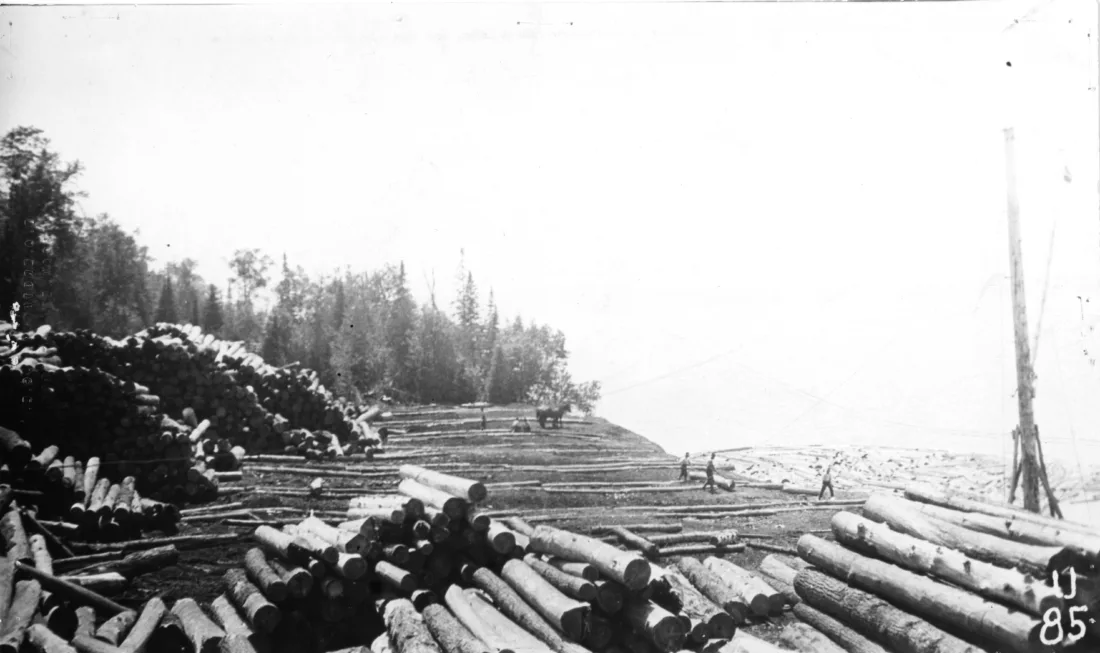
In 1918, logs docked at a landing and in the boom on the lake below. (Photo courtesy of the Marquette Regional History Center)
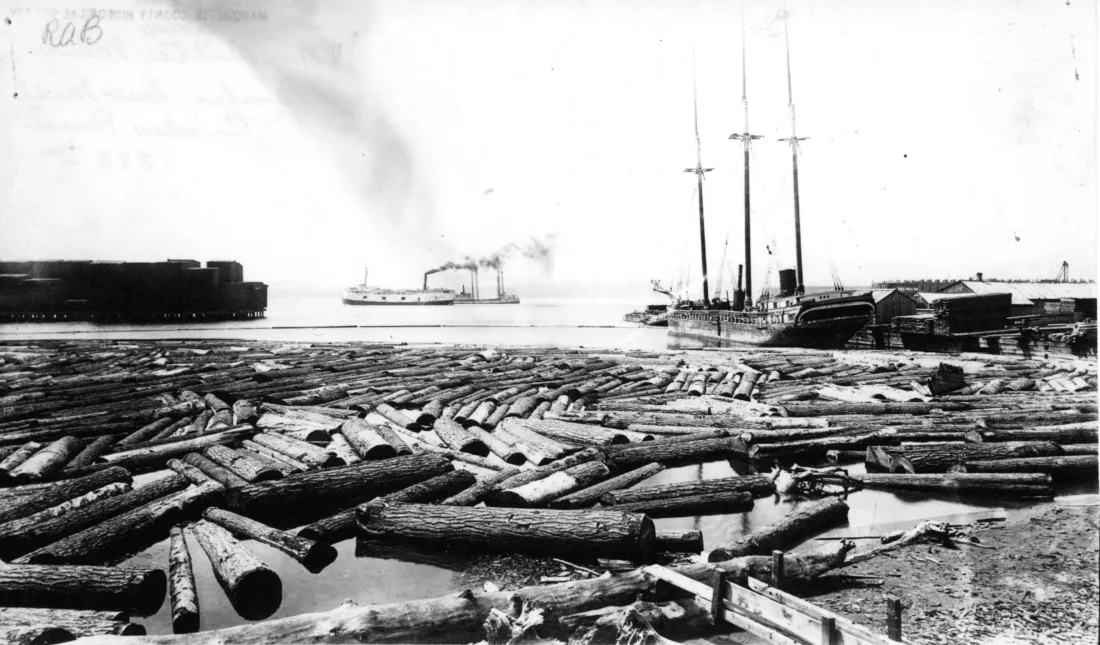
The log boom at the Burtis Saw Mill (Cinder Pond) is seen in a photo taken in 1895. (Photo courtesy of the Marquette Regional History Center)
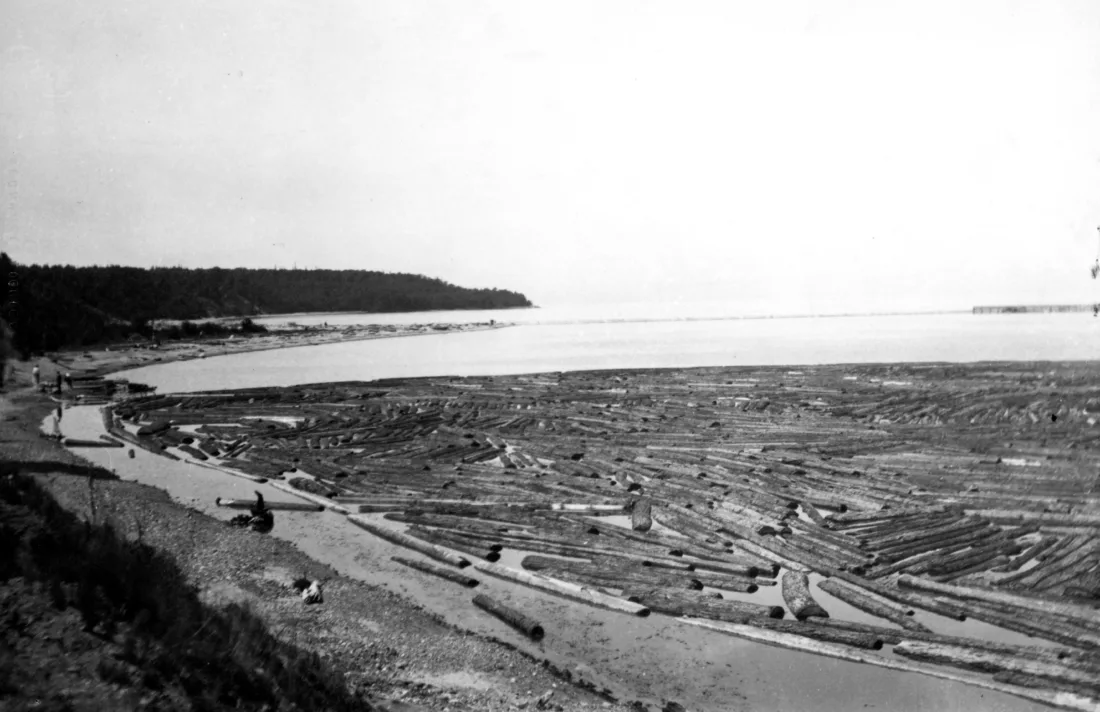
Log boom in 1918 is pictured. (Photo courtesy of the Marquette Regional History Center)
In 1918, logs docked at a landing and in the boom on the lake below. (Photo courtesy of the Marquette Regional History Center)
The log boom at the Burtis Saw Mill (Cinder Pond) is seen in a photo taken in 1895. (Photo courtesy of the Marquette Regional History Center)
Log boom in 1918 is pictured. (Photo courtesy of the Marquette Regional History Center)
Trending
MARQUETTE -- During the 19th century logging era, millions of board feet of timber were floated to sawmills along the shores of Lake Superior near Marquette.
The timber was sent down rivers to Superior from remote logging camps in the interior of Marquette, Baraga and Alger counties. Transporting logs from logging camps to sawmills was a precarious task for men working for lumber companies. One specific struggle was hauling timber on Lake Superior when calm waters turned stormy.
The wrath of Lake Superior is well known by residents in the area. During the logging era, when storms arose during a haul, booms would break, sending logs onto long stretches of shoreline and out into the lake.
In his book "Way of the Pines," Kenneth LaFayette, wrote, "Rafting logs was always unpredictable on Lake Superior and many times she objected to being used in this manner. With a be-dammed attitude she scattered rafts for miles on her beaches in protest."
At the mouth of a river, logs were floated into Lake Superior, gathered, and placed in a boom. The boom was then pulled by a tug or similar vessel to the mill. A boom was a long succession of large logs connected by chains which were used to corral free floating logs. In reporting the size of booms, individuals gave the number of board feet, not the number of logs. One formula used by lumber companies defined one board foot as a 12-foot x 12-inch diameter log.
The size of logs harvested by lumberjacks varied in size. For men corralling logs, whether it was several thousand smaller logs or a thousand larger logs, it was difficult to boom them when a stormy lake has strewn them on beaches or out into the Lake. At times additional men and equipment would be required to complete the task. Depending on the location and size of the boom, the process could take days.
In 1878, the Marquette Lumber Company had difficulty transporting 150,000 board feet of logs from the Pictured Rocks region to its sawmill located in the lower harbor near today's coast guard boathouse. Although the distance should have been manageable, the haul took several days as the initial boom broke not once but twice.
The Weekly Mining Journal reported on Sept. 21, 1878, "The logs are piled up on the beach below the Chocolay and will be collected and brought to their destination as soon as wind and seas do down" In the next edition, it was reported the Marquette Lumber Company’s shipment met additional trouble.
"Sunday evening last the raft of about 150,000 feet of logs which she lost below the Chocolay Thursday night of last week but lost it again when about to round the breakwater, the logs going on to the beach near lighthouse point. The raft was secured for a third time Monday evening and towed safely to its destination, the Marquette lumber company's mill."
Ironically the logs scattered near the Chocolay River might have saved lives. In the same edition, it was reported that on Saturday there was a wreck of a small sailboat in the same area as the scattered logs. The Journal reported, "The party luckily escaped drowning by leaping onto some floating saw logs close by."
A boom docked at a mill awaiting processing was not immune from storms either. In late August 1892, a boom of logs moored between Ripley's Rock and Gaines Rock broke away and scattered near the Rolling Mill (by the former Shiras Steam Plant at the corner of Lake and Hampton Streets).
The Mining Journal reported, "…they went ashore...and were pounded by the breakers so thoroughly that they will be in hard shape for the saws at the Burtis mill."
The practice of hauling logs in a boom on Lake Superior began to subside toward the end of the 19th century. Equipment to assist logging companies in making their own roads became available. This allowed companies to connect to public roads and railways to transport their timber.
By the early 20th century, this method of transport had diminished.