
Marquette photographer B.F. Childs recalled
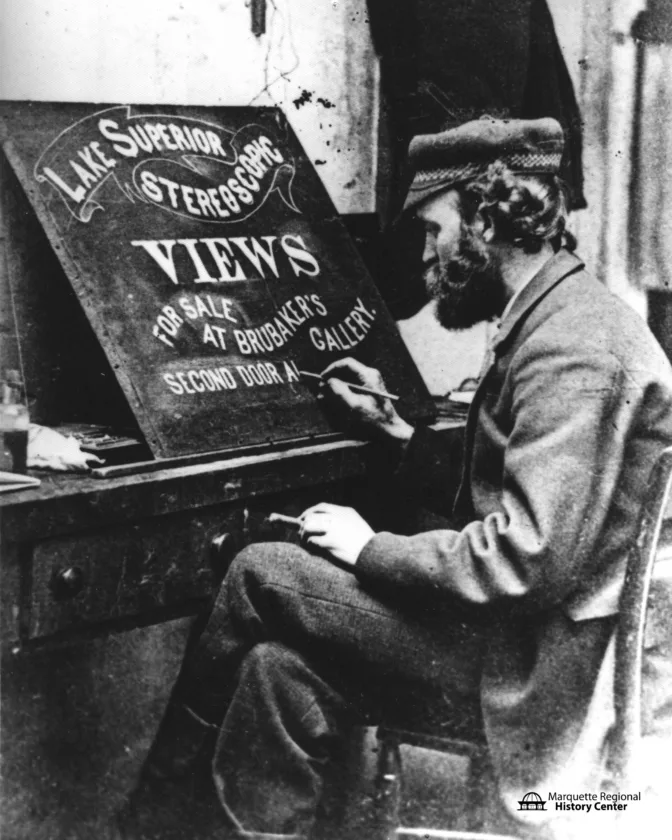
B.F. Childs is captured painting a sign for his store. (Photo courtesy of the Marquette Regional History Center
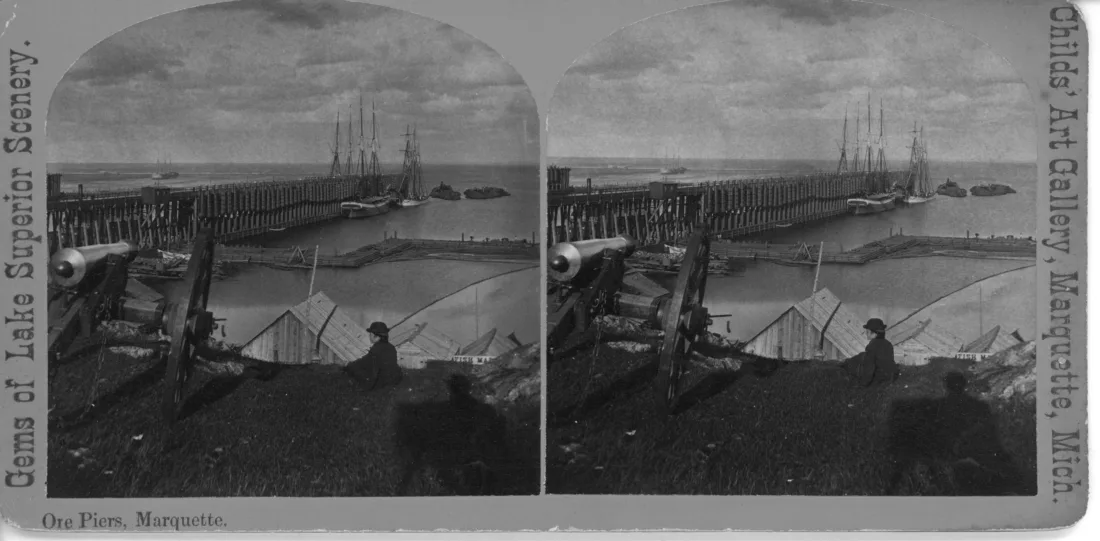
This is one of B.F. Childs' "Gems of Lake Superior" stereograph series, showing the ore piers in Marquette harbor. (Photo courtesy of the Marquette Regional History Center)
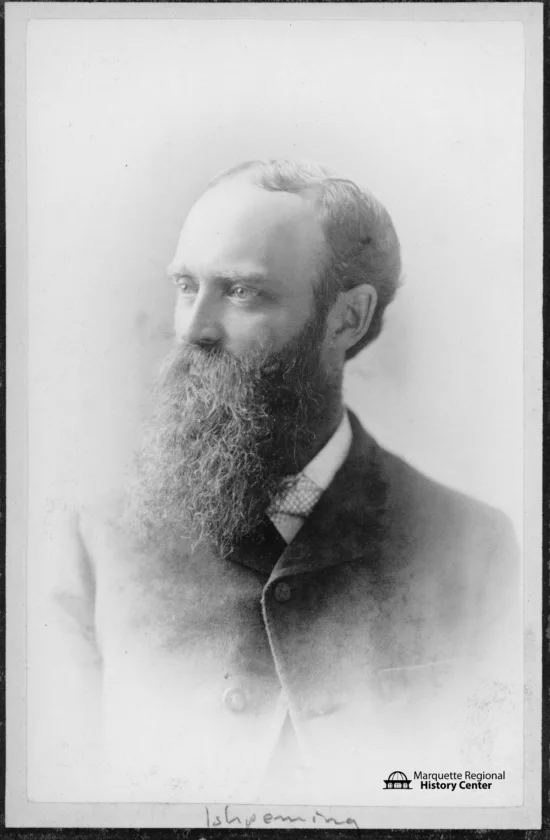
Pictured is B.F. Childs. (Photo courtesy of the Marquette Regional History Center)
B.F. Childs is captured painting a sign for his store. (Photo courtesy of the Marquette Regional History Center
This is one of B.F. Childs' "Gems of Lake Superior" stereograph series, showing the ore piers in Marquette harbor. (Photo courtesy of the Marquette Regional History Center)
Pictured is B.F. Childs. (Photo courtesy of the Marquette Regional History Center)
Trending
MARQUETTE -- Brainard Childs was born Oct. 17, 1842, in Windham County, Vermont. Supposedly his name was a misspelling of Bernard, and his middle name was alternately listed as Freeman and Freemont. He ended up going by his initials, "B.F." His early years were spent in Windham County and according to the 1860 Windham County census he was listed as an artist.
Shortly after June 1861, B.F. enlisted in the U.S. Army. He served in the 2nd Vermont Infantry in the regimental band. After the first Battle of Bull Run in July 1861, Childs became ill and was furloughed home to Vermont from September to October. The following month he returned to his unit still somewhat debilitated. In around this time, the Army was eliminating regimental bands as unnecessary. On Dece. 19, 1861, B. F. Childs was discharged from the Army with the rank of sergeant.
It was during his time in the army that he met Daniel Cross, a photographer and lifelong friend. After his discharge from Camp Barry, Virginia, B.F. started a photographic business in Fort Alexandria, Virginia circa 1863 and moving to Richmond, Virginia circa 1865. After the war, he spent a few months working with Cross making photographic portraits in Vermont. Sometime around 1866, he also worked in Massachusetts and Maryland.
B.F. may have come to Michigan as early as 1868. In 1869, he collaborated with the staff of Michigan State Geological Survey. This work was published by C.B. Brubaker from Houghton and consisted of stereographic views on yellow mounts of general scenes and copper mining. The series was called Lake Superior Views or The Picturesque of Lake Superior.
At this time he circumnavigated Lake Superior in his small sailboat, the Wanderer taking pictures. This series was published by C.B. Brubaker on orange mounts as Gems of Lake Superior Scenery and comprises his largest known body of work. It includes views of Houghton, Hancock, Marquette, Sault Ste. Marie, Pictured Rocks, Presque Isle, copper mines, iron mines, Grand Island, steamships and members of the Chippewa tribe.
Childs was known as one of the premier photographers recording Native American life from the late 1860s through 1892. Many of these images were taken in the Sault Ste. Marie area and in villages on the St. Mary's River. During this period he developed a great rapport with the native people and the images reflect this trust between the people being photographed and himself. This image is commonly identified as Charlotte Kawbawgam but recent research indicates that the woman in the photograph is too young to be Charlotte.
By 1871, Childs had moved to Marquette and opened a studio on Front Street. His business known as "Childs' Art Gallery" became one of the largest and best known studios in the Upper Peninsula.
In October 1874, B.F. married Mary Fannie DeHart Wood in Branch County, Michigan. They returned to Marquette where he operated photographic studios out of Houghton, Marquette and Ishpeming. In addition to his stereoscopic views, portraiture and picture frames, Childs sold art supplies including painting brushes, palette knives and tubes of oil paint. He also shipped supplies to photographers in other cities.
He served as vice president for Michigan's Photographers Association of America in 1883 and 1884. Childs remained active in photography until 1885 when he sold the Houghton branch and turned the management of the Marquette and Ishpeming studios over to his assistant Charles D. Cole. B.F. and his wife Fannie moved to Arkansas City, Kansas where he worked as a druggist.
In 1916 he retired from the drug business and in 1918 his wife died. After this he went to San Diego, California to live with his sister until he passed away from pleurisy and heart failure March 7, 1921. Up until his death he was still a part owner in the Childs Art Gallery. His ashes were returned to Marquette for burial and much of his estate left to St. Paul's Episcopal Church for establishment of a home for the poor in Marquette.
Child's left an extensive assembly of over 500 images documenting the history of northern Michigan and the Lake Superior region plus many portraits. Following his death, Cole continued to operate the studio in Ishpeming on Division Street. The business survived for 110 years before going out of business in 1978.
That year, the Marquette County Historical Society and Jack Deo each purchased a portion of the Childs collection. These thousands of glass negatives have been carefully stored and include portraiture, street scenes, mines views and many buildings, especially from the Ishpeming area and are a lasting testament to B.F. Childs' creativity and skill.