
Marquette Branch Prison agriculture, part 1
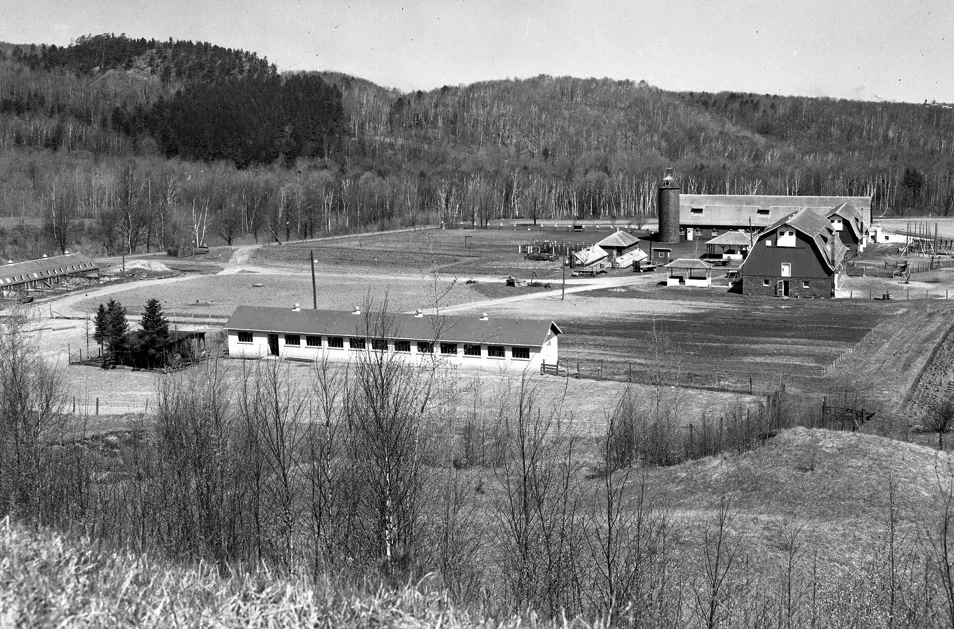
An overview of the Magnum Prison Farm is seen. (Photo courtesy of Jack Deo, Superior View Studio, Marquette)
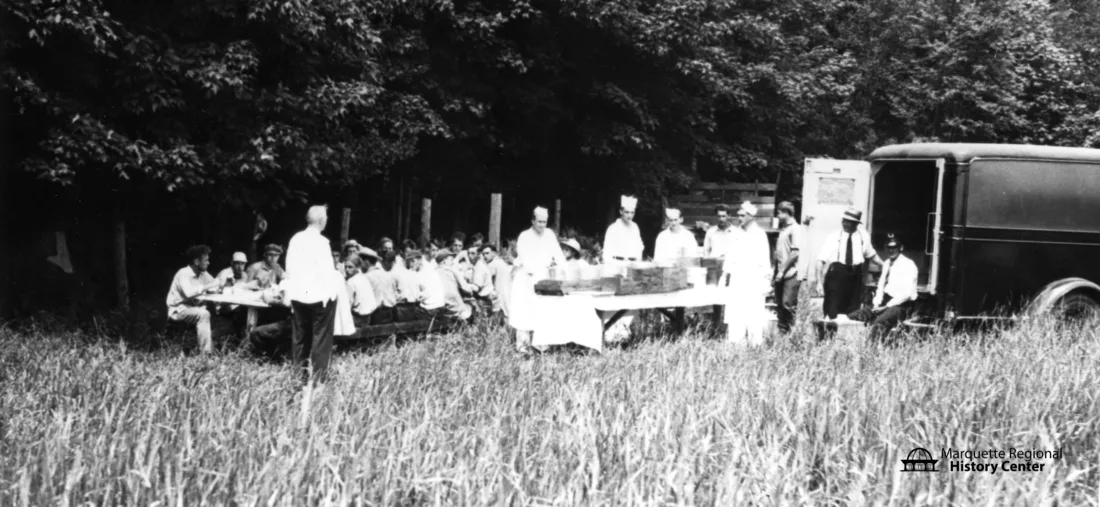
Prison farm workers are seen eating lunch, circa sometime in the 1940s. (Photo courtesy of Marquette Regional History Center)
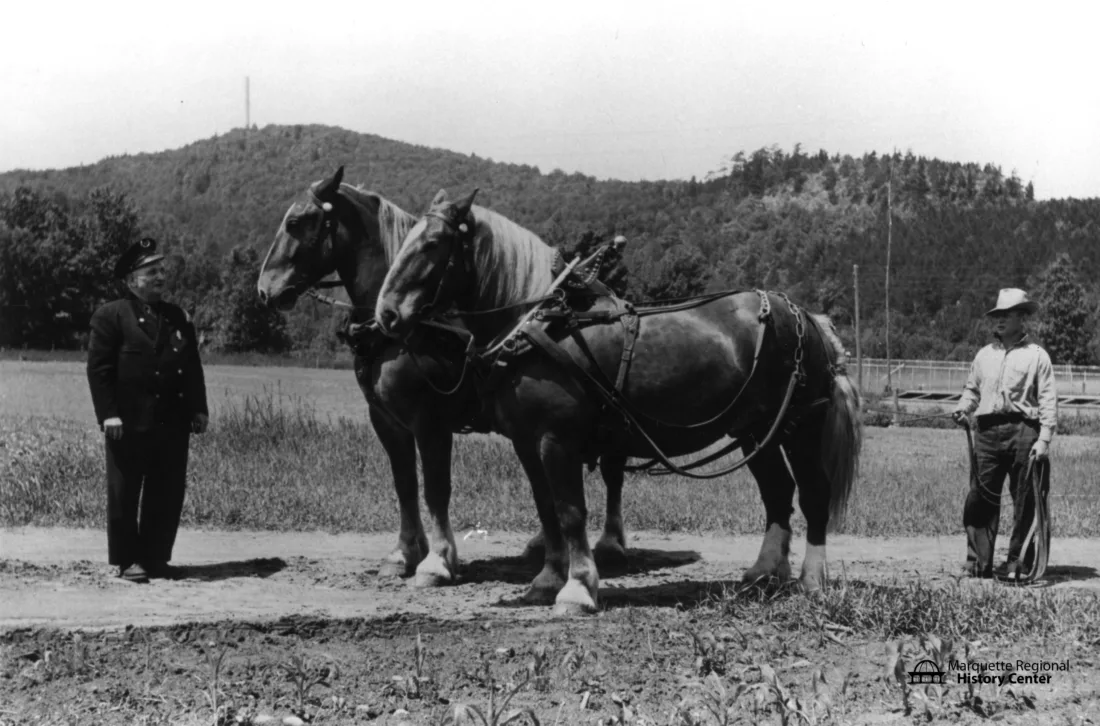
Pictured is Inka De Kol, left, and farm superintendent Milton Frances. (Photo courtesy of “One Hundred Years at Hard Labor” by Ike Wood)
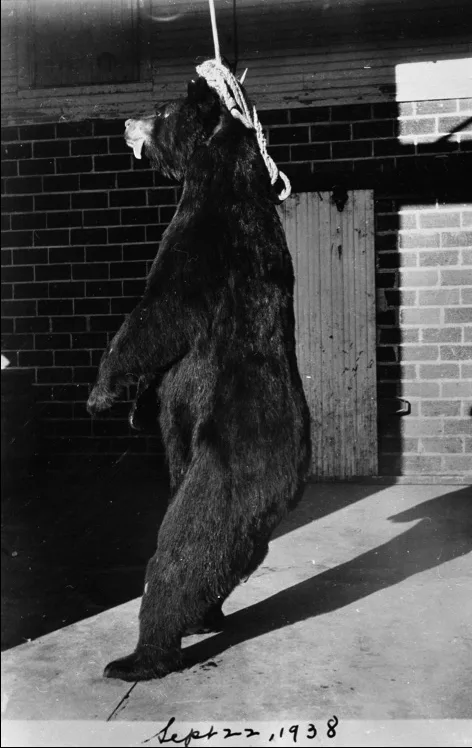
On Sept. 22, 1938, this bear was shot while attacking the prison farm's pigs. (Photo courtesy of Jack Deo, Superior View Studio, Marquette)
An overview of the Magnum Prison Farm is seen. (Photo courtesy of Jack Deo, Superior View Studio, Marquette)
Prison farm workers are seen eating lunch, circa sometime in the 1940s. (Photo courtesy of Marquette Regional History Center)
Pictured is Inka De Kol, left, and farm superintendent Milton Frances. (Photo courtesy of “One Hundred Years at Hard Labor” by Ike Wood)
On Sept. 22, 1938, this bear was shot while attacking the prison farm's pigs. (Photo courtesy of Jack Deo, Superior View Studio, Marquette)
Trending
MARQUETTE -- Marquette Branch Prison once had factories that made everything from cigars to snow fences. But the biggest, and ultimately most important industry, was agriculture, with hundreds of inmates producing food not just for themselves but for other institutions throughout the state for more than 100 years.
The primary goal was always the same: to lessen the burden on taxpayers by making prisons as self-supporting as possible, but an important secondary goal was to keep inmates occupied during their long days and years of incarceration.
As early as 1898, the prison warden was reporting that the farms had produced $2,600 worth of vegetables (about $104,000 today) that were either consumed or sold. He predicted that with an additional 40 acres being cleared, the farms would be the source of "considerable income" in the years ahead.
The farms eventually expanded to include more than 1,000 acres on Mangum Road (the Mangum Farm), farms on Little Lake Road and Marquette County Road 480 (the Dorais and Belanger farms) and often additional leased acreage as well. A front-page Mining Journal article on Aug. 30, 1952, noted that the biggest farm in the Upper Peninsula was at the prison, employing more than 100 inmates. Crops grown that year included cabbage, lettuce, radishes, tomatoes, carrots, beans, onions, cucumbers, beets, corn, apples and potatoes.
Jim Nancarrow, who oversaw the prison cannery, expected to put up 4,000 one-gallon cans of Swiss chard, 4,000 of beans, 6,000 of tomatoes and tomato puree, 2,000 of apples, 500 of sweet corn and 1,500 of relish. Additionally, he planned to preserve 12, 50-gallon barrels of pickles and 23 barrels of sauerkraut.
There were also huge harvests of potatoes, filling an entire warehouse on the Mangum Farm property, providing the 1,000 bushels per month needed to feed the inmates.
As valuable as the farm crops were, however, the greatest savings came from prison livestock. The same 1952 Mining Journal article reported that there were 1,100 laying hens at the Mangum Farm, producing more than 16,000 dozen eggs each year. The hens were "Jackson Red," a cross between Rhode Island Red and New Hampshire Red that had been developed at Jackson Prison downstate. Back on the main prison property, 270 hogs produced more than 71,000 pounds of pork.
But, as any farmer knows, plenty can go wrong. In 1924, the entire dairy herd had to be destroyed when tuberculosis was found in the herd. In 1938, a 400-pound bear was seen patrolling the pig pens. Inmates set up a watch but failed to find him and the watch was called off. The next night the bear returned, damaging the pen and taking off with a 100-pound pig.
The watch resumed and when the bear was seen again, an officer shot it. The inmates were treated to a meal of bear meat.
There were also hazards that were probably less common outside the prison. In 1962, an inmate set fire to the hog barn, killing 30 full-grown hogs and damaging other buildings.
At one point, the prison even had a fishing operation. In 1929, Warden James Corgan rebuilt an abandoned fishing boat and added a donated automobile motor.
The warden later reported, "A crew of inmates set out nets each morning before breakfast when weather permitted and took them in each day by 5 p.m. ... Enough fish were taken daily to provide the entire prison population with fresh fish at least once a week and often more frequently."
The harvests, which sometimes reached 2,000 pounds in a day, included lake trout, rainbow trout, whitefish and herring. Any not consumed at the time were cleaned, salted and packed and stored in the walk-in refrigerator for use in the winter.
The prison was most famous, however, for its dairy herd, which was also the longest lasting of the farm enterprises. After the herd had to be destroyed in 1924, the farm managers saw an opening. They began systematically building a prize-winning herd, buying and breeding Holstein and Holstein-Friesian crosses.
By 1938 the herd was setting production records not just locally, but nationally. At the U.P. State Fair that year, prison cows took grand champion, first and second places and the new bull was also named grand champion.
Ike Woods' invaluable book, “One Hundred Years at Hard Labor: A History of Marquette State Prison,” which was the source for much of the information in this article, includes a marvelous photo of Inka Del Kol, a Holstein-Friesian, posing with farm superintendent Milton Francis. Inka regularly took county, state, and national honors in production of milk and butterfat, and was one of only 50 registered cows at the time to have a lifetime record of over 200,000 pounds of milk.
The dairy, like all the farm operations, was intentionally labor-intensive. Up until the herd was auctioned off in 2010, inmates still milked the cows individually and cleaned the troughs with shovels and wheelbarrows (the manure was trucked back to the fields growing the silage that in turn fed the cows). But it produced enough milk to not only supply the Marquette prison, but enough to send to the other 12 prisons and prison camps across the U.P.
EDITOR’S NOTE: Next week's article will discuss the resurrection of the dairy herd starting in the 1990s until the farm operations ended in 2010.