
Whetstone Smith: A Marquette namesake
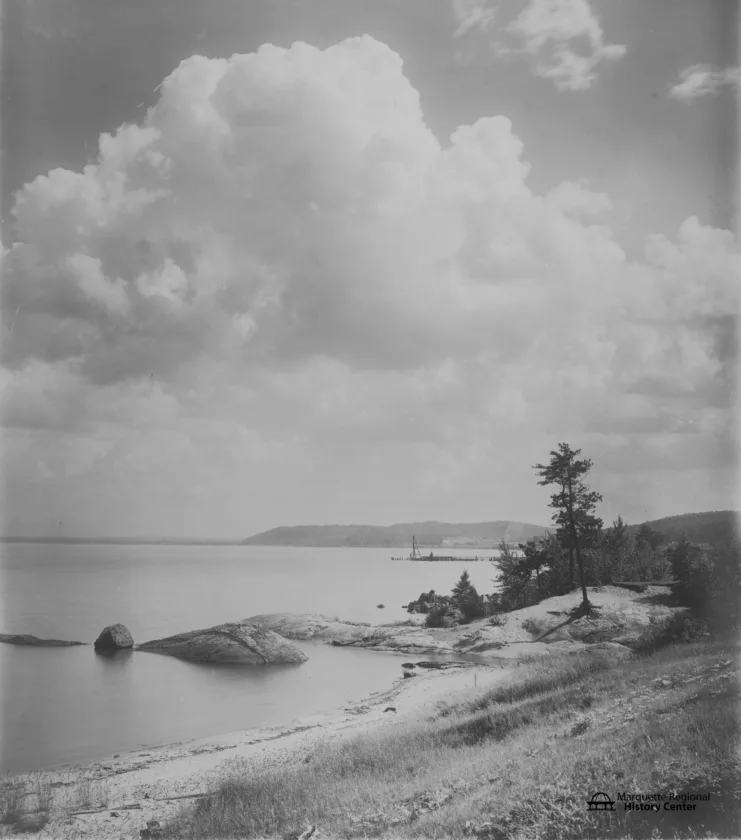
The mouth of Whetstone Brook is seen in June 1960. (Photo courtesy of the Marquette Regional History Center)
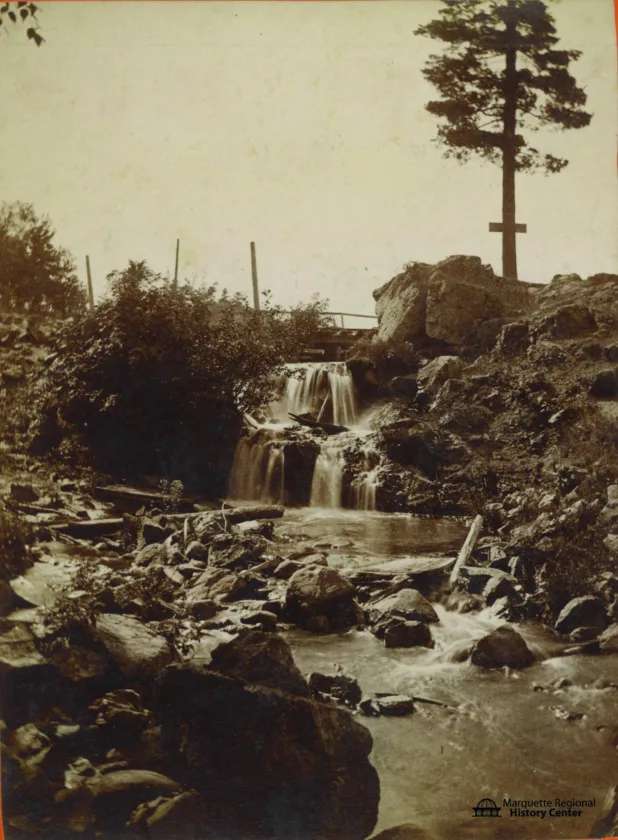
Pictured is a stereo card of Whetstone Brook from the 1800s. (Photo courtesy of the Marquette Regional History Center)
The mouth of Whetstone Brook is seen in June 1960. (Photo courtesy of the Marquette Regional History Center)
Pictured is a stereo card of Whetstone Brook from the 1800s. (Photo courtesy of the Marquette Regional History Center)
Trending
MARQUETTE -- Silas C. “Whetstone” Smith was born in 1811 in Vermont. He married Ursula Rouse in October 1842, and the couple went on to welcome two sons, William John and Charles Silas.
In 1847 Silas left his home in Ohio to come to the Great Lakes region for his health. He later recounted "In the month of July 1848, I landed on the present site of the now prosperous city of Marquette. At that time the only building here was a little log house. Shortly after my arrival, my attention was attracted by the apparent mineral wealth of the region and I began making explorations."
Liking the area, he had the ship captain drop him off on shore and leave him behind even though there were only two other settlers at the harbor and what is now the city of Marquette was a tangled cedar swamp. There were also several Ojibwa villages in the area plus other settlers at the Jackson Mine and Forge near Negaunee. He spent the next three summers here, returning home to Ohio in the winters.
Over those three years, Marquette grew to 17 families and Silas decided to settle here permanently. On the next trip in 1850, he brought his family with him, along with a horse and cow and enough lumber to start a home. As there was no dock, the cow, horse and lumber were thrown overboard; the animals swam while the lumber was rafted ashore.
When asked about the hardships faced by the settlers, Silas replied that he liked the early days in Marquette saying, “There was no ‘upper crust’ in society in those days, one man was as good as another as long as he behaved himself and the result was a happy and contented lot of people." He also noted that things had changed considerably since those days.
On two occasions ships that supplied Marquette failed to arrive. Silas had had the foresight to stockpile three years of supplies and was willing to share until additional ships arrived. Once established in the community, Silas did some preliminary research and started some mineral exploration, finding slate and variegated marble.
By 1854 his mineral explorations yielded the discovery of gold which was assayed at about $10.00 per ton. By 1855 he found gold deposits assayed at $140.00 per ton and a silver vein assayed at $20.00 per ton. In ensuing years, he explored the western Upper Peninsula for valuable ore, found some and was convinced of its value, but could not put together the investors to begin mining operations.
Not hitting the mother lode, Silas returned to Marquette and by 1860 was the hotel keeper of the Hotel Fremont in downtown Marquette. The family eventually established their home on East Ridge Street in Ishpeming. Through the end of his life, Silas was confident that he would live to see his mineral explorations profitably come to fruition. He continued to prospect and found stones at the head of Whetstone Brook (which now mostly runs under US 41), which could be used as whetstones.
Whetstones are rocks that can be used to sharpen knives and other bladed tools. Though the word is often mistaken as a reference to the water sometimes used to lubricate such stones, the term is based on the word "W-H-E-T," which means to sharpen a blade, rather than the word "W-E-T."
Unfortunately, the whetstones were not abundant enough to be commercially profitable. Silas was still enthusiastic about them and gave them to friends along with a "dissertation" on their properties. His association with these stones led local folk to nickname him "Whetstone" Smith and to give the name to the brook.
In May 1885, The Mining Journal published an article about his life, saying, "to-day he is probably the best posted man in the country as to mineral resources in the upper peninsula.” He was right about the presence of precious metals in the Upper Peninsula but despite his efforts never made much of a profit. He passed away in Marquette less than a month after the article was published.