Did Benjamin Franklin really badger Britain into ceding Isle Royale to the US?
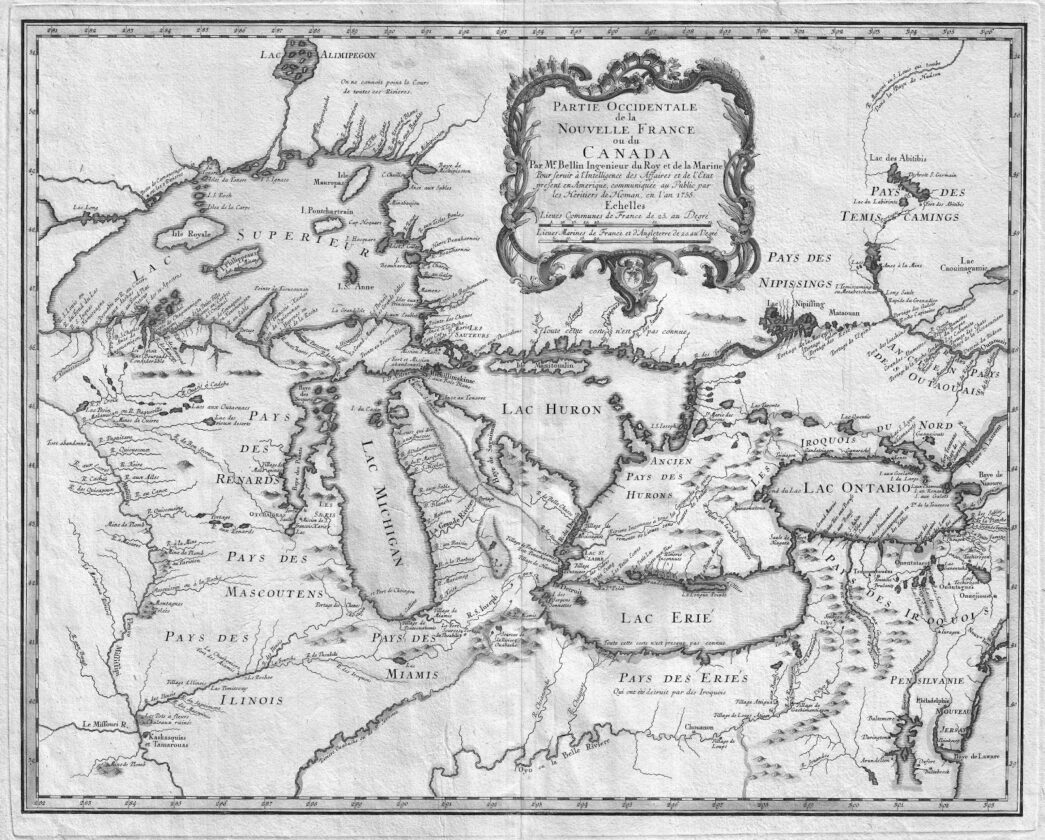
The Bellin Map of 1755 showing four major islands in Lake Superior. (Photo courtesy of the Marquette Regional History Center)
MARQUETTE — According to legend, Benjamin Franklin successfully pushed to include Isle Royale within the United States boundaries during the negotiations for the 1783 Treaty of Paris. He was reportedly aware of the potential copper resources on the island and wanted to secure it for the United States. A scenic overlook along the Greenstone Ridge Trail on the east end of Isle Royale National Park bears the name Mount Franklin in his honor.
There’s even a supposed quote from Britain’s Prime Minister at the time, Lord Rockingham, who reportedly said “Mr. Franklin, I don’t give a damn if that island is solid copper. If the treaty conference had lasted another week, you Yankees would have insisted on running your infernal boundary line around Ireland.”
Except that some of this information is inaccurate. Lord Rockingham died on 1 July 1782, and the treaty wasn’t signed until 3 Sept. 1783, more than a year later. And when we look at the text of the treaty, it states that the border will extend “through Lake Superior Northward of the Isles Royale & Phelipeaux to the Long Lake,” then along “the Water Communication between it & the Lake of the Woods … to the most Northwestern Point thereof, and from thence on a due West Course to the River Mississippi.”
Unfortunately, this text does not match up with the actual geography. First, there is no “Isle Phelipeaux.” Second, there is no river flowing directly from Lake of the Woods into Lake Superior, via a “Long Lake” or otherwise. Third, the Mississippi River does not extend west of Lake of the Woods.
The negotiators in Paris were unfamiliar with the region and relied on a map from Dr. John Mitchell, who also had never traveled to the area and had no training as a geographer or professional mapmaker. Mitchell was born in Virginia and studied medicine in Edinburgh. In 1755, while he was in London recovering from an illness, he created the map using other resources.
One of Mitchell’s sources appears to have been a map of the “Western Part of New France or Canada” drawn by Jacques-Nicolas Bellin that same year. We recently had a copy of this on display in our Mad About Maps exhibit here at the MRHC. Bellin used descriptions from Sieur la Verendrye, a French-Canadian fur trader, soldier, and explorer and Pierre de Charlevoix, an explorer and missionary. Bellin’s inclusion of four fictional islands in Lake Superior, including Isle Phelipeaux and Isle Ponchartrain, was based on Charlevoix’s description. The four islands were all named in honor of Charlevoix’s patron, Louis Phelipeaux.
It wasn’t until negotiations regarding the border restarted after the War of 1812 that surveyors realized that the four islands didn’t exist and the border was completely finalized in the 1840s. Regardless of the American British negotiations regarding the island, Isle Royale remained in Ojibwe hands. The Ojibwe ceded Isle Royale to the US in 1842. It became part of Michigan and in 1940, a national park with over 100 named islands spanning 45 miles.
Join us for My Amazing Cousin Ben: A Historical Presentation on our Founding Father
Benjamin Franklin at 6:30 tonight at the Marquette Regional History Center. This hour-long, whirlwind tour on the amazing life and revolutionary genius of Benjamin Franklin is presented by historian and music professor at Northern Michigan University, James A. Strain (a first cousin 10 times removed to Benjamin Franklin)!
Learn dozens of well-known and little-known facts about Dr. Franklin’s contributions to the independence of the United States. Dr. Strain will display his collection of replica early U.S. and colonial flags. He will include maps, music, scientific discoveries, and words of wisdom. So, bring your bifocals, pull up a chair next to the Franklin stove, and hold on to your kite string as a myriad of electrifying and fascinating facts about Benjamin Franklin are unveiled. $5 suggested donation. For more info visit marquettehistory.org or call 906-226-3571.
Superior History
U.P. Moments in History
History quiz
QUESTION: Name the “Three Sons of Ishpeming”? a. Mitchell, Braastad and Miner b. Maas, Mack and Wells c. ...
Did Benjamin Franklin really badger Britain into ceding Isle Royale to the US?
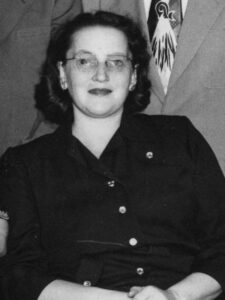
Everesta Steele & Ever Esta’s Dress Shop
History quiz
QUESTION: The Volstead act went into effect in 1920 nationally. What year did the Michigan ban on all alcohol ...