
Rachel Reeve Spear and the Red Cross Canteen
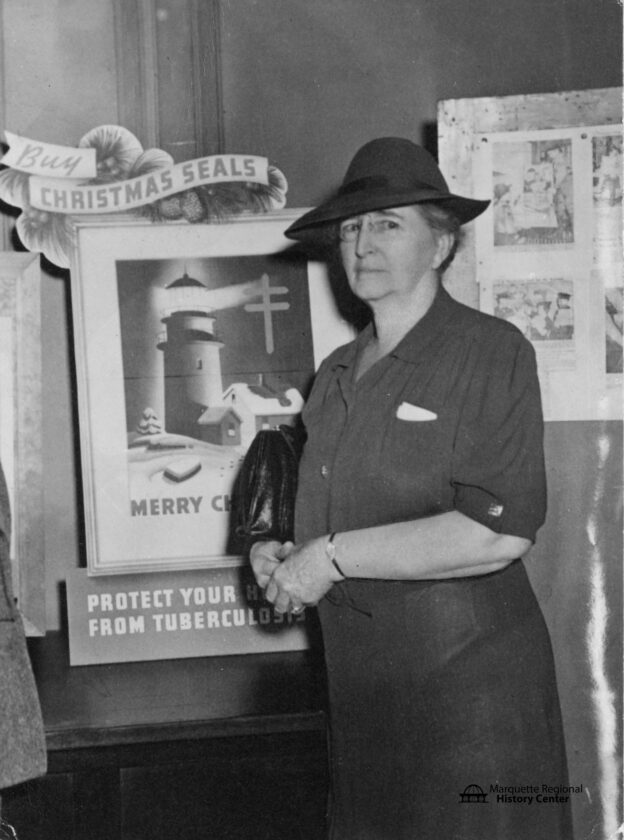
Rachel Spear, president of the Marquette County Chapter of the Michigan Tuberculosis Association, is pictured on duty in Grand Rapids in October 1941. (Photo courtesy of Marquette Regional History Center)
MARQUETTE — Rachel Cooper Reeve was a native of Camden, New Jersey, who attended the Friends Select School of Philadelphia and received a Bachelor of Arts from Wellesley College. While visiting the Abe Mathews family in Marquette in 1901, she was introduced to Franklin “Frank” Bennett Spear, Jr., the son of a Marquette businessman trading in coal, grain, wood and other building supplies. The couple married the following year and resided in Marquette.
Rachel was very active in the community, serving on numerous committees and organizations. She served as president of the Marquette County chapter of the Michigan Tuberculosis Association and was a member of the county chapter of the Visiting Nurses Association, the Daughters of the American Revolution and the Marquette County Historical Society.
During the patriotic surge following the United States’ entry into the First World War in 1917, the American Red Cross struggled to keep up as needs quickly outstripped the infrastructure needed to support them. Under the direction of the federal government, the Red Cross established a canteen service along rail lines across the country. From 1917 to 1919, Rachel Spear served as part of the American Red Cross Canteen Service.
The canteen service provided comfort to millions of soldiers in transit, in the form of sandwiches, coffee, candy, fruit, cigarettes, matches, postcards, toiletries and other personal items. In large cities, the canteens operated in permanent buildings located at railroad stations with volunteers on duty 24 hours a day. In other cases, restaurants offered food to soldiers at cost.
In Marquette, an Emergency Canteen Committee was organized in August 1917, then reorganized in September under the Central Division, with Sara (Meigs) Jopling as chairman. At the request of Mr. Lytle, general superintendent of the DSS&A, dinners were served at Colonial Hall (120-122 W. Washington St.) to drafted men passing through the city on troop trains and lunch boxes were packed by ladies of the Guild Hall. Marquette residents also knit 700 sets of scarves to be distributed nationally as well as outfitting local men.
In December 1918, members of the canteen service began meeting all the trains carrying returning soldiers and sailors. Tobacco and chocolates were given to all soldiers and sailors whether returning home or just passing through the city.
The canteen service report from Marquette covering October 1917 through January 1919 had the following committee members: Bessie (Wilkinson) Miller, chairman; Nettie (Gregg) Drake; Louise (Wintermeyer) Tauch; Clara (L’Huillier) Chambers; Evelyn (Bertrand) Eldredge; Emily (Phelps) Randall; Harriet (Oyster) Lytle; Sarah (McConnell) Ball; Rachel (Reeve) Spear; Catherine (Moran) Murray; and Miss Ada Mapes. They had served 5,031 soldiers and sailors, both drafted and enlisted.
Furnished by the government:
2,754 box lunches
1,820 dinners
Donated by individuals:
1,000 magazines
Paid for by the local Red Cross:
500 bags of tobacco
875 cigars
700 chocolate bars
278 packages of candy
390 packages of gum
2 ½ bushels of fruit
920 postcards
Rachel Spear donated numerous artifacts and photographs to the historical society prior to her death in July 1965. Her Red Cross Canteen Worker’s Head Dress and Armband, along with a World War I soldier’s handknit wool scarf, are on display as part of the Marquette Regional History Center’s new special exhibit, “The U.P. Through 250 Artifacts.”
This exhibit runs until Jan. 2, 2027, and showcases 250 artifacts, photographs and documents from the MRHC’s permanent collections. These objects connect local history to the national story while commemorating the 250th Anniversary of the U.S. Declaration of Independence.
Superior History
History quiz
QUESTION: Which woman formed the Marquette Women’s Welfare Club in 1914 and served as its first president? a. ...
U.P. Moments in History
Rachel Reeve Spear and the Red Cross Canteen
U.P. Moments in Time
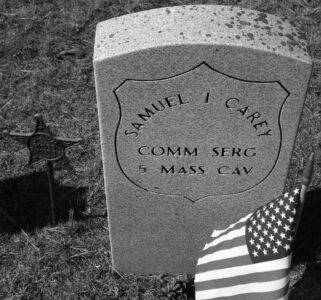
Samuel Carey: Black, Civil War vet, barber, Negaunee resident
History Quiz
WUESTION — "Finland Calling" or "Suomi Kutsuu" was an iconic, long-running Finnish-American television show ...