
US trading partners scramble to make tariff deals
Trending
WASHINGTON -- With President Donald Trump’s dramatic tariff hikes on the cusp of starting, countries around the world scrambled on Thursday to finalize their trade frameworks with the United States, figure out the tax rates their goods might face and prepare for the unknown.
Shortly before today’s deadline for the tariffs beginning, Trump said he would enter into a 90-day negotiating period with Mexico, one of the nation’s largest trading partners, with the current 25% tariff rates staying in place, down from the 30% he had threatened earlier.
“We avoided the tariff increase announced for tomorrow and we got 90 days to build a long-term agreement through dialogue,” Mexican leader Claudia Sheinbaum wrote on X after a call with Trump that he referred to as “very successful” in terms of the leaders getting to know each other better.
White House press secretary Karoline Leavitt said at Thursday’s news briefing that Trump “at some point this afternoon or later this evening” would sign an order to impose new rates starting at 12:01 a.m. EDT today. Countries that had not received a prior letter from Trump or negotiated a framework would be notified of their likely tariff rates, either by letter or executive order, she said.
The unknowns created a sense of drama that have defined Trump’s rollout of tariffs over several months, with the one consistency being his desire to levy the import taxes that most economists say will ultimately be borne to some degree by U.S. consumers and businesses.
Trump imposed today’s deadline after his previous “Liberation Day” tariffs in April resulted in a stock market panic. His unusually high tariff rates unveiled in April led to recession fears, prompting Trump to impose a 90-day negotiating period. When he was unable to create enough trade deals with other countries, he extended the timeline and sent out letters to world leaders that simply listed rates, prompting a slew of hasty deals.
Trump reached a deal with South Korea on Wednesday, and earlier with the European Union, Japan, Indonesia and the Philippines. His commerce secretary, Howard Lutnick, said on Fox News Channel’s “Hannity” that there were agreements with Cambodia and Thailand after they had agreed to a ceasefire to their border conflict.
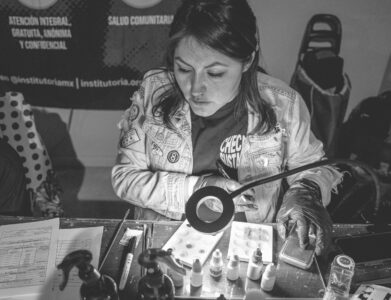
A volunteer analyzes the reagents in psychoactive substances belonging to a festival-goer at the Check Your Substance booth that offered free drug testing, and where people can confirm their drug does not contain adulterants or fentanyl, during a three-day electronic music festival in Mexico City on Jan. 31. (AP file photo)
Trump said as part of the agreement with Mexico that goods imported into the U.S. would continue to face a 25% tariff that he has ostensibly linked to fentanyl trafficking. He said autos would face a 25% tariff, while copper, aluminum and steel would be taxed at 50% during the negotiating period.
He said Mexico would end its “Non Tariff Trade Barriers,” but he didn’t provide specifics.
___
Associated Press writers Lorne Cook in Brussels and Jamey Keaten in Geneva contributed to this report.