Grand Island archaeology probes past

Archaeologist Eric Drake is seen at a dig on Grand Island. (Photo courtesy of the Marquette Regional History Center)
-
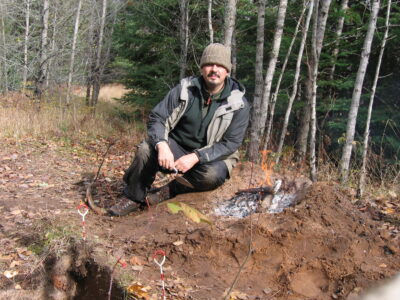
- Archaeologist Eric Drake is seen at a dig on Grand Island. (Photo courtesy of the Marquette Regional History Center)
-
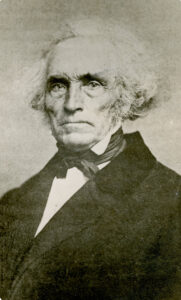
- Abraham Williams is pictured. He was the first permanent Euro-American settler to arrive on Grand Island, which happened in 1841. (Photo courtesy of the Marquette Regional History Center)
Approximately eight miles long and three miles wide and comprising 13,000 acres, it is the largest island on the south shore of the lake. The island has two sections: a larger, western portion, which is connected by a low, narrow isthmus to a smaller, eastern lobe, known locally as the Thumb.
The island was acquired by the Hiawatha National Forest in 1990 and designated the Grand Island National Recreation Area. Since its federal acquisition, a significant amount of archaeological research has been conducted on the island. Identification of sites (Phase I archaeology) and evaluation of the sites’ historical and cultural significance (Phase II archaeology) revealed 4,000 years of continuous human occupation.
Starting in 2001 the Hiawatha National Forest partnered with Illinois State University (ISU) on the Grand Island Archaeological Research Project, under the direction of the late Dr. James Skibo, professor at ISU (an Upper Peninsula native and Northern Michigan University graduate) and U.S. Forest Service archaeologist Eric Drake.
The project’s first objective is full-scale excavation and interpretation (Phase III archaeology) of sites that cover the entire human history of Grand Island. The goal is to understand the specific activities of the people who lived on and used the resources of the island.
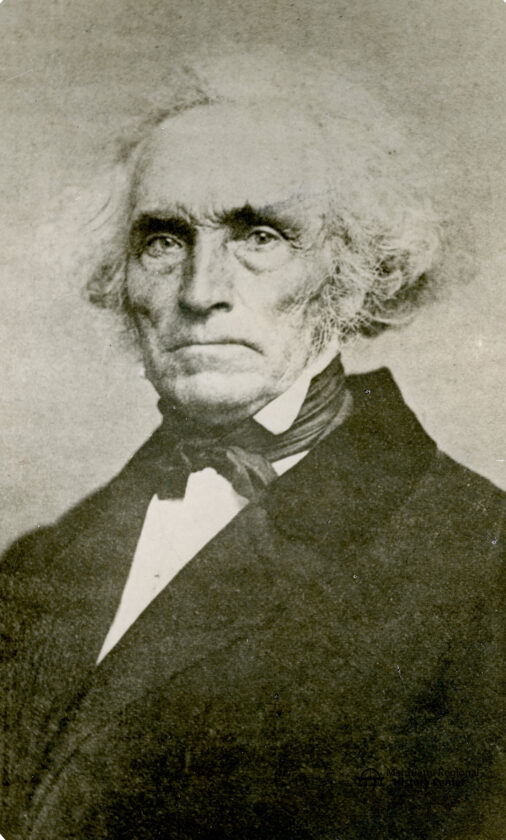
Abraham Williams is pictured. He was the first permanent Euro-American settler to arrive on Grand Island, which happened in 1841. (Photo courtesy of the Marquette Regional History Center)
The second objective of the Grand Island Archaeological Project is to provide advanced training in the field techniques of archaeology through an archaeological field school that draws students from ISU, NMU, and elsewhere. Over the course of a month, students learn excavation, pedestrian survey and shovel testing, map reading and the recording of archaeological sites, including the creation of detailed maps of the sites using a geographical information system.
A final objective is promoting understanding of the island’s unique history to visitors including public interpretation and outreach programs. The project also included youth archaeology workshops which gave local youth a chance to participate in the digs, working alongside the college students.
More than 200 archaeological sites have been identified on the island, ranging from the island’s earliest occupation during the Late Archaic period (circa 2000 BCE), to the Woodland period (circa 0-1600 CE), as well as Protohistoric/Contact period (circa 1600-1840) occupations and sites associated with the hotel and resort era.
Among the sites is the largest known Late Archaic settlement in all of the Lake Superior region at Murray Bay. The early native Americans took advantage of its protective harbor and set up seasonal campsites to collect acorns, harvest spawning fish in the shallows and hunt deer, moose, bear and other wildlife.
According to tradition, which is supported by linguistic and archaeological studies, the ancestors of the Anishinaabe (Ojibwe) migrated from the Atlantic Ocean, or perhaps Hudson Bay, following the St. Lawrence Seaway to the Straits of Mackinac, arriving there about 1400.
They continued expanding west, south and northward. By the time of contact with Euro-Americans, there was a small band of Anishinaabe on the island. During the 17th and 18th centuries, there were sporadic visits from trappers and missionaries.
The first permanent Euro-American settler, Abraham Williams, arrived in 1841. At the invitation of a local chief, he opened a trading post on the southern end of the island, near Murray Bay. It was near the archaeological site of Gete Odena, which means ancient village. A single hearth feature (the remains of a fire) dates the initial occupation of the site to the Late Archaic period.
The most intensive use of Gete Odena took place from the late 1700s to early 1800s CE, probably right up until Williams arrived on the island. A wide range of Woodland material was recovered, but it is dominated by chipped stone and ceramics.
The animal remains are primarily large mammals such as moose, black bear, and whitetail deer, as well as smaller mammals like beavers. Additionally, six pit features are believed to have been used to create smudge fires to smoke animal hides.
The site seems to represent a special-function habitation site where animal exploitation activities concentrated on mammals and the processing of hides. Combined with another archaeological site, a French fur trader’s cabin that dates to roughly 1820, it might provide an indication of how the local population became involved in the fur trade to supply the European market.
Following Williams’ death in the 1870s, William Mather, president of Cleveland Cliffs Iron Company, then purchased the island as a natural reserve. Mather and some of his company executives built a few private cabins and a small hotel that catered to tourism in the still relatively untamed northern Great Lakes.
To learn more about Upper Peninsula archaeological sites, visit the Marquette Regional History Center’s Eleventh Annual Archaeology Fair. Held on International Archaeology Day, Saturday October 21, the fair is an open-house event from 11 a.m.-3 p.m. at the history center.
As an official collaborating organization with the Archaeological Institute of America, the history center explores and celebrates local historical evidence and world-wide archaeology. Enjoy hands-on learning for all ages.
Multiple booths feature various regional and global displays and activities, including a scavenger hunt and the screening of a Fresh Coast Film Festival short. The fair is included with general admission and membership at the sponsor level on up.
Superior History

History quiz
U.P.’s miracle on ice
U.P. Moments in History
History quiz
QUESTION: Who was Marquette’s first known casualty during World War II? a. Abraham Fleury b. Alvar ...
Old Lady Lucy