
A greener lunch room
NHS?class awarded grant for local food efforts
Trending
By CHRISTIE MASTRIC
Journal Staff Writer
NEGAUNEE -- Negaunee High School's environmental science class has been awarded a $2,000 grant to support a project that will bring more local food into the lunch room.
U.S. Department of Agriculture Food and Agriculture Service Learning Program grant involves educating the students about local food.
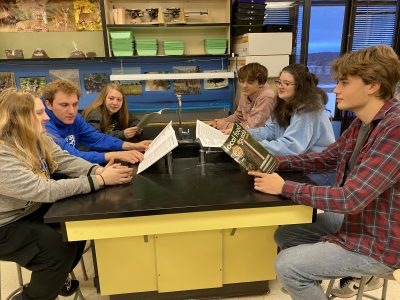
After meeting with farmers and food service to better understand their local food system, students designed a project that will provide hydroponic greens like spinach, kale and lettuce to school lunches, according to a news release from Negaunee Public Schools.
"I hope the community can see how hard my students worked on this project to incorporate healthy foods into our lunch program," teacher Todd Backlund said. "My hope is that the community will help them raise the additional funds necessary to purchase the hydroponic system by participating in our third annual meat raffle fundraiser."
Raffle tickets may be purchased at the Negaunee High School office from 8 a.m. to 2 p.m. Monday through Friday or from any environmental science student. The drawing will be at 8 a.m. Feb. 22 at the high school.
The first four prizes will be butchered, processed and wrapped half-hogs raised by Negaunee High School environmental science students, with processing donated by Solderman's Meat Processing of Gladstone. Crazy Joe's Salsas & Dips and 906 Communications, both based in Baraga, will donate the smoking of hams and bacon. The next four prizes will be beef bundles, with the ninth and 10th prizes to be a chicken bundle and a 20-pound turkey, respectively.
The cost is $10 per ticket, with only 1,000 tickets to be sold.
According to foodrevolution.org, hydroponics is defined as a type of gardening method that doesn't use soil.
The food project is one step in a larger plan to provide more access to fresh, locally grown options at the school, NPS said. Students will work together with farmers and food service to provide education and information to their school community about locally sourced food purchased from the 10 Cents a Meal program through the U.P. Food Exchange, an online food hub. Additionally, this initiative deepens relationships between the school and area farms, which will host students for farm tours and leadership activities in the spring, NPS said.
"This project was very important to us because we are creating an example of how other schools can incorporate locally grown foods into school lunches," NPS student Hunter Mikkola said.
Student Izzy Kantola said that she is excited to be a part of this change and is eager to see how it impacts the students at NPS.
NPS said that even though the grant does not cover the entire cost of the hydroponics system, the environmental science students will continue to write other grants and raise funds to obtain the additional funds needed.
Student Annabelle Beebe said, "This project has made us better problem solvers and allowed us to explore many opportunities we would not have otherwise without the funding from MSU."
Producing and purchasing more local foods to serve in schools is the major goal of the project, NPS said. As core components of Farm to School, local food production and procurement supports farmers in the community and expands the variety of healthy food choices for students.
The National Farm to School Network calls itself an "information, advocacy and networking hub" for communities working to bring local food sourcing as well as food and agriculture education into the school systems and early care and education environments.
Project partners in the U.S. Department of Agriculture Food and Agriculture Service Learning Program grant include the Michigan State University Department of Community Sustainability, Michigan State University Upper Peninsula Research and Extension Center, NPS, Marquette-Alger Regional Educational Service Agency, Little Parsley Farm and Chartwells.