
What’s Flying: The last of the fall colors
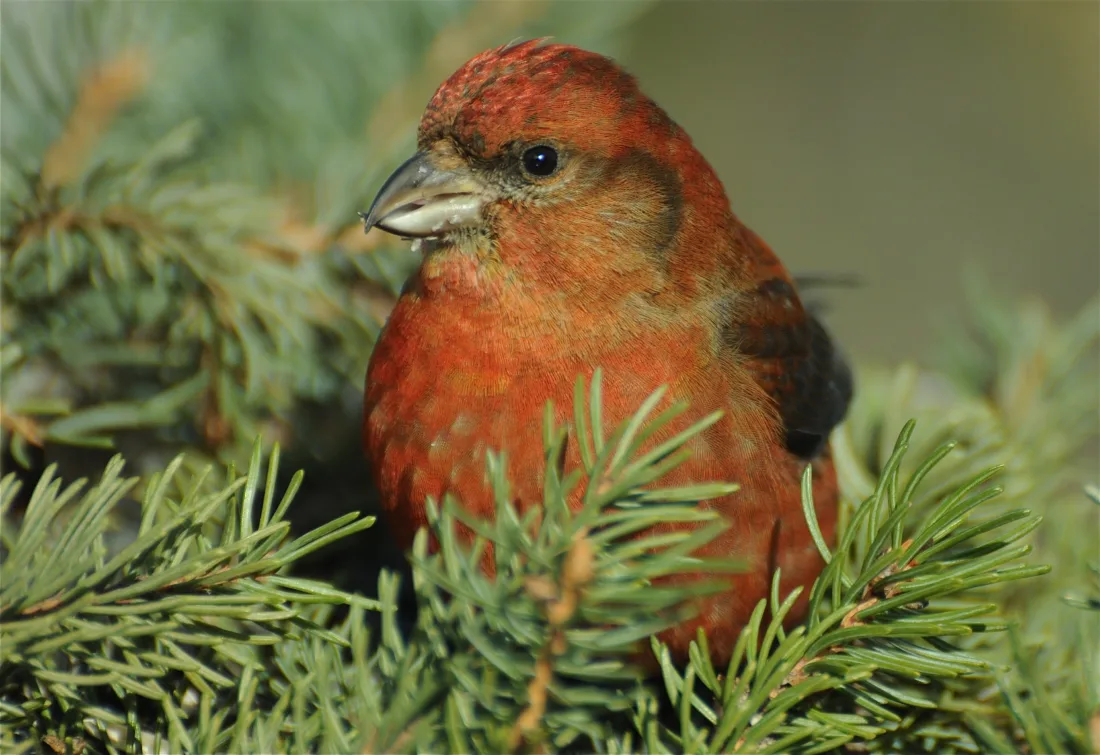
A red crossbill looks on. (Scot Stewart photo)

STEWART
A red crossbill looks on. (Scot Stewart photo)
STEWART
Trending
"There is no real ending. It's just a place where you stop the story." - Frank Herbert
There is nothing like a big windy day and some frosty temperatures to begin finding the end fall colors' final stories in the Upper Peninsula. The story of this year's wonderful autumn show here is wrapping up! A look at the hills south of Marquette highlights some runs of bright yellow aspens and some relaxed sugar maples enamored in their golden orange highlights shining alongside their bare neighbors.
It truly seemed like the show put on by the cast this year's trees far exceeded all expectations, considering what the summer drought subjected to nearly all the area. Parts of the central Upper Peninsula have paid the price for the lack of rain with the recent forest fires on the North Ridge, Craig Lake State Park, and Black River this month. Just how dry it still is apparent with the stubborn resistance the fires have displayed.
Those areas that have burned this fall will be destinations for black-backed woodpeckers soon. The heat and the smell of smoke from the fires may attract beetles from great distances. One group of bark beetles, called the fire beetles (Melanophila), have small pouches of water in their bodies that expand when they sense heat, often from miles away. The beetles then take off for the heat, usually at or near the site of weakening and dying trees at a wildfire. With diminished abilities to defend themselves, the trees are prime targets for the beetles to lay their eggs, and the hatched larvae to feed on the inner bark and the woodpeckers that eat them.
White-spotted sawyer beetles, with their extremely long antennae, are familiar to many in the Northwoods and they too look for weakened trees to lay their eggs. Smoke particles in the air draw them to fire sites. With tree defenses diminished or completely shut down, and little surviving competition from other insects, the trees are a gold mine for these beetles. With the mild temperatures a few beetles may make it there this fall. If the beetles are not found by woodpeckers now, there will still be plenty of beetle and wasp larvae in the trees next year, and eventually colonies of carpenter ants nesting inside to keep the black-backed woodpeckers, and downy, hairy, and eventually pileated woodpeckers busy next year. Chickadees, nuthatches and brown creepers will look there for these and other insects too.
Fall migration is still on across the Upper Peninsula. Birders continue several fall counts across the north woods. In Marquette a startling number of migrants were observed and counted this past Tuesday north of town. Working just off Co. Rd. 550 near Sugarloaf, a birders watched and counted a huge migratory stream head south overhead. During a three hour morning count last Tuesday, 733 red crossbills, 331 pine siskins, 114 American goldfinches, 27 snow buntings, and 14 Lapland longspurs were tallied. At Whitefish Point in Chippewa County, during the 3 3/4 hour count there 2500 siskins were counted, along with 120 red crossbills, and 225 purple finches. Gigantic numbers of siskins have been seen in past years there too.
Most of these birds are heading south out of the boreal forests in Canada. Nearly all of them will head out of the U.P., with just a few crossbills, siskins and goldfinches sticking around, as long as conifer and birch seeds are available. Some of the siskins and goldfinches may also join locals at bird feeders for extended stays in the area.
Raptors continue to show their presence here too. A merlin has been seen regularly at Presque Isle chasing blue jays and juncos. Peregrine falcons also continue to be seen in town but have expanded their hunting territory farther away from north Marquette. Bald eagles are also regulars along the Lake Superior shoreline, but a casual check of the birds at the Marquette County landfill yielded an estimated count of nine eagles there this past Tuesday.
Waterbirds also continue good showings at several sites including Whitefish Point and Marquette. Fourteen duck species were seen passing the point on Monday, including both dabblers and divers. The former are dwindling down, with American wigeons and green-winged teals the most commonly seen dabblers now. Several flocks of the latter have been observed in Marquette too. Scaup, black scoters, red-breasted mergansers, and long-tailed ducks are the most frequently seen divers with all seen at both locations except the scoters.
On the windier days, it has been more difficult to find ducks out on the harbors in Marquette, but on the calmer days they are being seen across most of the Lower Harbor, especially at the south end near the old Shiras Steam Plant dock. Some are even beginning to work into the more sheltered spots closer to shore along both sides of the ore dock near Mattson Park and the city piers. Horned grebes are beginning to appear in the same areas and in the next few weeks more of them and the diving ducks may work into these areas as some may look to work the calmer waters. With the continued forecast of relatively mild weather waterbird migration may continue at a slower pace, but it will be worth it to keep an eye on the Lake front in Marquette, especially Lower Harbor as more ducks and some grebes continue to move through and into the area this fall.
With the end of October nearing, warbler movements should be nearing an end for most species, but a few orange-crowned and yellow-rumped may occasionally be seen for a while yet as some have made it in years past all the way to the Christmas Bird Count. That same great weather will make it great for birders too. Getting out for these late birds and the last of the fall colors is a special treat and keep the stories going!