
What’s Flying: I don’t think we’re in Kansas anymore
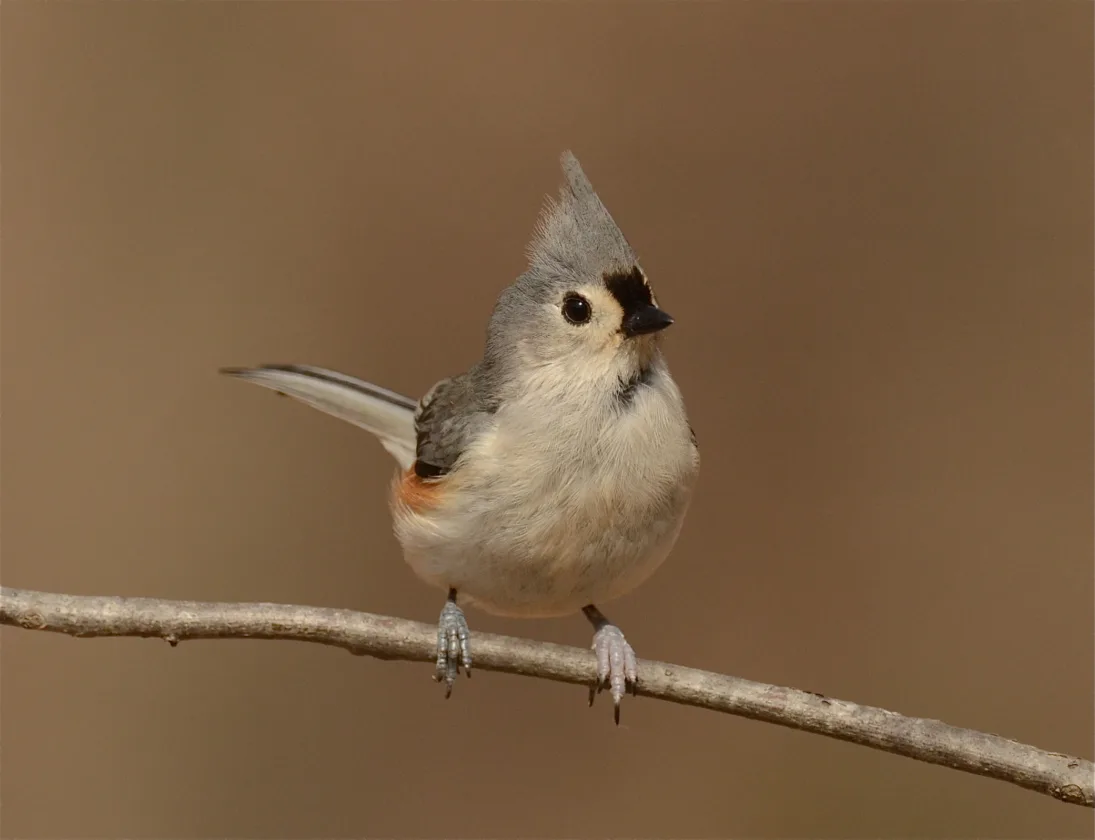
A tufted titmouse looks on. (Scot Stewart photo)

STEWART
A tufted titmouse looks on. (Scot Stewart photo)
STEWART
Trending
"A treasure may lie behind the next tree or dune. You never know what new wonderful bird may have been blown here by the latest wind ." - Anonymous
"I don't think we are Kansas anymore, Toto." Dorothy, in The Wizard of Oz
November winds are sometimes the breezes of magicians. Many birders keep a close eye on all the various ways other birders report their most recent sightings. November seems to be one of the best times to find birds that are not in the places they are expected.
Fall migration gets many birds moving. A number of possible factors can send them in what seems like the way. Hurricanes, strong jet streams, drought, forest fires and the changes they have made, big storms, fog, and heavy rain can move birds off their expected courses. There are other factors that have been discovered in recent years providing clues to other reasons for bird flight mis-directions.
Space weather may be one reason birds may fly of course. This refers to massive waves of energy thrown at Earth by solar eruptions. The same events causing the aurora borealis. Sunspots on the sun's surface can produce solar flares and coronal mass ejections. These disturbances disrupt birds' ability to detect the Earth's magnetic fields, one of the ways they navigate. Studies have shown solar storms have been shown to have some effects on birds flight. During severe solar storms some birds literally did not fly. Those getting into the air often fly in random patterns directed by the prevailing winds. These birds may end up in location they normally don't reach.
Scientists have long thought magnetic iron crystals in bird brains helped them, and that birds are normally guided by magnetic iron crystals. In recent years though additional magnetized deposits have been discovered in the livers of birds that may actually be directing the birds. Studies of pigeons have yielded the important role livers play in navigation. Further research suggests birds with liver ailments may have difficulty migrating properly.
So, November is one of the best months to find bird vagrants, brought here from far away places by many factors, most undetermined. Marquette saw one of the rarest arrive here last weekend. One of the best birders in the area, especially when it comes to finding unexpected species, was birding in one of the most neglected parts of town next to Schneider Mill Court when he found a flycatcher. The opening has plenty of invasive plant species and an unused semi-trailer. Fortunately, it has had plenty of insects and room for a flycatcher to hunt.
It turned out to be a species with a normal range that stretches across most of the western states with the closest corner to the Upper Peninsula in Kansas, an ash-throated flycatcher - the first ever in Marquette County. Less than 20 have ever been reported in Michigan. They like to perch between six and eighteen feet above the ground and watch for insects they drop down to catch. It was seen through the week and enabled dozens of birders to get a glimpse. Ironically, reports of another on at Whitefish Point last Sunday as well! Although rare outside their range, they are frequent vagrants seen around Lake Michigan and along the entire East Coast.
Marquette saw another rarity this past week that raised a few different question. A tufted titmouse showed up in Harvey just a block or so from a home where one appeared several years ago. They are found across most of the eastern U.S. but normally only to the Mackinaw Bridge in Michigan and central Wisconsin. Tufted titmouses are nonmigratory, like their relatives, chickadees, so wandering this far north is difficult to explain. They are extremely attractive birds with larges eyes, crests, and powder blue backs, and their calls can sound similar to those of cardinals. Primarily seed eaters in winter, they often remain close to bird feeders in their home territory.
Because some reports suggest a fair amount of bird life has moved away from the Rocky Mountains this fall, perhaps due in part to drought and lack of food, it hasn't been too surprising another western bird is turning up in the U.P- this fall, Townsend's solitaires. These birds also wander a fair amount in winter, and they are not terribly uncommon in the U.P. One spent several months feeding on a variety of shrub and tree fruits and soft cones of junipers and yews last winter. Another was seen for a similar stretch north of Paradise in Chippewa County. October is a bit early for them here though suggesting there may be more on the way. They are mostly gray-colored thrushes usually found close to or in fruit trees and bushes when they arrive here.
Last week a northern mockingbird was also reported at Whitefish Point, staying there several days. Some of these birds are usually seen in the U.P. each year, but usually in the spring. They have a year-round range across most of the southern half of the U.S., with a summer band extending northward to the southern edge of Michigan and Wisconsin. One did spend more than a week singing and foraging along the edges of the soccer fields near the Superior Dome, apparently leaving after it was unable to locate a mate.
On yet one more unusual note, three trumpeter swans appeared again on the Dead River near the mouth. Swans have man irregular visits to the river over the years, often in the spring and fall. It is not certain where they go in between visits but do appear at times with juveniles, suggesting they are breeding nearby. On a flip five tundra swans were seen recently at the mouth of the AuTrain River. Migrants only passing through, they usually head to the Atlantic from the northwest U.S. and Canada on a route through central Wisconsin. So head out, treasure awaits even if we are not in Kansas.