
What’s Flying: Great surprises all across the U.P.

STEWART
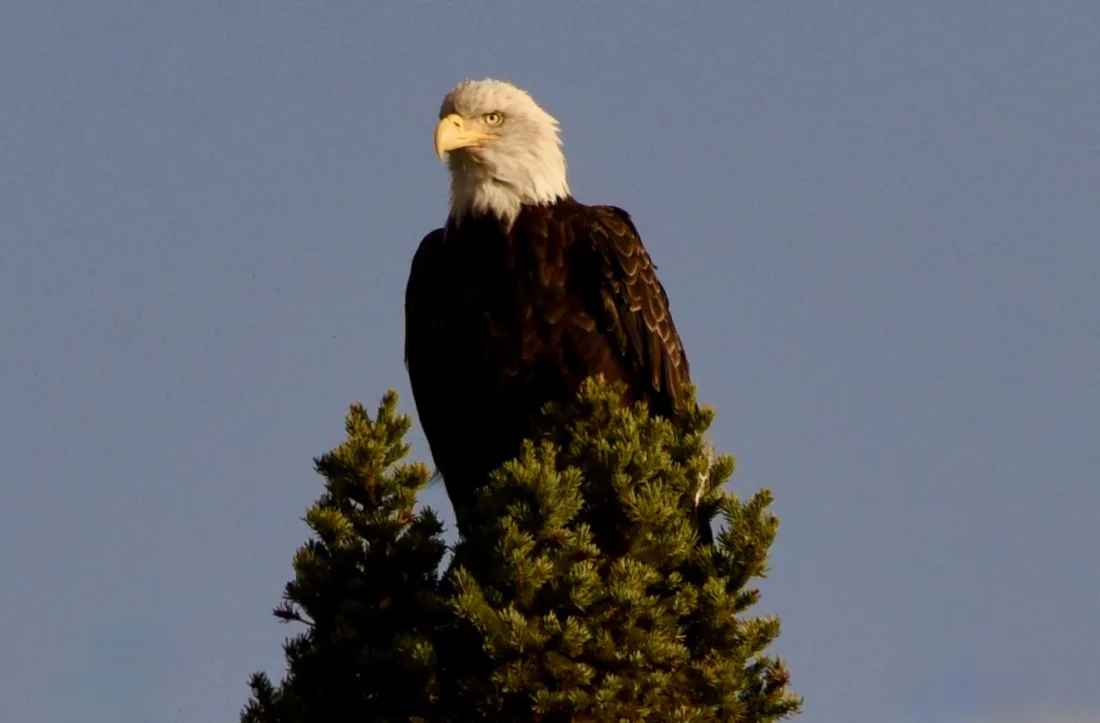
A bald eagle looks on in Chassell. (Scot Stewart photo)
STEWART
A bald eagle looks on in Chassell. (Scot Stewart photo)
Trending
"If you stand in the meat section at the grocery store long enough, you start to get mad at turkeys. There's turkey ham, turkey bologna, turkey pastrami. Someone needs to tell the turkey, ‘man, just be yourself.’" - Mitch Hedberg
October in the Upper Peninsula has provided some interesting surprises already, at its only at the midpoint of the month. Dry conditions all summer first created an idea the fall colors across much of the area might be dulled by the drought. Overall, the yearly rainfall totals were near normal, but the low summer totals left many areas totally parched, even though they were cushioned by the winter's record snow totals. The colors across much of the central to western counties - from the Iron Bridge in Negaunee Township to Copper Harbor have had exceptional displays of rich crimson and deep orange maples and bright birch, basswood, ironwood, birch and aspen lemon yellows.
The drought created perfect conditions for wildfires this summer that really did not materialize. The one of the reasons the North Woods may have been spared from fires could have been the lack of lightning - few thunderstorms all summer. That all changed, surprisingly, in October, was the arrival of some storms. This past week at least three big storms made the news.
Eighty degree temperatures in October in the U.P. are not all that unusual any more with global warming. The U.P. saw two days of above average temperatures last weekend with temps up to 87oF on some thermometers. With end of week forecasts predicting snow in the west and in the higher terrains changes, however brief, are on the way.
Those touring across the area looking for late pockets of peak fall colors may have been surprised to find unexpected pockets of wild turkeys. Between Marquette and Copper Harbor at least a half dozen flocks can often be seen. There is even a flock near Brockway Mountain on the road heading toward Eagle Harbor. Thirty years ago, there were few wild turkeys anywhere in the U.P. The few to be found were usually on the Wisconsin-Michigan border in the western U.P. For veteran birders, the numbers are really surprising. Some of that late peak color was found around the tip of the Keweenaw last weekend too. Now though, thy seem to be acting like everywhere is home.
During the hot spell last weekend, the winds were also high. Gusts over 50 mph were observed at Brockway Mountain so it was surprising to find a quartet of horned larks foraging in the weedy patches there right alongside the road. Neither hikers or cars seemed to particularly bother them as they looked for seeds and the odd grasshopper.
There has been a strong push of horned larks moving through the U.P. Late last week a small flock of horned larks and lapland longspurs was found foraging in the newly seeded stretch of the bike path near the Lakeshore-Wright St. roundabout. The following morning the flock had grown to nearly one-hundred. A jittery flock, they alternated from the grass covered ridges and the rocky area protecting the shore. The group was mostly longspurs, but careful looks revealed the horned larks mixed in the flock.
Construction zones on the highway can provide gifts. At the bridge construction on U.S. 41 south of Chassell a quick look might provide a great look at a bald eagle overseeing the river fish populations on the Sturgeon River. A casual check along the highway can yield surprising shows.
Life in the Lower Harbor in Marquette is picking up! The early arriving redhead ducks, scaups, and mergansers, have been joined this week by more common goldeneyes and newly arrived long-tailed ducks. For many, the latter are true diving favorite. They occasionally arrive in flocks of twenty or more and often forage in tightly formed groups in the deeper parts of the harbor, far from breakwall and shore. Most intriguing is watching them forage together. One minute the flock is all swimming together. The next, they are all gone on a dive. They are among the most proficient duck divers, able to go up to 200 feet down in search of mussels and other mollusks and crustaceans.
For those looking ahead to the winter and wondering what to expect from winter visitors, the Winter Finch Forecast from the Finch Research Network and Tyler Hoar in Ontario has provided some clues. The annual report describes mountain ash, birch, and conifer production over the summer to provide a look at how finches, bohemian waxwings, red-breasted nuthatches, blue jays, pine and evening grosbeaks may move to find food during the winter. Due to the detailed look at forest crops, the forecast usually provides a relatively accurate look at how they will migrate to find food.
A "robust" crop of American mountain ash fruits across most of southern Canada means there will not be too many pine grosbeaks or bohemian waxwings visiting the U.P. this winter. When the crop is low, both species drop down into the states looking for mountain ash and crab apple fruits. There will probably be just a few this year. This may also keep evening grosbeaks and purple finches closer to home in Ontario this winter.
Red crossbills have already made a decent push through the U.P. as seen at Whitefish Point this fall. Some will remain in the area looking for white pinecones and seeds. Some pine siskins may drop down again this year as some have already come through, but predictions on redpolls are still uncertain. It will be interesting to see how these species wander into the U.P. during the winter months.
Some other surprises have come from around the area with a family of five tundra swans at AuTrain on the Lake Superior beach last Tuesday. The group included two adults and three juveniles. They are usually a little smaller than the local trumpeter swans and adults have a yellow marking at the base of their bills. Great surprises all across the U.P.