
What’s Flying: The seasons are a’changing
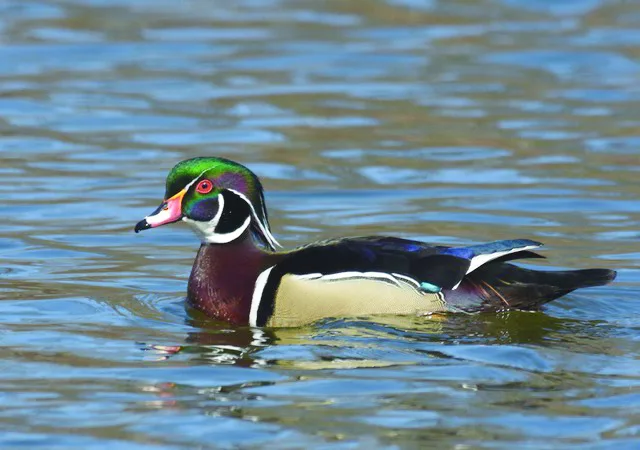
A male wood duck wades. (Scot Stewart photo)

STEWART
A male wood duck wades. (Scot Stewart photo)
STEWART
Trending
"Change is hard but inevitable." - Jenny Han
Although mentioned frequently lately, the autumnal equinox - the "official" start of fall, is just around the corner. It comes around Tuesday, Sept. 22 at 8:05 p.m. EDT in the Northern Hemisphere. The days have drawn noticeably shorter, every fifth tree along the highway is turning red or yellow, and the temperatures are dropping especially in the evening. Although it has been an often warm, sunny summer, the thought of the inevitable change to autumn comes with a mixture of feelings by many minds wander, and the concepts of winter coats, snow shoveling, and winter seep in behind the current dreams of fall colors, pumpkin spice, piles of blowing leaves and crisp sunny, frosted edge mornings.
Still, autumn is a treasured time in the U.P. Those bright blue skies, often punctuated with spectacular clouds and V's of honking Canada geese above, and remnants of violet-colored asters and bright yellow goldenrod (there's an oxymoron), give way to those hoped for brilliant crimsons, golds, and yellows of the maples, oaks, poplars, birch, and tamarack. Summer sun provided what the maples need for their reds, now can a few late rains provide what they all need to avoid just shriveling up in summer's drought.
Joining in the display of fall colors has been a steady of stream of monarch butterflies moving through the central U.P. stopping to refill on some of those late goldenrod flowers. Because the flowers are nearly done, many butterflies have meticulously worked up and down many flower stalks to take advantage of all the available nectar. They have had to complete with a good number of common eastern bumblebees still working the same flowers.
Those flocks of geese are beginning to pass overhead and below them flocks of dabbling ducks and a few diving ducks through the area. The latter are tougher to find unless viewed as they fly past shoreline sites like Whitefish Point in Chippewa County. Continuing fair weather has brought northern pintails, northern shovelers, green- and blue-winged teals, American wigeons, American black ducks and mallards, the dabblers. A few common mergansers, white-winged scoters, and greater scaup, the divers have also come through this week.
Impressive numbers of dabblers have been noted at the Gwinn Sewage lagoons too. Seventy-eight wood ducks were seen there recently along fifteen blue-wing teals. Joining them was big flock of 154 Canada geese was seen there on Tuesday. Five wood ducks were seen at Portage Point in Delta County too. They were in the company of seven great egrets!
Red-necked grebes are also on the move. Whitefish Point has been a good spot to watch their fall migration too. 96 were seen on Tuesday and good numbers should be seen there for a while yet.
Most days this past week 40-60 species of birds have been noted at the Point. Perhaps the best, seen through the early part of the week there, was a female painted bunting, with a run there that started on Monday. The normal range for painted buntings normally extends as far north as central Kansas and parts of Missouri. They do wander however and have been reported in nearly all the Lower 48 states except for the northern Rocky Mountain states and South Dakota. Wanderers have also made it to most of the lower Canadian Provinces.
The bunting seen at Whitefish Point was a female. Unlike the gaudy males though, the female painting buntings are designed to slip into a world where they can quietly sit on a nest and blend in. They sport the subtle plumage for that - light green backs and heads, yellowish bellies. Perfect for blending in while on a nest or simply foraging on the ground and low brush for seeds. The Upper Peninsula has seen several painting buntings visit over the years. Most are around for just a day or two before disappearing. Because vagrants like this rarely have any sort of tracking technology, almost nothing is known about their fortunes after they are gone, unless their remains are found somewhere along the line.
Late migrants from the north have made their way through as some local birds continue on here in the area. Ruby-throated hummingbirds have still been seen trickling through. Birders are encouraged to keep feeders up, keeping them clean and filled with fresh sugar water to assist these Canadian birds on their longer trip to the Gulf Coast and Central America. Late birds may also include western species like Anna's and rufous hummingbirds if the jet stream ever pick up with storms from the West Coast to push some of these western birds eastward. Even late ruby-throats have come through the central U.P. as late as mid-November. They have been recovering from minor injuries or other physical problems late to heal. Those feeders will definitely help them.
Young common grackles continue with their parents in the Marquette area. This is a really new development from their behavior just a few years ago when they headed south from the area round the end of August. They have been nesting more frequently in wetter, wilder areas in the city limits and may have learned to adapt better to seed and suet feeders to continue on. Families of rose-breasted grosbeaks have also continued in parts of town this week.
It is that time of year when mammals like bears and raccoons look to fatten up in preparation for the colder weather and may look to bird feeders for a quick fix. On the east side of Marquette, raccoons have been making regular raids on feeders, pulling down shorter feeder poles and redirecting suet baskets into places providing more leverage for opening the baskets and prying out high fat foods. Long-time residents have lots of experience dealing with black bears and their muscle. It is that time of year when a lot of grief can be spared by simply bring feeders in at night or emptying them to reduce temptations.
Everyone knows the seasons are a'changing and it's time to embrace the wonder of living in a four-season climate with all the wonders it brings!