
What’s Flying: Take a moment
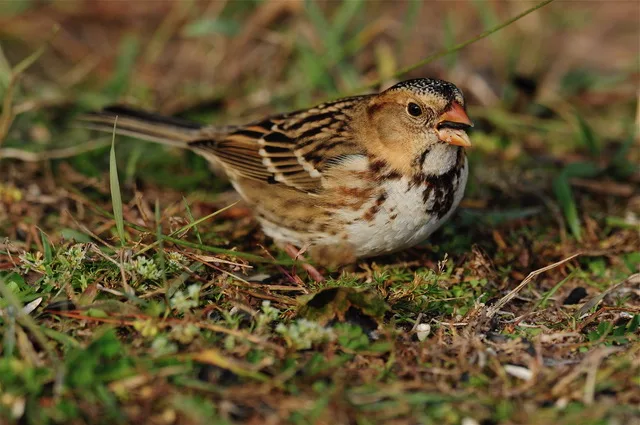
A Harris’s sparrow looks on. (Scot Stewart photo)

STEWART
A Harris’s sparrow looks on. (Scot Stewart photo)
STEWART
Trending
"You see, the what ifs are as boundless as the stars."
"...nature is reflected in our capacity for wonder." - Richard Louv
What if it is a big El Nino year? What if the Upper Peninsula still gets another record winter of snow? What if the mild conditions continue into late November again? These are just a few of the questions sure to be on the mind of even more people than just those of the Upper Peninsula.
El Nino is making the news already and for good reasons. The Pacific Ocean off the coast of Peru is already warming up considerably and this could be the hottest it has been ever. Forecasts now are at nearly 100% sure of a very strong El Nino lasting until next February based on the temperature of the Pacific surface off South America. Below the surface the temperatures have been even higher above average. Normally the warming of this part of the ocean begins in the spring and peaks somewhere around December. El Nino is Spanish for the child, referring to Christmas celebrations. Although El Nino is a natural event, temperatures have risen during the last 175 years, due to human activity based on research using the growth of coral reefs in the eastern Pacific to measure the effects of temperature on their growth over the past 900 years.
The effects of an extreme El Nino to the U.P. could mean an even more extreme roller coaster winter. Normally the event triggers warmer temperatures and drier conditions for Michigan. But the warmer seas can also play havoc with polar conditions and produce polar vortexes. Yoopers have become familiar with that phrase and generally do not find it to their liking as it often produces extremely cold, subzero conditions. Winter may produce another seesaw season requiring a seatbelt!
So, in the meantime, autumn moves on here in the U.P. Many feeder station continue to host a wide array of birds as some prepare for migration, some ae just passing through, and some birds may have simply stocked up on some days prior to rainstorms or low-pressure systems.
Many of the eBird reports have include ruby-throated hummingbirds. As many as eight have been at some feeders. While there are still females and juveniles here from this summer, as time moves on this fall more and more hummingbirds will be migrants from Canada heading south.
Suet currently can attract a surprising number of different species. Besides the four resident woodpeckers and their offspring, flickers may be attracted to it, but they are rare. For nuthatches and chickadees, the visitors may be mostly juveniles, finding their way to more meals. Common grackles and starling may make up the heaviest traffic at the moment, with the some of the former leaving soon, and the latter here longer. Some starlings will winter in the U.P. and nearly all will be in towns. The more unusual suet visitors are brown thrashers and others looking to build up extra fat before migrating.
Warblers have continued to push through with many Tennessee warblers and common yellowthroats now in the mix. Warblers always produce a challenge for birders and fall migration may top all the rest. During migration nearly all warblers on the ground are actively looking for food. They only stop for a second or two before flipping more leaves looking for caterpillars. Add on to this that most warblers are now completely changed over from their fall molt to drab, olives, dull yellows, black and whites and presto, few stand out as easy identifications. Thank goodness for black and white warblers and yellow-rumps still flashing yellow-rumps!
The rest are often very similar in appearance. Birders must look for gray hoods, white wing bars, partial or complete eye rings to help distinguish different species. Sifting through them does help to make for exciting days. Sound recordings like those on the Merlin app and photos to compare to field guides can help and make future sitings more definitive.
For those looking for a good shorebird fix, the north winds are the key. Last Monday and Tuesday were particularly good days for them traveling under good conditions. Monday had a pair of semipalmated plovers, a spotted sandpipers, three ruddy turnstones, and fifteen sanderlings. Tuesday was similar with four semipalmated plovers, a turnstone, seven sanderlings, and a semi-palmated sandpiper. A good variety of raptors has also been patrolling the shore there for weary travelers to dine on as they come ashore.
Somewhat surprisingly, Peninsula Point, on Lake Michigan in Delta County, has also been a great birding spot this week. On Monday there a 75-minute check found 41 species. Four sharp-shinned hawks and a Cooper's hawk hunted along the shoreline as a single ruddy turnstone worked along the shore. Nine species of warblers were found in the nearby trees as an American white pelican and a bald eagle flew over.
Sparrows are also beginning to make more appearances with a couple of white-crowns now starting to appear. It won't be long until larger flocks of them and dark-eyed juncos will begin showing up in the area. With them the hope of spotting some Harris's sparrows will grow. These are larger sparrow, mostly rich brown in color with remnants of black in their crowns and throats. Migrating with white-crowns, they are particularly special as the only birds nesting exclusively in Canada. They will be migrating from the Prairie Provinces to the central plains for the winter. Some do veer a bit off course each fall and end up in the U.P., especially in the Marquette area where birders are quick to report them.
Wondering what will be next? Take a moment, check the weather, then go out and find out!