
What’s Flying: One of the best places around
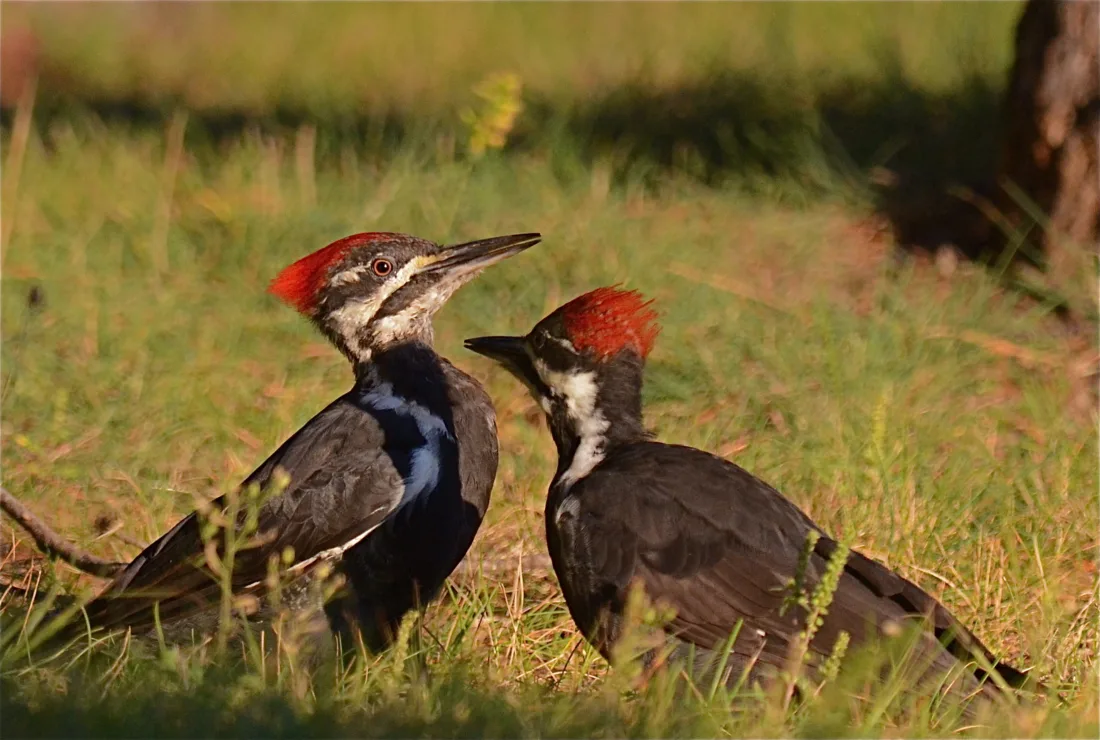
Pileated woodpeckers are seen anting on Presque Isle. (Scot Stewart photo)

STEWART
Pileated woodpeckers are seen anting on Presque Isle. (Scot Stewart photo)
STEWART
Trending
"Summer...
Light your tinsel moon, and call on
Your performing stars to fall on
Headlong through your paper sky...”
– Dorothy Parker
The performing stars of the recent Perseid meteor did exactly that, providing several nights of terrific shows. As the August moon slowly melted away during the pleasantly warm nights meteors shot across the night sky turning the Upper Peninsula "Sphere" into a great Midnight displays. The moon is waxing again, and a few cooler nights begin to hint at the season to come.
And to meet current expectations, the fall bird migration season is underway. A check of eBird reports this week has shown a distinct uptick in shorebird sightings along many of the Lake Superior beaches recently along with some other great birds and a few surprises.
On Tuesday birders on the Lower Harbor Breakwall in Marquette found at least five Baird's sandpipers and three least sandpipers gleaning midges and other insects off the boulders on the lake side of the concrete wall and both levels of the concrete itself. The sandpipers often work along the edges, dropping down to run on a lower shelf where there are some passage running under the boulders hidden from direct view. Those protected spots make it difficult to keep track of a group as they dive in an out of sight and out of reach of the occasional merlins and peregrine falcons cruising the wall for each targets. A small number of sandpipers have been on the breakwall for more than a week.
Also seen in the Lower Harbor this week was a pair of black-crowned night herons. They are rare visitors to the northern U.P. but occasionally wander northward from the Lake Michigan area. Both of these birds were juveniles; in recent years black-crowned night herons have been seen in the Sturgeon River and Dead River marshes and in the Lower Harbor but are more often seen at the Portage Marsh in Delta County and other marshy areas close to the Lake Michigan.
Birders make regular checks at the mouth of the AuTrain River in Delta County during both spring and fall migrations for shorebirds too. In the past few days there semipalmated and black-bellied plovers, least, semipalmated, and spotted sandpipers, sanderlings, a killdeer, and a yellowlegs were found in the last week or so on that beach. Bonaparte's gulls have also been passing through there.
At Whitefish Point birding has also picked up there. Baird's sandpipers stopped off there too after crossing Lake Superior. Semipalmated and piping plovers, a greater yellowlegs, killdeers, spotted, solitary and least sandpipers have also streamed past, with many pausing to take a short rest there. The number of shorebirds there does not go unnoticed. Sharp-shinned and Cooper's hawks, American goshawks, and northern harrier have been seen at the Point this week. Some actually perch on the tip or in dead snags nearby waiting for weary birds to come in off the lake. Tired birds can be an easy meal for a waiting raptor. Broad-winged hawks and bald eagles have been watching migrating through but are not hunting songbirds. Broad-wings occasionally catch birds, but it is usually young juveniles and occasionally nestlings.
The dry conditions across many parts of the country will make foraging more challenging for some birds during migration this year. Forest conditions in the central Upper Peninsula are some of the driest seen in some time. The current state has dried many fruits like blueberries, huckleberries, blackberries, mountain ash, sand cherries and late raspberries, chokecherries, and pin cherries. Gray catbirds, thrushes, robins, cedar waxwings, and even woodpeckers will find smaller fruits, and in some places, no fruits at all this fall.
Dry forest conditions will reduce grass and herb foliage too, limiting the amount of foraging available to insects eaten by sparrows, pipits, horned larks, and upland shorebirds like some plovers and sandpipers. It will also reduce the food available to grazing geese and may funnel some, like Canada, greater white-fronted, snow, and Ross's to athletic fields and fairways where some watering may have occurred.
Dried soils will also drive many invertebrates like beetles, earth worms, and others living near the surface deeper into the ground. This can make foraging by species, like robins, tougher. Some woodpeckers, like northern flickers and pileated woodpeckers benefit from the emergence of new winged ants in late summer. Entire families of woodpeckers can occasionally be seen, especially at Presque Isle Park in Marquette, during large eruptions of active ant colonies as adults teach young birds how to utilize these large, short-time quantities of foods. Because these new ant king-queen emergences follow major rainstorms when soils are softer for the new ants to start to their own colonies, it can create problems for the timing of some of these foragers.
Warblers are also beginning to show up in the area as they start their fall trips from the boreal forests of Canada to Central and South America for the winter. There are even a few species that overwinter in the Caribbean like Kirtland's warblers heading to the Bahamas. For some of them the challenges of drought and forest fires change over to excessive heat and tropical storms. Fortunately, the hurricane season has been relatively quiet so far!
The portions of the U.P. that have received recent rains will definitely be good stops in the near future for birds heading south and great places for summer residents to continue preparing to migrate. Hopes will be running high for more, gentle rains to ease the pressures continuing to build for drier spots. In the meantime the U.P. will continue to provide one of the best places around!