
What’s Flying: Migration is bringing new treats every day
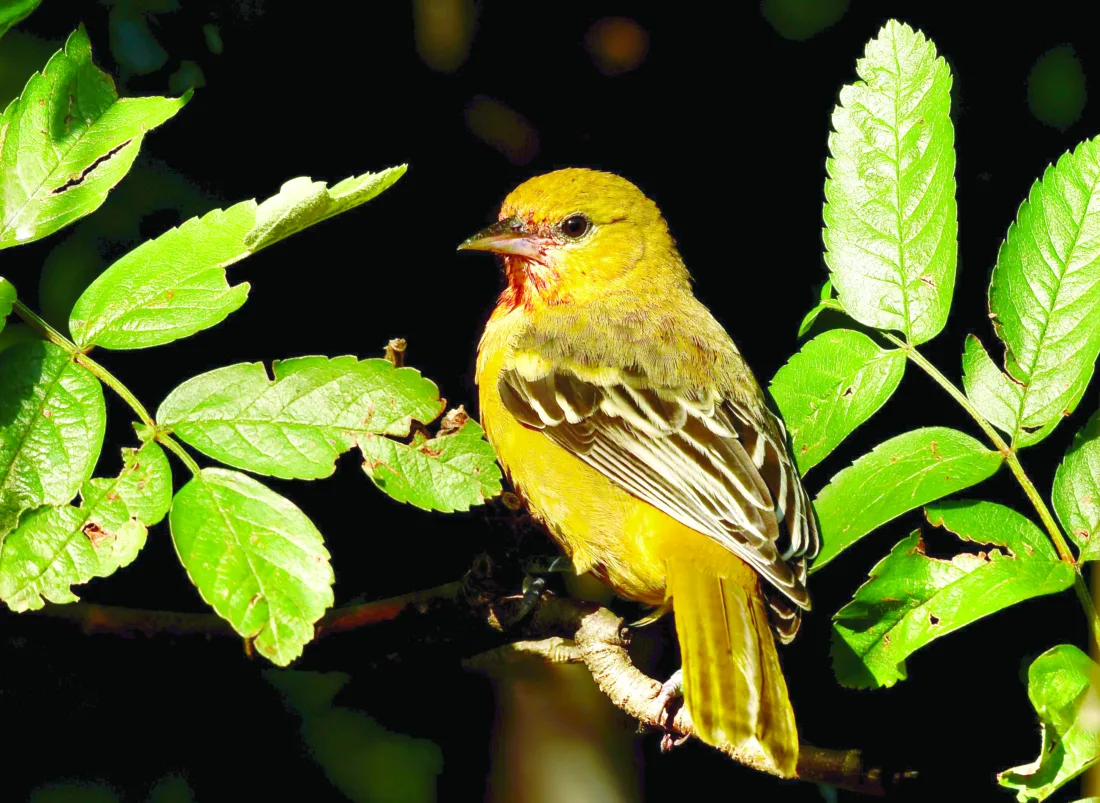
A Baltimore oriole looks on. (Scot Stewart photo)

STEWART
A Baltimore oriole looks on. (Scot Stewart photo)
STEWART
Trending
"Migratory birds connect people, ecosystems, and nations. They are the symbol of peace and of an interconnected planet." - Antonio Guterres
As August draws to a close and thoughts turn mor and more to Autumn, fall bird migration begins to move toward center stage. While the length of daylight is the biggest catalyst to stimulate birds beginning the process of heading south weather can be a factor in some of the movements of some birds too.
Weather conditions have provided only a few "blips" from the dry sunny daily routine recently creating dangerously dry conditions. Many of the area's trees and shrubs have shown massive evidence of drought impact, so the isolated showers recently seen in the area have been most welcome.
Strong north winds last Saturday and Sunday may have provided a small push to get some of the early migrants like warblers and shorebirds. Last Sunday a wave of different species seemed to arrive in ripples one or two species at a time. The first arrival may have been the first of two Baltimore orioles. Possibly a female and a juvenile, fall offers many new identification adventures for birders.
Early migrants often are still in summer breeding plumage. After a busy summer, many of these birds have worn, faded feathers. Some, like cardinals and rusty blackbirds, molt just once in the fall, with grayish-brown-tipped feathers. As the winter nears spring, the tips of these feathers will wear down, revealing brighter breeding plumage. Many birds molt their bright summer feathers, changing up for plainer colors to blend in and avoid notice by predators. These birds will molt again in late winter into spring, regaining their bright colors.
Some of the year-round birds are also going through molts, often really interesting molts. Both blue jays and cardinals often lose nearly all their head feathers at once. This often leaves them looking bald. The skin on them is very dark grayish-black. Fortunately the replacement feathers pop in quickly.
Baltimore orioles, red-winged blackbirds, and rose-breasted grosbeaks are among birds having juveniles of both sexes resemble females. All Baltimore orioles begin molting in August and complete the process by late September. They will be heading south to Florida, the Caribbean, Central and South America. The eastern U.S. seems to have gotten shorted when it comes to oriole species. Nine make their homes in the U.S. for at least part of the year. Four found only in small parts along the southern U.S. border in the Southwest, Scott's, Altamira, streaked-backed, and Audubon's. Two more are found across bigger areas, Bullock's and hooded. Only three are found in the east, orchard, Baltimore and spot-breasted and the latter is found only in Florida.
In the Sunday wave eighteen other bird species were seen at the same feeding station that also featured a bird bath and a mountain tree with bright orange fruits. Migrants in the mix included a gray catbird, ruby-throated hummingbird, several species of warblers including Nashville, and five rose-breasted grosbeaks.
On the Lower Harbor breakwall over the weekend, semipalmated plovers, spotted sandpipers and semipalmated sandpipers were observed feeding on insects on the concrete and rocks. By Tuesday at least nine warbler species were seen passing through at Presque Isle. In a 47 minute walk, one birder found 66 individual warblers. Nearly all the warblers have already molted and are now in their winter plumage. For most that means, olive, green and pale yellow colors with dashed of black and white wing bars. Continually on the move, most are nearly impossible to study for long or photograph as they dive in and out of the foliage hunting for caterpillars and other insects. Vireos are sometime seen in the mix of different warbler species often foraging and migrating together.
Birding at Whitefish Point is the true gage of migration's start. Waterbird counters there are providing their daily sightings list on eBird. On Tuesday 65 species were found on the counter's list. Six plovers and sandpipers were on that list, but only one duck species, common merganser. Three flycatcher species and two vireos were seen, along with eight species of sparrows and thirteen kinds of warblers were also included on that list.
Elsewhere at Whitefish Point on Tuesday a big push of crossbills was found. 127 red crossbills and two white-winged crossbills was found along with five pine siskins. These are considered winter finches, birds more commonly found after cold weather sets in, although some red crossbills do nest in the U.P. in summer.
Recordings of the red crossbills were made and added to the counters bird list. There are currently ten subspecies of red crossbills in North America and 18 more in Europe and Asia. They are currently adapting to succeed in different locations with different combinations of conifers live. This is reflected in the size and shape of their bills, used to pry open cones to extract the seeds. The crossbills are stuck into the spaces in the cones and opened to pry open the space more. Their tongues then pull out the seeds. It is often impossible to careful observe these differences in the field, but because they also have different calls, recording and analyzing those calls is the method used to identify subspecies encountered.
The best birding of the season is right now. Migration is bringing new treats every day!