
What’s Flying: The shining, scented forests of August

STEWART
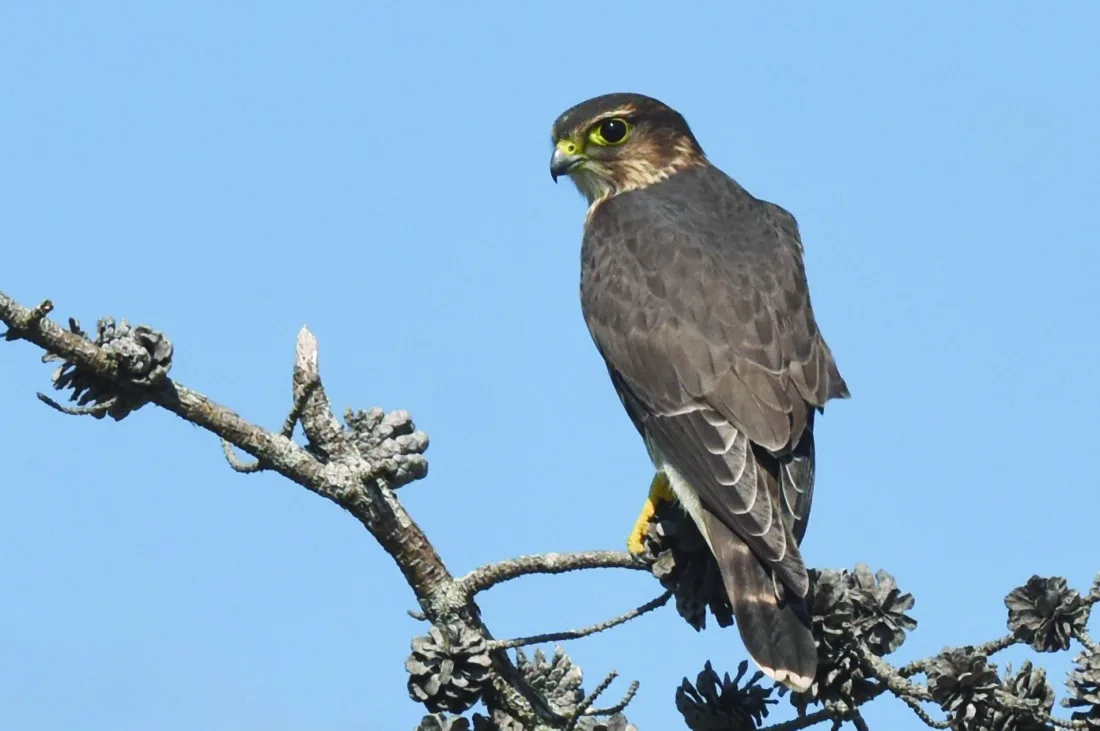
An adult merlin looks on. (Scot Stewart photo)
STEWART
An adult merlin looks on. (Scot Stewart photo)
Trending
"The August morning, shining and scented, lured him outside." - May Sinclair
The fragrances of summer change more quickly as the days begin to wane and it winds down. The sweet, heavy aroma of basswood trees has taken its spot in the cast of lures tugging outdoor lovers of the season out. Aptly named early goldenrods and Lindley's asters are providing some of the new ground color.
One of the really enjoyable sounds of late summer is the rustle of aspen leaves fluttering in the wind. On their square petioles, the stems holding them onto the branches, they wave back and forth like no other leaves and give quaking or trembling aspens trees their names. And now as the leaves enter the latter half of their lives, they have grown stiffer and noisier as they bask in the sun and warmth of late summer.
The chatter in the trees is changing too. A few birds are still singing -- red-eyed vireos are still going strong, with mourning doves and cardinals piping in occasionally with short riffs. But more often it is the short chips of black-capped chickadees, American goldfinches, and along the water's edge red-winged blackbirds occasionally filling the air. Conversations between young and adult common grackles and crows are the main stays in some neighborhoods close to where their nests were this spring and summer.
The family conversations have been even better for the raptors. Young barred owls, recently fledged, sometimes hold extended nighttime chats with parents. A couple of those chats have been reported recently. They can include more typical calls -- "Who cooks for you?." But some are punctuated with single hoots and more remarkable vocalizations called monkey calls because of their resemblance to the ape calls from chimps. They can be extended conversations, so cool to hear, but a little unsettling sometimes when they start in the middle of the night and are heard while sleeping.
The other chats making an impact on summer experiences are those of falcons of the north woods, peregrines and merlins. The falcons are more closely related to parrots than hawks. It helps explain why they are much more vocal and more social than most hawks. Even though they are bird-eating predators, their bills have more than a small resemblance to those of parrots and parakeets.
The peregrines residing on the north side of Marquette this spring and summer were heard regularly as the two adults checked on each other. The two fledged youngsters frequently seen and heard on Presque Isle also create lively chat sessions as they await their next meal, usually pigeon, blue jay, or a shorebird, delivered by their parents.
The peregrines' smaller cousins, the merlins, are also very vocal. A few of these dove-size falcons spend the winter months in the Upper Peninsula, but most migrate here in spring from the more southerly Lower 48 states. Adults use old crow nests, usually in the tops of tall white pines in the area.
They are not as vocal on arrival in the U.P. and during nesting season as peregrines, but once the young fledge, it can get quite noisy. Last Tuesday neighbors on the south side of Marquette were entertained for hours by a pair of young merlins and an adult as the young looked for a fresh meal. The adult dashed in and out of the neighborhood as the young flew from the top of several telephone poles to rooftops and back again to the poles. With nearly every move the young vocalize in high beep, beep, beeps. When parents are hunting nearby, it's a wonder they are ever able to catch a bird to feed those noisy young!
Rare bird reports have been, well rare, in recent days. Most of the rare bird sightings in Marquette County have come from two places - the Swanzy Plains south of K.I. Sawyer and the Peshekee Grade. The jack pines around Gwinn have been a good spot in recent years for Kirtland's warblers. Not this year though, Clay-colored sparrows have been seen there but the best birds have been Brewer's blackbirds.
Similar in size to red-winged blackbirds, they are iridescent blue-black-green with yellow eyes. Although their range is shown to include almost all of Michigan, they are more common in the western states and provinces. They do have seem to prefer grasslands. Their range has been spreading eastward though in the last hundred years.
On the Peshekee, black-backed woodpeckers have continued to delight birders looking for boreal species found primarily is just a few pockets of spruce-tamarack across the U.P. Unfortunately, other boreal species, Canada jays and boreal chickadees have been more difficult to come by and have not been reported this summer. An occasion white-winged crossbill has been seen along with some red crossbills there this summer though. Another white-winged crossbill was also found at Whitefish Point this past week where some of the woods in the area has similar characteristics.
White-winged crossbills are some of the most unique birds found in the U.P. They are wanders always looking for conifers producing high levels of cones. They can eat up to 3,000 seeds in a day, used their crossed bills. Their primary food are the seeds in small cones, mostly tamarack. They also will search out hemlock and balsam fir. Their lower bill curves upward alongside the upper mandible. By sticking their bills between cone bracts, then opening their bills, they can pry open that space and extract the seed wedged in there using their tongue. When the conditions are right, with high cone numbers present, they may begin nesting, regardless of the time of year. They have been known to nest in all twelve months.
They are seen from time to time near red crossbills. These birds do nest in the U.P. and come in a variety of sizes and feed on a greater variety of conifers. Find them all in the shining, scented forests of August!