
What’s Flying: The air starts to clear
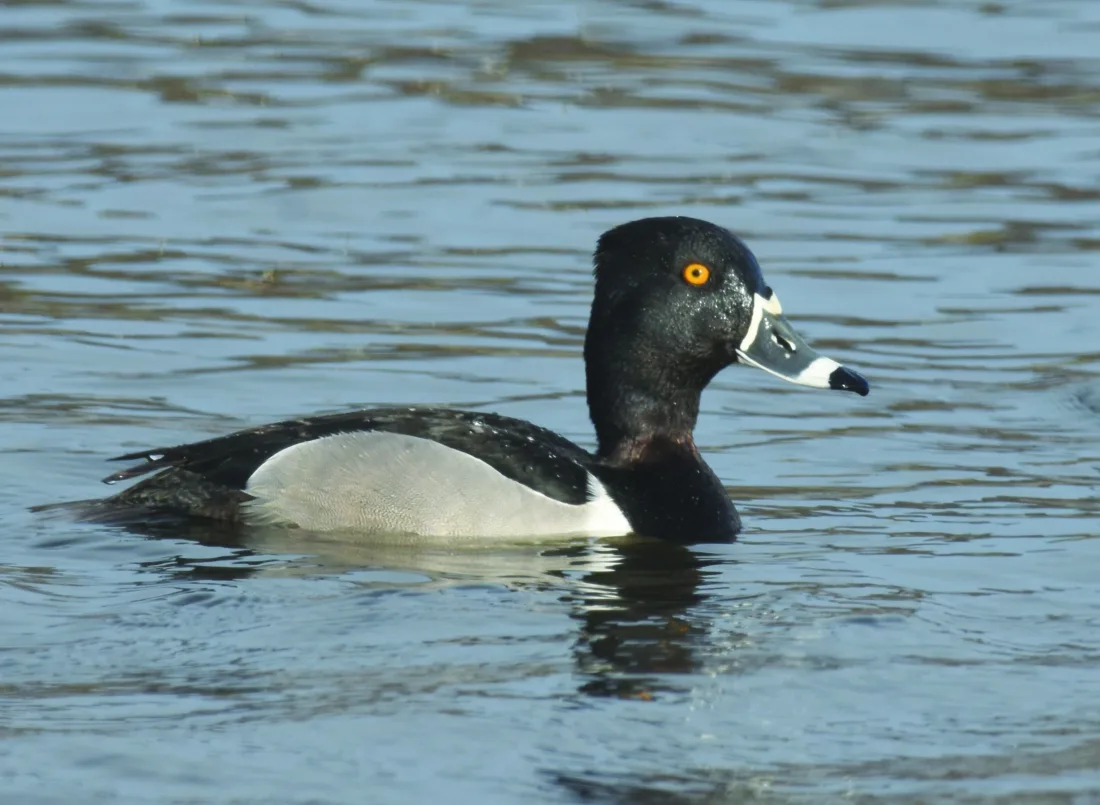
A ring-necked duck looks on. (Scot Stewart photo)

STEWART
A ring-necked duck looks on. (Scot Stewart photo)
STEWART
Trending
"If I had my way, I'd remove January from the calendar altogether and have an extra July instead." - Roald Dahl
That seems to be a logical call this year as so much of this July had produced all but inhabitable conditions at times. Seems like everybody, man and beast alike, would love to have some of those days back. The wildfire smoke of Minnesota and Canada may have been the worst of it, leaving many to wonder how young, developing animals, especially birds and younger mammals might prevail. Their parents cannot take them into an environment where air quality indexes are lower, or the air is filtered to reduce smoke particulates.
Hummingbird resting heart rates can range from 500 to 600 and up to 1,200 bpm when they are in flight. Shrews can have a heart rate up to 1,300 bpm. These rates require a relatively huge volume of oxygen requiring up to 250 breaths per minute for a ruby-throated hummingbird and up to 800 per minute for a short-tailed shrew. Both of these are found in the Upper Peninsula.
Birds have a different respiratory system than mammals though. It is a two-breath, unidirectional system. Their lungs contain two compartments. When they inhale, that fresh air goes immediately to the back, or posterior part of their lungs. With the second breath, the initial breath passes through parallel tubes into the anterior sacs to exchange oxygenated air for gases with more carbon dioxide before it is exhaled. In this way the system provides enough oxygen to provide the amount of oxygen the muscles need for flight.
Air with excessive amount of smoke particulates does have some visible effects on bird nestlings including reduced size and thinner bones. This past smoke danger lasted an entire week. For adults, their vocalizations decreased, and the air was definitely quieter last week during this stretch. Many birds also spend more extended time on the ground where the air may be less full of contaminates.
Some songbirds are still incubating eggs and feeding young birds and fledglings. Very young mallards have been seen in the Lower Harbor in Marquette. At the Gwinn sewage lagoons last Monday, wood ducks, mallards, hooded mergansers, and eastern kingbird adults were all found with recently fledged young. Northern cardinals and mourning doves have all been heard singing or calling this past week suggesting they may still be working on late clutches.
Green-winged teals are unusual in the Marquette area except during spring migration. At least one was found through most of the winter months with mallards in north Marquette on the Dead River and on the waterway running parallel to Presque Isle Ave. south of Hawley Street. It has been with just a bit of surprise they have been seen on both the Dead and Chocolay Rivers this past week. In the shallows of the Dead upstream from the river mouth a pair was seen last Saturday. The day before a single teal was seen in Harvey on the Chocolay. Green-wing teal drakes are petite ducks, the smallest dabblers in North America, with metallic-green eye swaths across their chestnut -colored heads.
Green-winged teals have special structures resembling small combs on the inner edge of their bills to help filter the water they forage through for food as dabblers. Most do migrate to the southern states in winter but may switch between Texas and California in different winters, perhaps to increase chances of finding a mate.
During the past few winters single or small numbers of more unusual dabbling ducks have been found in Marquette. The large number of mallards overwintering in town has provided support for ducks like American wigeons, northern pintails, and green-winged teals. Warmer winters have definitely been a possible condition make overwintering here easier for dabblers. Dabbling ducks do not dive, but forage in shallower waters, usually marshes, swamping areas, and the shallows of wider rivers with slow currents. Open, lower stretches of the Dead River, food available from feeding stations along both the Dead and Chocolay Rivers, along with the warmer waters of other rivers in winter, have all contributed to making conditions more conducive for overwintering in the U.P.
Seney National Wildlife Refuge has also seen an impressive uptick in waterfowl. A recent eBird checklist reported 60 ring-billed ducks seen in the refuge including several families with very recently reported young. Seney is one of the few wetlands areas in the central U.P. where significant numbers of ring-billed ducks nest and produce young each year. Ring-billed ducks are divers but thrive in the shallower waters in the pools at Seney. Many of the ducks there are much browner, stained by the tannic acid in the sediments in the waters at Seney from decomposing sphagnum mosses and other vegetation found in the wetlands. Trumpeter swans in the refuge are also dabblers, and their necks are also stained, many with bright copper colors from the sediments in the pools where they forage.
A drive down highway M-35 between Escanaba and Menominee can reveal a wide variety of wader birds and other waterbirds taking advantage of the fertile shallows along the shores of Lake Michigan. Great blue herons, great egrets, and American white pelicans may all be found foraging in the shallows, often extremely close to the highway where they may be observed at close range. Occasionally some of these species can be found foraging together providing a great tableau of birds feeding together right along the highway. Drivers must be vigilant of the activity along the shoreline to catch the prime activity as they drive along M-35 and still drive and pull-off safely to see the birds. It appears the air will remain clear and smoke-free for both humans and wildlife alike!