What’s Flying: Winter keeping man and creature alike very busy
STEWART
“Winter is not a season, it’s an occupation.” – Sinclair Lewis
For man and creature alike, this winter season has kept everyone in the Upper Peninsula busy. For man, it has been keeping warm and moving snow. The most commonly heard question around town has been “Where are we going to put more snow? For creatures it is survival.
Birds have those more critical survival questions to answer every day during this cold period. One of the most serious might be where to sleep at night when the temperatures reach their lowest readings. For starters, many birds overwintering regularly in the U.P. may have simply have more feathers than those living farther south. For chickadees and golden-crowned kinglets, feathers may make up 11% of their total body weight. Some research has found chickadees and goldfinches may have 30% or more feathers they have in summer. In the preparations for nightfall on extremely cold days, birds often feed heavily to build up a greater fat reserve. Birds may hang out near feeders at sundown eating more and to even find a spot nearby to spend the night.
Many here in the U.P. head for the thick cover of bushes, but more may head to evergreens where the force of wind are reduced even more, and some heat of the day may be trapped a bit longer early in the night. The heavy cover of conifers like spruces, pines, balsam firs, and cedar provide extra protection from snow and freezing ice. This cover is used especially by larger birds like doves, cardinals, crows, jays, ravens, wild turkeys, eagles, and hawks unable to find refuge in tree cavities.
Birds will puff out, using a connective set of muscles to produce greater loft of feathers to trap more body heat and reduce heat loss. The smaller down feathers underneath are most responsible for increasing their feather insulation. Some studies have suggested birds may conserve up to 40% of heat otherwise lost doing this. Birds can turn their heads and tuck them under their shoulder feathers to reduce their surface area to further reduce heat loss. This has extra advantages for turkeys with their bare faces and waddles due to the extra escaped heat they suffer from bare skin. With their heads tucked in they are also able to inhale the warmed air trapped in their feathers.
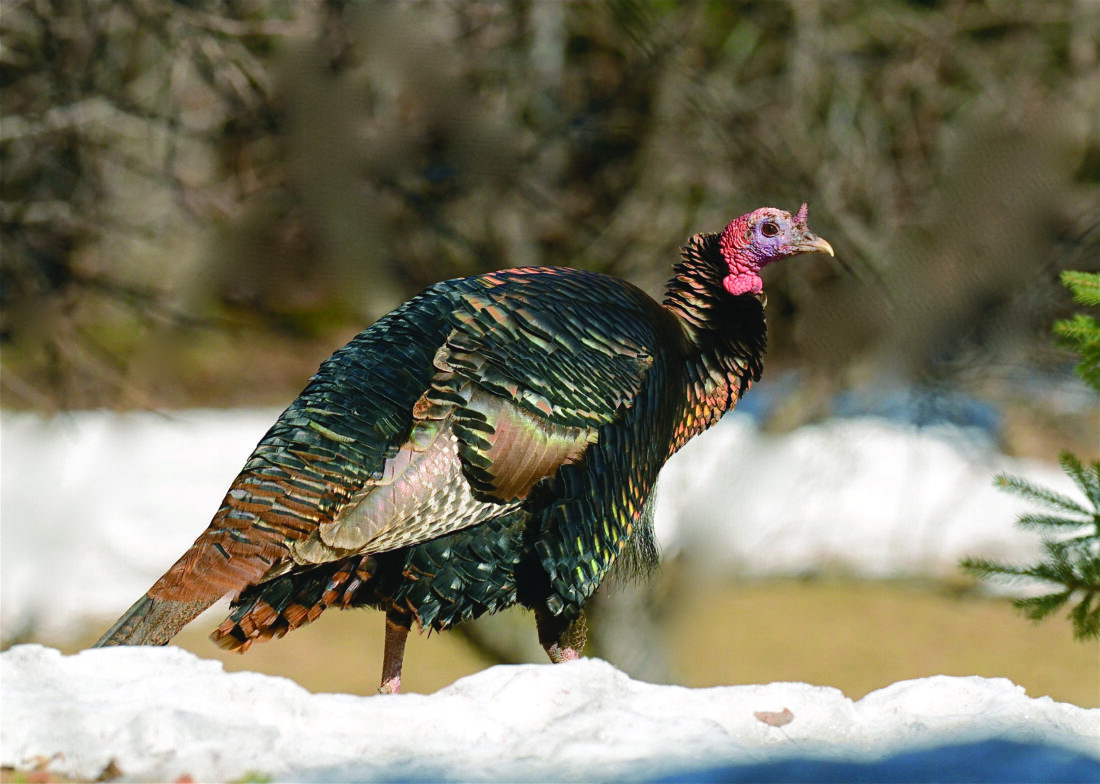
A wild turkey looks on. (Scot Stewart photo)
Ducks, swans, and geese will head to open water for the night and can fluff feathers too while still maintaining their feathers’ waterproof qualities. Since open water temperature will drop down only to about 32oF at the lowest, it will still be warmer than air temperatures. In addition, their legs have a specially designed circulatory system to lower the amount of cooled blood returning to the body to minimize heat loss. Because of their preference for open water and loss of foot sources most of summer’s Canada geese head farther south as the waters here freeze up and snow covers the areas fields.
Old woodpecker nests, knot holes and other opening in trees are often used by nuthatches, chickadees, and some woodpeckers as nighttime roosts. Nuthatches and black-capped chickadees often sleep in tree cavities and maximize the experience by sleeping in groups create a warmer environment during the night.
Many birds also experience a state of torpor at night as well to conserve energy. By reducing body temperature and slowing their breathing rates they can reduce the energy spent by up to 40 percent. Birds can also become almost motionless for hours at a time at night to save even more. As dawn comes, they may begin a shivering period. Heat is produced as their muscles begin to move. Many observers are often surprised to find birds foraging or at feeders at the very first light of day as they begin getting what they need to generate the heat and energy they need to feed for another day.
With the continuing challenges the weather has brought, there have been some subtle changes in the behavior of a number of bird species in the U.P.
-
- STEWART
-
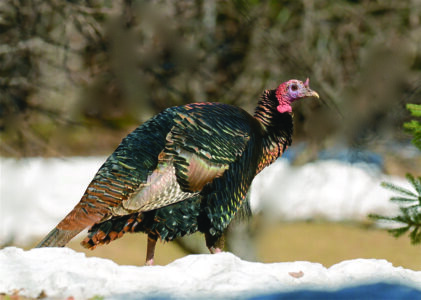
- A wild turkey looks on. (Scot Stewart photo)
A number of American goldfinch and pine siskins have been moving around the U.P. too with many now visiting different feeders, especially in Marquette. Some of these changes may be due to the continuing appearances of Cooper’s and sharp-shinned hawks, northern shrikes and possibly a merlin. All four prey on birds and learn where they can frequently be found. After a while some begin to make regular visits to these sites leading the prey species to make fewer visits to these hunting locations.
The Lake Superior shoreline is nearly all locked in ice from this current “cold snap” forcing mallards, black ducks, and tundra swans onto the open stretches of the Dead and Chocolay Rivers in Marquette and limited, mostly spring-fed open waters elsewhere. A quartet of swans, probably trumpeters, was seen Monday on the Dead River in the Forestville area.
Pine grosbeaks are still being seen at a number of U.P. locations, mostly at bird feeders outside of larger residential areas. Several small flocks of bohemian waxwings and a number of rough-legged hawks are still being seen in the eastern U.P. too. Keeping bird feeders full during this challenging time will yield more birds just trying to survive – guaranteed!
Friday: Outdoors
Outdoors North: Humbled by this majestic place
What’s Flying: Winter keeping man and creature alike very busy
DNR weekly fishing report
Little Bay de Noc: Anglers fishing the upper bay had limited success. Most anglers targeting walleye reported ...
Shoveling snow? Over-exertion and cold temps can raise your heart risks
Outdoors North: Let the winter pass over like a storm