What’s Flying: Challenges lie ahead
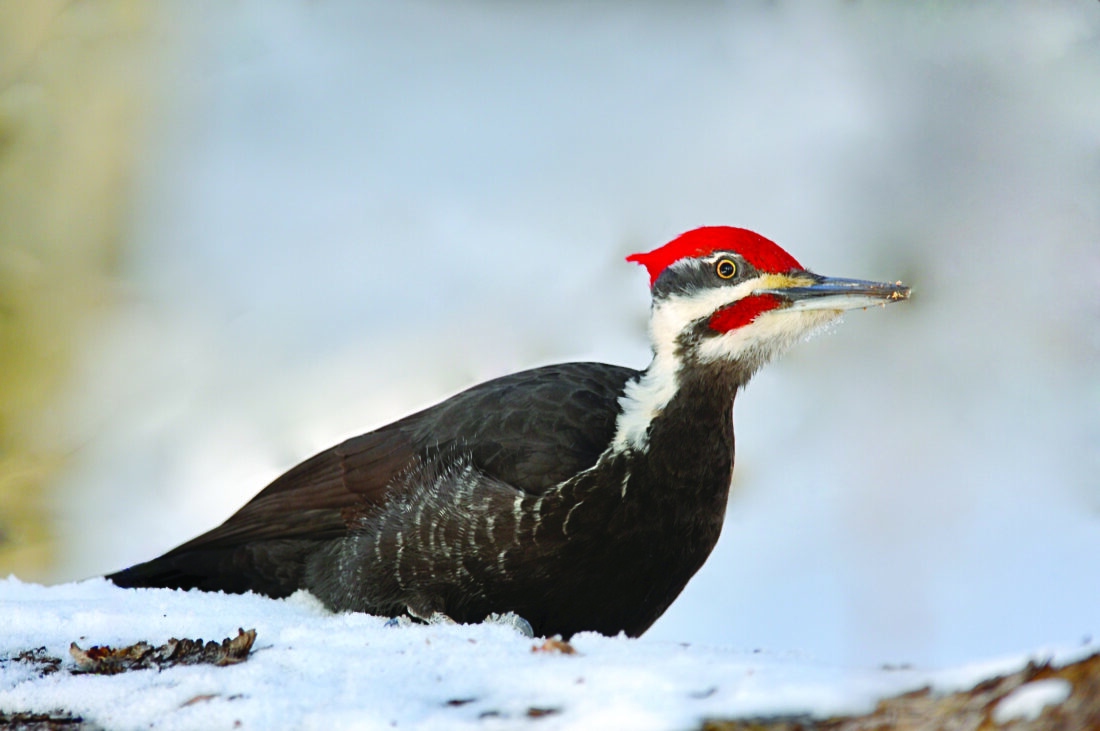
A pileated woodpecker looks on. (Scot Stewart photo)
“Shut the door not that it lets the cold in but that it lets out the coziness.” – Mark Twain
Coziness has become something truly special with this current stretch of icy cold weather. It is a particularly moving experience now to peer outside, over the snowdrifts and snow piles and watch tiny goldfinches fluttering valiantly to stay on a sunflower tube feeder long enough to grab a few seeds to eat before ducking back into the cover of nearby shrubs out of the wind.
The windy weather has affected birds in a variety of ways this winter. Woodpeckers in particular have responded in a variety of different ways. Once the temperatures drop closer to zero, many woodpeckers will hang out close to bird feeders, especially those with suet and feed repeatedly, particularly near sunset. At some feeding stations both hairy and red-bellied woodpeckers have also been visiting black-oil sunflower feeders and suet feeders. Red-bellies frequently feed on seeds and fruit, and they do often head to sunflower feeders.
Pileated woodpeckers have taken a slightly different approach exploiting one situation resulting from the high winds. Many of the larger trees came down when the 50+mph winds caught the large crowns of needle bearing branches and literally pulled entire root systems right out of the frozen ground. Some trees though were weakened by a combination of rot and insect damage. Where the trunks of these trees split or shattered, they exposed the carpenter ants, wasp larvae, and beetles providing much quicker access to them.
So how has the extreme weather affected other birds? At least one snowy owl continues to pop up on the Picnic Rocks in Marquette. Most often when one has appeared it has been in the afternoons. One was also reported in the Rudyard area in Mackinac County too. Snowy owls are extremely hearty spending most of their lives on the tundra of northern Canada, Alaska, and parts of northern Europe and Russia so they’re no surprise remaining.

STEWART
Bird diversity has been good in the eastern Upper Peninsula. Besides the snowy owl, at least four rough-legged hawks and red-tailed hawk were iisted in eBird reports last week. Two flocks of snow bunting were also noted, one of 50 birds and another a flock of 110! Small flocks of pine grosbeaks and bohemian waxwings were also seen. The snow buntings and the waxwings have not been listed in eBird farther west in the U.P. though.
A Townsend’s solitaire has also continued in Marquette. It has been reported mostly on the east side of Marquette and once at Mattson Park. Its normal winter range does extend across most of the western states from Canada to Mexico. These solitaires here feed primarily on crab apples, winter berry and the flesh cones of juniper and yew.
Pine grosbeaks continue to be reported around Marquette and Ishpeming in small groups feeding in crab apple trees and some sunflower feeders. Mixed flocks of American goldfinches and pine siskins have continued around Marquette too but have managed some changes in their visits to feeders, possibly due to unscheduled appearances by both Cooper’s hawks and northern shrikes. The hawk and shrike(s) have been widely seen around the entire Marquette area. The shrike has been seen moistly on the north side of Marquette close to Lake Superior, from McCarty Cove to the former city compost area.
Another surprise bird continuing to be seen in Marquette is a common grackle. Normally migrants, here in the U.P. from spring to early fall, they have made extended stays to just after Christmas in Marquette, but under more mild winter conditions. The one currently being seen in town has been visiting both suet and sunflower feeders. Eagles have also been seen regularly flying along the Superior shoreline between Picnic Rocks and the lighthouse.
The current icing of Lake Superior will be altering the patterns of bald eagles in Marquette, Harvey and other locations. Some changes have been noted already as one was seen on U.S. 41 last week south of town feeding on a road-killed deer on the shoulder. Some eagles also head to local landfills and join ravens, crows, herring gulls and starlings.
Perhaps the most amazing bird behavior this time of year is the courtship and nesting of great horn owls. They become quite vocal during December as they affirm their nesting territories and cement pair bonds. There is a nest in the Houghton area that has been monitored with video cameras in recent years and is under observation again this winter. Recently a female was seen at the nest site indicating nesting might be happening soon. Normally nesting begins in Illinois around mid-February and a little later here so nesting may be coming soon.
The timing of their nesting usually occurs to maximize the later development of young owlets with the beginning of spring bird migration and the arrival of summer residents and the birth of small mammals and other small animals so plenty of food is ready to feed them. Watching females incubating eggs with an inch of snow on their heads though is really touching
-
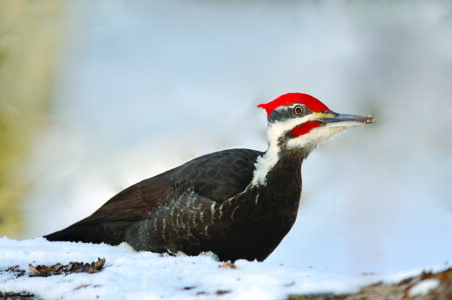
- A pileated woodpecker looks on. (Scot Stewart photo)
-

- STEWART
One other owl was also seen in the Harvey area recently of note. A rare to the area boreal owl was seen several times near M-28. These are quite rare in the central U.P. and only a bit more commonly seen during some winters in the eastern counties.
The extreme cold will be the next challenge for wildlife of all kinds here so there should be much to witness as animals pull out all the stops to beat the odds and survive.